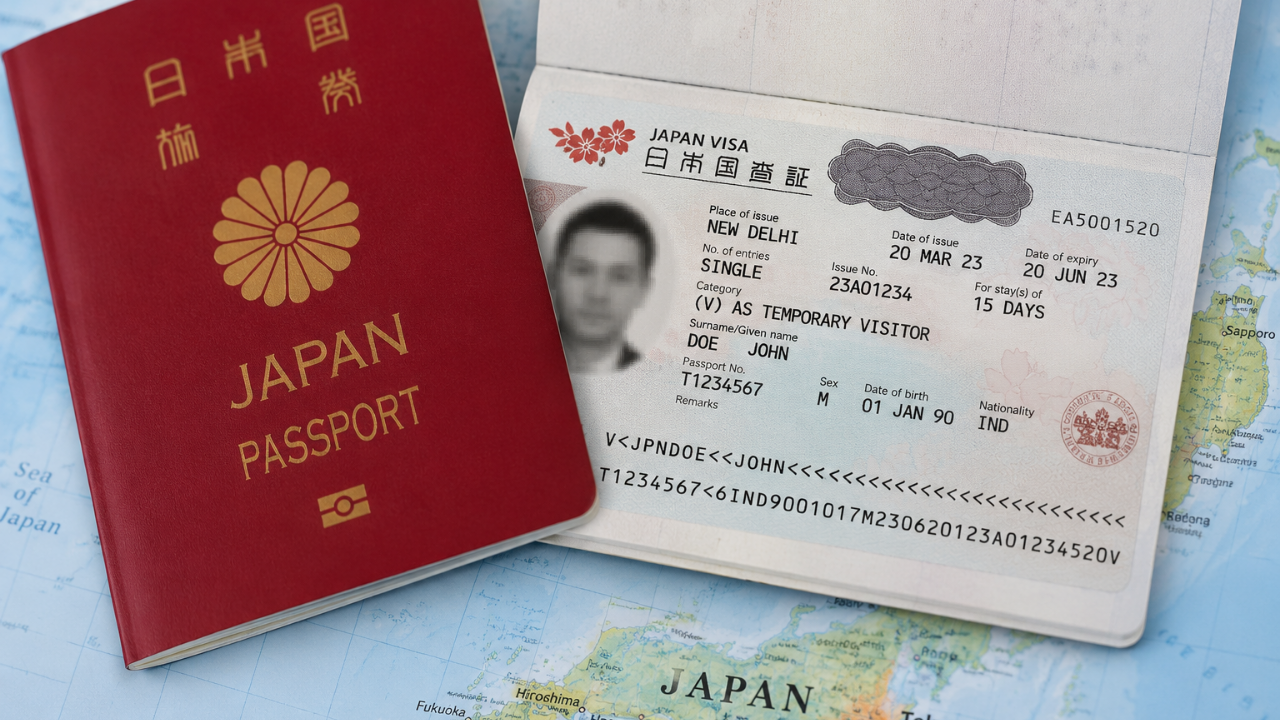
Imagine stepping onto foreign soil with a tourist stamp that expires in two weeks, only to pack up your bags and leave over three decades later.
That is not a script from a Hollywood thriller. It is the real life story of Mun Jong-gi, a 72-year-old South Korean man who managed to slip through the cracks of Japan's immigration system for thirty-three years. His quiet run came to an abrupt end when Shizuoka Prefectural Police arrested him following an anonymous tip.
Stories like this sound impossible in our current era of biometric tracking, digital surveillance, and strict border controls. Yet, Mun’s decades-long stay exposes how easily someone could vanish into the shadows of a foreign country during the 1990s and stay there simply by keeping their head down.
The 1993 Decision That Started It All
Mun arrived in Japan in September 1993. Armed with a short-term tourist visa that granted him a mere 15 days in the country, he carried a plan driven entirely by economics. Like many economic migrants of that period, he wanted to chase better-paying work than what was available back home in South Korea.
Investigators state that Mun did not even use his own credentials to cross the border. He allegedly used his younger brother’s passport. When those initial 15 days ticked away, he made a choice that altered the next trajectory of his existence. He didn't board a flight back to Seoul. Instead, he stayed.
He eventually settled in Yaizu, a coastal city located in Shizuoka Prefecture. To survive, he took on casual day labor and informal odd jobs, blending into the background. Reports indicate he used the Japanese alias Morita Shoichi. For more than thirty years, he paid rent, woke up for early shifts, grew older, and lived an ordinary daily routine while technically existing outside the law.
Why the Legal Timeline Matters
There is a fascinating legal nuance hiding beneath the headlines of this case. While Mun spent roughly 33 total years living in Japan, his official criminal charge accounts for a slightly shorter timeframe: about 26 years.
How does that work? Japan's legal framework regarding immigration underwent critical revisions in February 2000. Before that amendment went into effect, overstaying a tourist visa was technically not classified as a distinct criminal offense under Japanese law in the exact same way. Because of this statutory shift, local prosecutors trace the punishable violation back to February 2000 rather than the autumn of 1993.
Under Japanese statutes, overstaying a permitted period can carry serious penalties, including imprisonment with or without hard labor for up to three years or hefty fines reaching three million yen. Mun reportedly admitted to the allegations during police questioning after his August 26, 2026 arrest.
How Did He Hide for Decades?
People naturally wonder how someone avoids detection for over thirty years in a developed nation like Japan. The answer lies partly in the sheer scale of migration changes over the decades and partly in human anonymity.
When Mun landed in Japan in 1993, the country faced a massive wave of undocumented residents. Japanese Justice Ministry records show that Japan registered roughly 298,646 visa overstayers that exact year—the highest peak on record. Enforcement mechanisms, digital record-keeping, and employer verification systems were light years away from what they are today.
Over the years, that number plummeted drastically. By January 2026, the official count of visa overstayers dropped to 68,488. Border enforcement tightened, systems modernized, and public reporting mechanisms became sharper.
Mun managed to stay off the grid because he avoided major institutional red flags. By relying on informal day labor, using an alias, and avoiding situations that triggered deep background checks, he maintained a low profile. His run didn't end because of a sweeping government audit or a high-tech facial recognition camera at a train station. It ended because someone tipped off the police. In June 2026, an anonymous tip reached Shizuoka Prefectural Police regarding a suspected illegal resident. That tip triggered the investigation that ultimately unraveled a 33-year secret.
What This Case Tells Us About Modern Borders
Mun Jong-gi’s arrest serves as a rare window into a bygone era of global mobility. In the 1990s, crossing borders and vanishing into a metropolis was a reality for adventurous or desperate economic migrants who were willing to risk living on the margins.
Today, trying to replicate a 33-year evasion is practically impossible. Centralized digital databases, mandatory My Number cards, strict tax reporting, and automated immigration checks mean modern overstayers face immediate pressure long before a decade passes, let alone three.
If you are tracking international immigration policy or studying historical enforcement gaps, cases like Mun's highlight the massive shift in state surveillance capabilities. Japan’s handling of this file demonstrates that while historical overstayers can hide for an extraordinary length of time through sheer luck and quiet living, the net eventually catches up—often triggered by a single phone call from an observant neighbor.
Authorities are continuing to process the case through Japan's legal system, determining the final steps for an elderly man whose two-week journey turned into a lifetime.