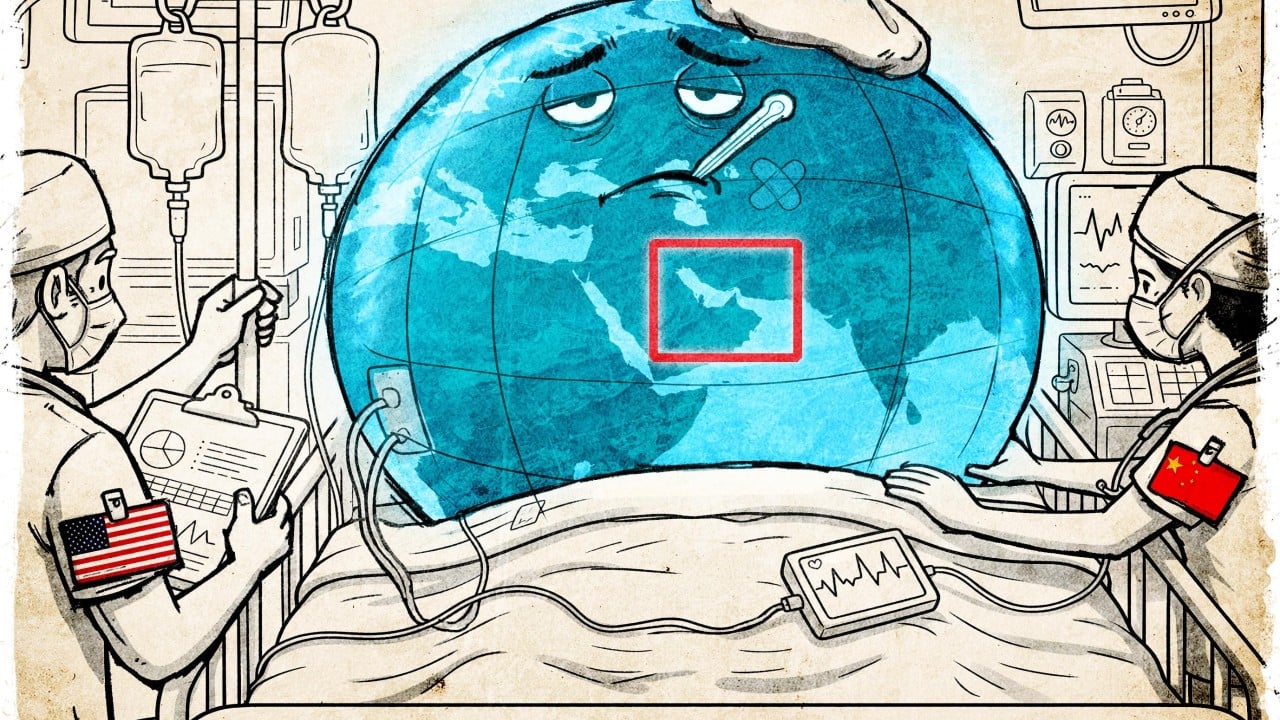
You can hate your neighbor, but if your house shares a common water pipe, you still need to make sure it doesn't burst. Right now, global maritime trade routes are leaking from a dozen places, and the two biggest economic powers on Earth are spending too much time glaring at each other instead of fixing the plumbing.
Global commerce depends on a simple premise. Ships must be able to move goods from port to port without getting hijacked, torpedoed, or squeezed by localized regional conflicts. When choke points like the Strait of Hormuz or the Bab el-Mandeb get blocked, prices spike in Chicago, Shenzhen, and Rotterdam within hours.
Everyone talks about decoupling supply chains. Nobody talks about how those same supply chains all ride on the exact same ocean waves.
The Myth of Solo Security on the High Seas
Washington still clings to the old playbook of acting as the world's solitary policeman. Beijing watches its massive energy imports crawl through contested sea lanes with a growing sense of anxiety. Both approaches are failing.
The US Navy is stretched thin. Maintaining carrier strike groups across multiple oceans costs a fortune, and domestic political appetite for endless foreign entanglements is at an all-time low. Meanwhile, China has built the world's largest navy by hull count, but it lacks the far-flung base network required to project solo security across every critical global waterway.
If either side tries to secure global trade alone, it results in expensive failure or outright conflict. The math points to an uncomfortable reality for hardcore nationalists in both capitals. Cooperation isn't a sign of weakness. It's a logistical necessity.
Shared Vulnerabilities Demand Shared Patrols
Look at what happens when regional flare-ups happen in the Middle East or Southeast Asia. Trade disruptions hit Chinese manufacturing lines just as hard as they hit Western retail shelves. Energy shipments destined for Asian ports pass through the exact same narrow corridors patrolled by Western navies.
When extremists or regional proxies target commercial shipping, they aren't hurting just one flag. They are damaging the entire globalized economy.
"When the sea lanes close, nobody wins a trade war because nobody has any goods left to sell."
Practical coordination does not require a formal alliance or a signed treaty of eternal friendship. It requires tactical deconfliction and functional coordination. Think of it like air traffic control. You don't have to like the pilot flying the other plane to make sure you both don't crash into the same mountain.
What Joint Maritime Management Actually Looks Like
Realists know that total geopolitical trust between Washington and Beijing is a pipe dream. That is fine. You don't need trust to build functional guardrails.
- Joint escort coordination: Sharing intelligence on piracy and regional militant threats in high-risk zones like the Western Indian Ocean.
- Standardized communication channels: Upgrading direct military hotlines to prevent accidental naval clashes during joint anti-piracy operations.
- Port access protocols: Establishing emergency safe harbor rules for commercial vessels caught in unexpected regional crossfire, regardless of their registry.
These aren't radical concessions. They are baseline maintenance tasks for running a global economy that trades trillions of dollars annually.
Stop Playing Chicken with Global Commerce
The current trajectory leads straight toward a catastrophic miscalculation. A minor naval standoff in the South China Sea or the Arabian Gulf could easily spiral into a shooting war that destroys modern trade networks for a generation.
Leaders in Washington and Beijing need to look past the next election cycle and the next round of domestic posturing. The oceans are too big for one nation to guard, and too fragile for two nations to fight over.
Pick up the red phone, divide the watch, and keep the shipping lanes open.