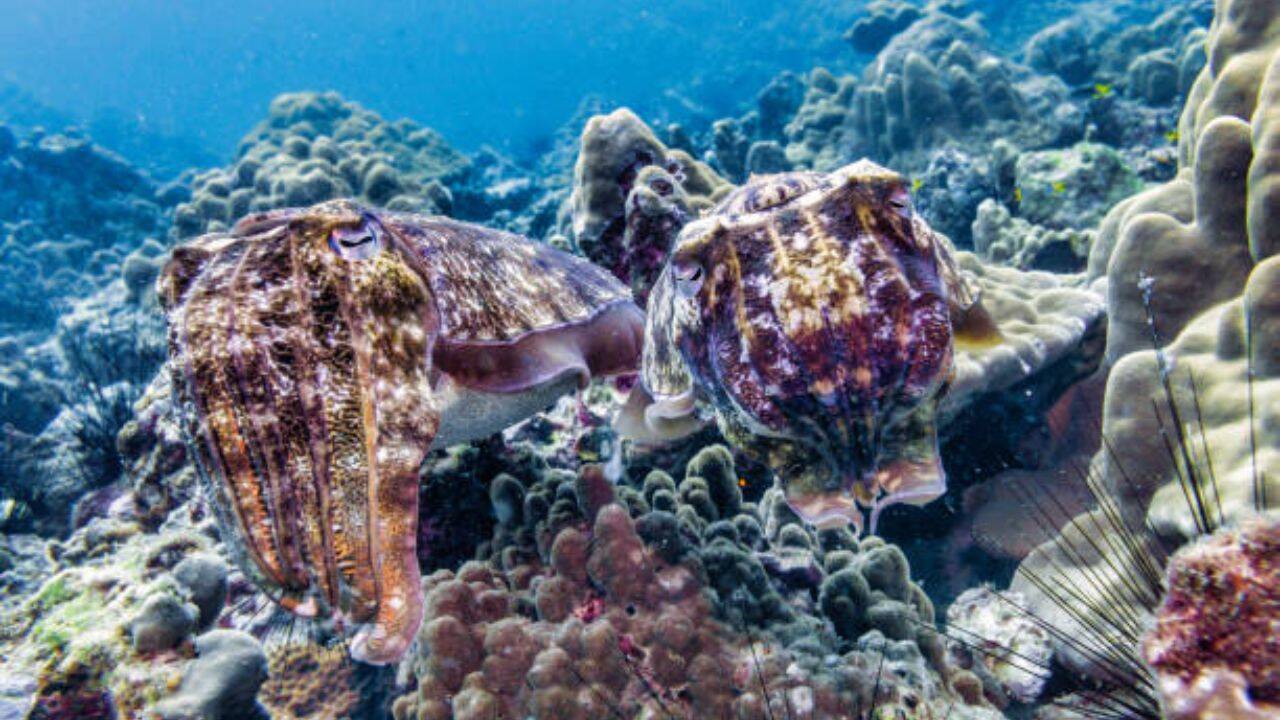
The rocky coastline of Point Lowly in South Australia's upper Spencer Gulf usually transforms into an underwater disco every winter. More than 100,000 giant Australian cuttlefish cram into the shallow waters to flash neon colors, perform intricate courtship dances, and spawn in the only mass gathering of its kind on Earth.
Then came 2026. Discover more on a similar subject: this related article.
Instead of a sprawling metropolis of pulsing cephalopods, divers found an eerie, empty ocean. Local dive surveys managed to spot only a handful of individuals—some counts recording a staggering low of fewer than 50 animals where tens of thousands usually thrive. Millions of eggs should blanket the seagrass beds right now. Instead, researchers found only a few hundred.
Scientists are scrambling for answers, and local tourism operators have canceled their winter dive seasons. How does an entire population vanish overnight? Additional reporting by Al Jazeera highlights related views on the subject.
The Anatomy of a Unique Migration
To understand why this disappearance is so terrifying for marine biologists, you have to look at how these animals live. Giant Australian cuttlefish aren't just regular marine life. They are endemic to the region, meaning they possess a distinct genetic makeup found nowhere else on the planet.
Every single year, the cycle repeats with brutal efficiency:
- Adults migrate to the rocky reefs of the upper Spencer Gulf specifically to breed.
- Males aggressively compete for mates using hypnotic light shows.
- Females lay eggs securely in shelter-providing seagrass.
- The ultimate catch: Right after mating, the adults die.
Because the adults perish immediately after reproduction, the entire species relies completely on the survival of that single year's generation. If the adults don't show up to breed, or if their eggs fail, there is no older generation left in reserve to pick up the slack. The clock resets to zero.
Pointing Fingers at Toxic Algae
So, where did they go? Marine scientists point a heavy finger toward a silent killer that has plagued the South Australian coast: toxic algal blooms.
A persistent bloom dominated by the microalga Karenia cristata has lingered in regional waters. Cephalopods are notoriously sensitive to environmental shifts. Researchers believe this toxic soup either poisoned the cuttlefish directly or wiped out the crabs, shrimp, and small fish they rely on for food. Cuttlefish are obligate hunters; if their live prey disappears, they starve.
Water temperature changes are also under the microscope. While winter temperatures fluctuate naturally, the rapid onset and severity of this year's crisis point heavily toward an ecological shock rather than a normal seasonal dip.
What Happens to Whyalla Now?
The fallout extends far beneath the surface. For the industrial town of Whyalla, the winter cuttlefish migration is a major economic engine. Thousands of tourists typically brave the freezing southern waters to witness the spectacle firsthand.
This year, tour boats stayed docked. Authorities even rushed through temporary restrictions on swimming and snorkeling around Point Lowly to protect whatever microscopic chance of survival remained for the few stragglers hiding out.
Is the population gone forever? Not necessarily. Cephalopods are famous for fast growth rates and quick life cycles, meaning a population can theoretically bounce back in a couple of years if conditions stabilize. Business owners who rely on the seasonal migration remain cautiously hopeful, pointing out that nature operates on boom-and-bust cycles.
Right now, however, the ocean off Whyalla remains quiet. Until government agencies complete their formal assessments and release official population modeling, the future of the world's only mass cuttlefish gathering hangs in a very delicate balance.