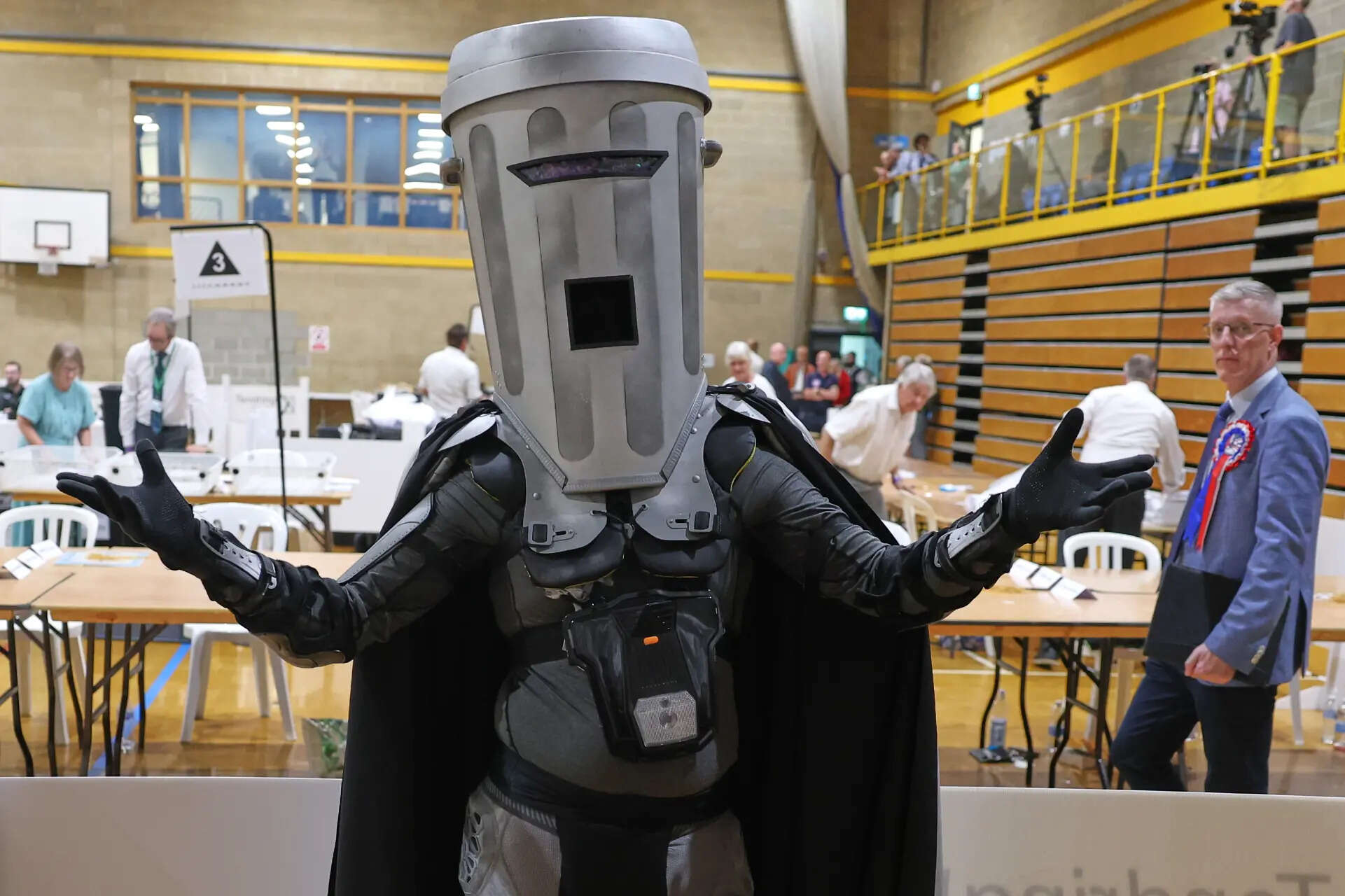
British politics has officially stopped pretending to be normal. When a perennial joke candidate wearing a metal garbage can on his head captures massive media attention while challenging a high-profile party leader, you know the system is operating in uncharted territory. Meet Count Binface, the satirical creation of comedian Jon Harvey, who turned a chaotic special parliamentary election in Clacton-on-Sea into a national spectacle.
If you're wondering how a self-described intergalactic space warrior from the planet Sigma IX ended up finishing strong against heavy-hitting political figures, you have to look closely at the exhaustion gripping the British electorate.
The Anatomy of a Circus Election
The entire farce kicked off when Reform UK leader Nigel Farage abruptly resigned his parliamentary seat. Facing intense scrutiny over undisclosed financial gifts and an impending parliamentary investigation, Farage decided to trigger a special election to clear his name and challenge what he termed the political establishment.
Major mainstream parties chose to boycott the contest, dismissing it as a self-serving stunt. That boycott left a massive vacuum. Into that vacuum stepped dozens of fringe hopefuls, led most notably by Count Binface.
Wearing a black bodysuit, a silver cape, and an upside-down metal bin, Binface ran on a brilliantly absurd platform:
- Nationalizing the singer Adele.
- Capping the price of 99-flakes at 99 pence.
- Building at least one genuinely affordable house.
- Renaming London Bridge after actor Phoebe Waller-Bridge.
While it sounds like a comedy sketch, the underlying message struck a massive chord with voters who are deeply cynical about traditional party politics.
Why Voters are Turning to Satire
Voter apathy isn't just about low turnout; it's about active disgust. When people feel ignored by Westminster, casting a ballot for a man with kitchenware strapped to his head becomes a rational act of protest.
During the scorching summer heat wave, Binface stood outside television studios doing round-the-clock international interviews while sweating through heavy plastic armor. He didn't offer standard poll-tested platitudes. Instead, he told interviewers from Tokyo to Rome that humans were actively cooking the planet.
Voters waiting outside seaside amusement arcades in Clacton expressed a common sentiment. They knew Farage would likely secure the seat due to his entrenched local base, but they praised Binface for exposing the absolute absurdity of modern campaigning. When the official results rolled in, Farage won the seat back with 63% of the vote, but Binface pulled a striking 27% share to finish second, claiming a profound moral victory.
The Broader Meaning for Post-Brexit Britain
This bizarre electoral episode reveals something fundamental about the UK's political culture. Britain has a long, proud tradition of eccentric protest candidates, from the Official Monster Raving Loony Party to Lord Buckethead. But the scale of support for satirical alternatives reflects a deeper institutional fatigue.
Post-Brexit politics promised "taking back control," yet voters often find themselves trapped in endless cycles of political theater, scandals, and parliamentary inquiries. When politics feels like a bad TV show, voters will happily vote for the actual comedian on the ballot just to puncture the pomposity of the ruling class.
Farage returned to the House of Commons, but the shadow of the ongoing parliamentary probe into his finances means his return might be short-lived. Should another snap election occur, expect the trash can to reappear. After all, when the political landscape feels entirely like rubbish, a man in a bin makes perfect sense.