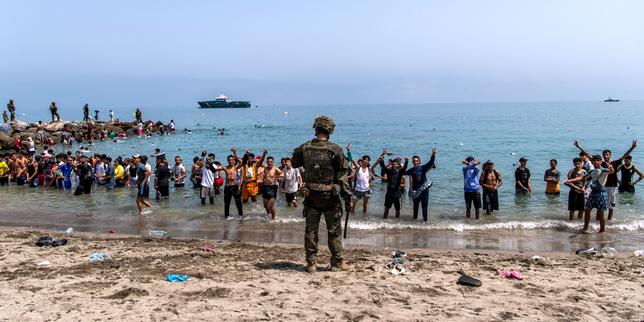
Tens of thousands of people crossed into Spanish territory in a matter of hours, shattering every security expectation.
When over 40,000 to nearly 50,000 individuals managed to cross the border into the Spanish enclave of Ceuta from Morocco within a single day, it wasn't just a localized emergency. It became a geopolitical earthquake. Prime Minister Pedro Sánchez rushed to the site, facing intense political pressure, while European leaders stared down a massive operational failure.
Let's look at what actually happened on the ground and why this event changes everything about how Europe handles its southern borders.
The Reality Behind the Numbers at Ceuta
You've probably seen the flashing news banners. Figures ranged from 40,000 to upwards of 49,000 arrivals in less than twenty-four hours. To put that in perspective, that number equates to over half of Ceuta's total permanent population arriving on its beaches and fences almost overnight.
Many of those who arrived were young men wading across the water or slipping past border points, often exhausted, wearing simple clothes, and shouting slogans. Behind the dramatic television footage lies a grim human toll, with local reports confirming multiple tragic deaths during the chaotic crossings.
Madrid and Rabat scrambled to contain the fallout. By the end of the emergency window, the Spanish government announced that over 48,000 of the individuals who entered had already returned or were being repatriated back to Morocco under a fast-tracked bilateral arrangement.
Why Pedro Sánchez is Demanding European Unity
The crisis immediately triggered a fierce political storm across the continent. Critics from various European factions pointed fingers at Madrid's border controls, while right-wing figures in countries like Germany and Italy argued that this wave signaled a total collapse of southern European perimeter security.
Pedro Sánchez didn't mince words. Standing near the flashpoint, he called for strict European solidarity. Spain cannot carry the weight of continental migration policy alone. When an enclave on the northern coast of Africa becomes the epicenter of a continental debate, burden-sharing ceases to be a diplomatic buzzword. It becomes an existential requirement for the Schengen zone.
The Diplomatic Tightrope Between Madrid and Rabat
Managing migration across the Strait of Gibraltar relies entirely on fragile diplomatic cooperation between Spain and Morocco. Rabat holds an immense amount of leverage. Past crises—such as the massive influx seen back in 2021—demonstrated how quickly diplomatic friction can translate into sudden border openings.
This time, however, the rapid agreement to facilitate returns prevented a permanent occupation of the enclave. But it exposed deep vulnerabilities. Security analysts point out that relying solely on temporary containment deals is a ticking clock.
What Happens Next at the Border
The immediate emergency response involved deploying military units to reinforce local police forces inside Ceuta. Yet, boots on the ground only solve the symptom, not the root cause.
If you're wondering how Europe plans to stop a repeat of this scenario, the truth is complicated. Structural economic pressures in North Africa, coupled with shifting smuggling routes, mean that desperate crossings will continue. European leaders face a narrow window to overhaul their migration pacts, or else local flare-ups like the one in Ceuta will permanently redefine EU politics.
Watch the upcoming diplomatic summits closely. That's where the real policy shifts will happen—long after the crowds on the beaches of Ceuta have dispersed.
Emergency at Spain-Morocco Border: Pedro Sánchez Confronts Massive Ceuta Migration Surge
This video provides a direct, ground-level look at Pedro Sánchez's emergency visit to Ceuta and the security response following the massive border crossings.
http://googleusercontent.com/youtube_content/1