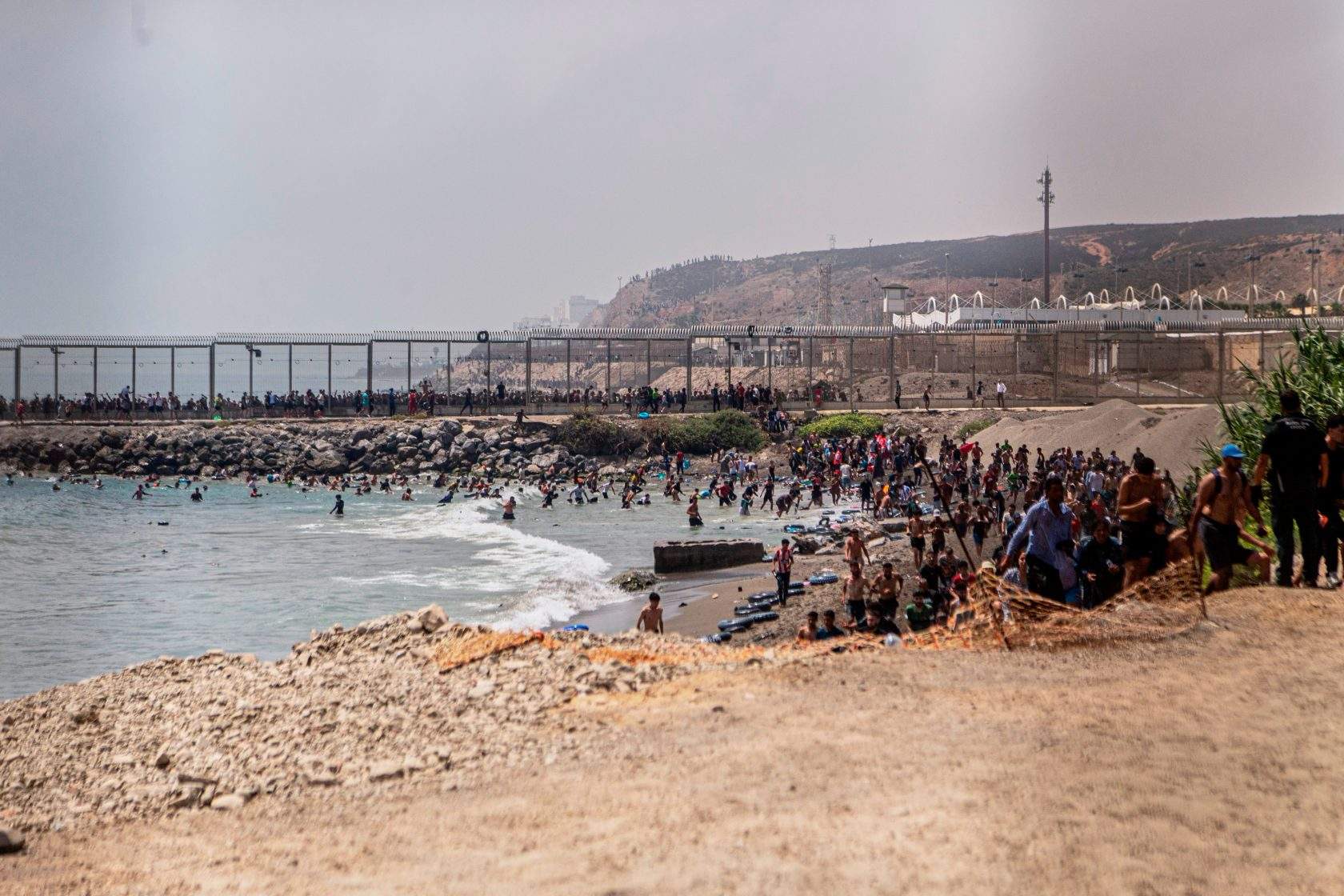
Borders break down fast when thousands of people decide to move at once. That is exactly what happened in the tiny Spanish enclave of Ceuta. Located on the northern coast of Africa, this small territory turned into absolute chaos when crowds of migrants streamed past security barriers from Morocco.
If you look closely at the maps and read the daily briefings, you might think this is just another sudden flashpoint. It isn't. This crisis exposes deep structural flaws in how Spain and the European Union handle sudden migration waves at their most vulnerable physical perimeter.
The Anatomy of a Collapsed Frontier
The numbers tell a staggering story. State broadcasters and local officials reported that between 2,000 and 3,000 people pushed into Ceuta within hours. Some swam around the Tarajal breakwater using inflatable inner tubes. Others smashed through gates in the border fencing.
Local law enforcement stood no chance. Rachid Sbihi, who represents the Civil Guard officers stationed in the area, didn't mince words when describing the situation to reporters. He called it absolute chaos. The infrastructure completely failed under the sheer weight of the crowd.
Why Ceuta Is a Unique Pressure Point
Ceuta and its sister city Melilla represent the European Union's only land borders on the African continent. That geographic reality makes them magnets for people fleeing economic collapse, violence, or lack of opportunity across Africa.
When thousands of people gather in nearby Moroccan border towns like Fnideq and rush the fences simultaneously, local authorities get overwhelmed immediately. Reception centers fill up overnight. People end up sleeping on pavements.
Madrid's response has historically been reactive rather than preventative. Juan Jesús Vivas, the head of Ceuta's regional government, urgently demanded that the central government declare a national emergency and send in the military. Prime Minister Pedro Sánchez's administration resisted that specific label, refusing to classify migration flows under traditional national security emergency laws. Yet, reality forced their hand. Madrid quickly announced the deployment of armed forces to back up the Civil Guard and restore basic security.
The Legal Loopholes Fueling the Surge
Critics and local leaders point to legal shifts as a catalyst for sudden spikes. A recent Spanish Supreme Court ruling changed the landscape significantly. It stated that migrants who arrive by sea cannot be summarily pushed back across the border without individual due process. That rule differs from land-crossing policies, creating an immediate incentive for people to take to the water on makeshift flotation devices.
When the legal framework protects sea arrivals from instant expulsion, word spreads instantly through messaging apps. People take calculated risks. Tragically, those risks cost lives. At least three people died attempting the sea crossing during this latest escalation, and tolls from similar historical surges have climbed even higher.
Cooperation and Politics
Diplomacy plays a massive, often invisible role in managing these borders. Morocco remains a vital partner. Spain's interior ministry insists that Moroccan police actively stop numerous individuals from reaching the fences, working hand in hand with Spanish forces to organize fast returns for those who cross illegally.
However, political friction is guaranteed every single time a breach occurs. Conservative opposition leaders quickly attacked Sánchez's government for looking the other way, framing the event as an intolerable national security threat. Meanwhile, humanitarian groups argue that focusing solely on military deployments and border fences ignores the root desperation driving young men, families, and children to make the crossing.
Until Madrid and Brussels address the legal contradictions and structural pressures at Europe's southern gates, these dramatic scenes will repeat themselves. Walls help temporarily. Real strategy requires looking past the immediate chaos on the beach.
Spain deploys army in Ceuta to patrol border with Morocco after migrants swim ashore
This video provides historical context and visual documentation of how military deployments operate during major migrant surges along the Spanish-Moroccan border in Ceuta.
http://googleusercontent.com/youtube_content/1