You would think moving the President of the United States by helicopter would involve a communications pipeline tighter than Fort Knox. Honestly, you would be wrong. A National Transportation Safety Board preliminary report exposed a string of avoidable breakdowns that allowed a commercial passenger jet and Marine One to drift dangerously close together near Ronald Reagan Washington National Airport.
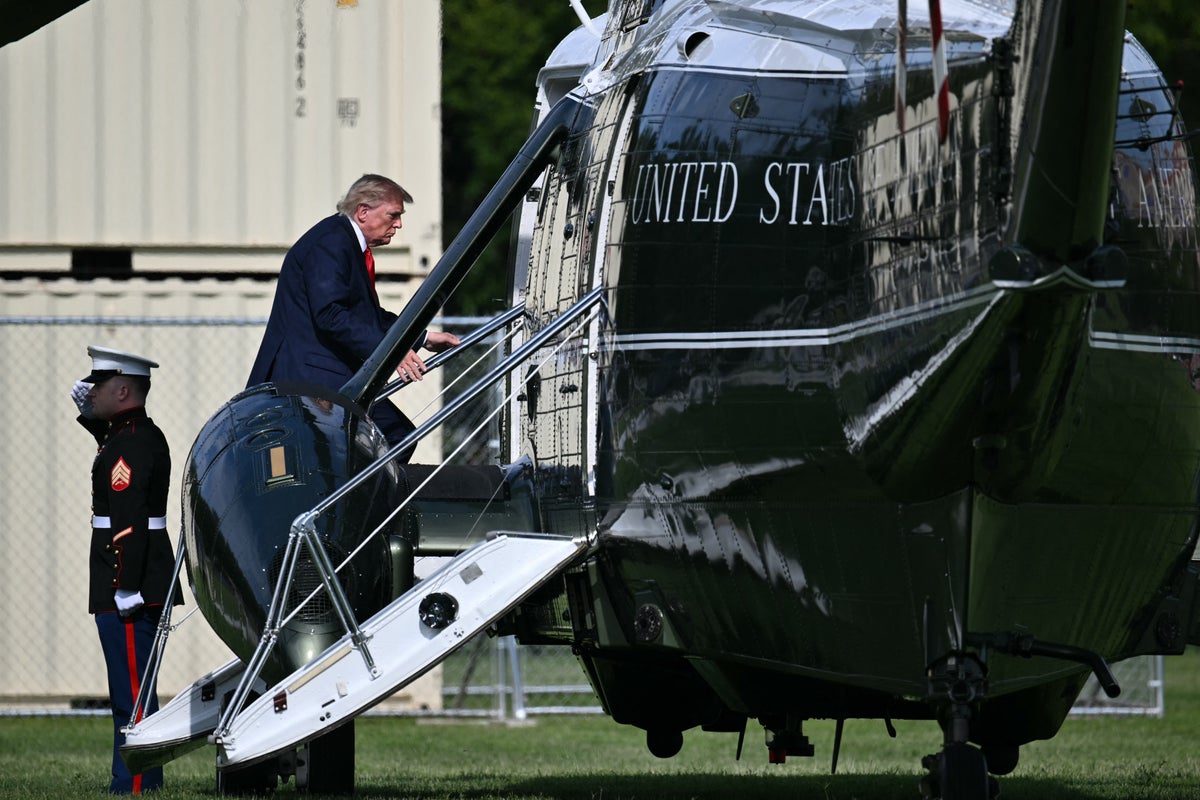
Donald Trump was onboard the presidential helicopter on August 4 when it crossed paths with an Envoy Air regional jet. The aircraft came within 0.8 miles laterally and roughly 700 feet vertically of each other. Traffic collision avoidance systems triggered alerts on the commercial flight, while the military pilot had to physically spot the jet and pause movement to prevent a catastrophe.
The scariest part? Everyone involved knew the communications lines were broken before the wheels even left the White House lawn.
The Warning Signs Everyone Ignored
Just one week prior to the incident, air traffic controllers and the pilots flying Marine One sat down for a meeting. They needed to address glaring radio glitches that kept standard three-minute warning protocols from working properly. Controllers complained they weren't getting the mandatory heads-up before presidential departures from the White House helipad.
Instead of fixing the core radio infrastructure right then and there, they opted for a clumsy workaround. They agreed to route the three-minute warning message through a third party at Joint Base Anacostia-Bolling.
That patch job failed on August 4. Tower recordings proved that the Marine One pilot transmitted the necessary warnings, yet the control tower heard nothing. The secondary relay through Anacostia-Bolling didn't work either.
When you rely on a chain of phone calls and handoffs to move the commander-in-chief through crowded airspace, you are asking for trouble.
A History of Broken Hotlines and Dead Radios
If this sounds familiar, it is because federal aviation safety has been stumbling through a communication blind spot for years. Following a tragic midair collision involving an airliner and an Army Black Hawk helicopter near the same airport that claimed 67 lives, the Federal Aviation Administration implemented strict new mandates. Any conflicting route requires an immediate halt to all takeoffs and landings.
Despite those tightened rules, basic hardware failures continue to plague the system.
Investigators discovered that a dedicated hotline connecting the Pentagon directly to the Reagan tower had been broken and out of service for over three years. Nobody at the FAA even noticed it was dead.
Furthermore, NTSB technicians found that line-of-sight obstructions blocked the radio receiver signals coming from the White House departure zone. The airport radio receiver was sitting in a nearby neighborhood, struggling to punch signals through structural interference. Only after the close call did technicians haul those radios up to the roof of the Reagan air traffic control tower. Subsequent tests showed they finally worked as intended.
It took a near-miss with a sitting president onboard to force a basic hardware upgrade that should have happened years ago.
What Actually Needs to Happen Next
We can rely on bureaucratic finger-pointing, or we can demand functional accountability from our aviation authorities. Moving forward, the FAA and the military must abandon fragile third-party radio relays. Direct, unshakeable redundancy is the only acceptable standard when presidential transport intersects with commercial air traffic lanes.
Test the hotlines weekly. Audit the radio receivers monthly. Stop treating critical safety infrastructure like an afterthought until a headline forces your hand.