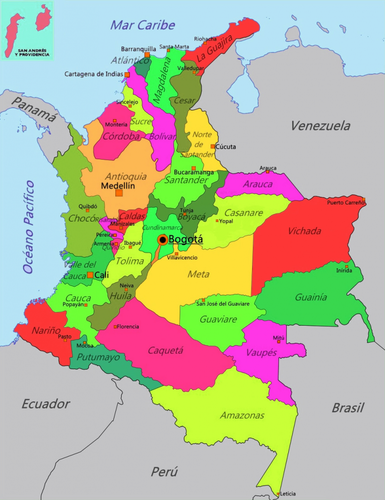
Foreign policy shifts rarely happen in a vacuum. When Colombia's newly inaugurated government stepped up on Monday and officially recognized Israeli sovereignty over the Golan Heights, Bogota didn't just tweak its foreign policy. It blew up years of diplomatic alignment.
President Abelardo de la Espriella took office on Friday, and he wasted zero time. By Monday, his foreign ministry dropped a statement making Colombia only the second country on earth—following the United States in 2019—to back Israel's claim over the strategic plateau. Meanwhile, you can explore related events here: Inside Iran's Massive Tehran Mobilisation Campaign And What It Really Means.
If you're wondering why this matters right now, look at the geography and the timing. Israel captured the Golan Heights from Syria during the 1967 Six-Day War and extended its laws there in 1981. For decades, the international community treated that annexation as a non-starter.
Then came de la Espriella. To understand the complete picture, we recommend the excellent report by The Guardian.
Breaking the Mold in South America
To understand how radical this move is, you have to look at what came immediately before. Under former president Gustavo Petro, Colombia's relationship with Israel cratered. Ties grew toxic during the Gaza war, culminating in fierce diplomatic rows and broken communication lines.
De la Espriella campaigned on a hard-right, security-first platform. He promised to reverse Petro's positions entirely. He pledged to restore tight diplomatic ties and move Colombia's embassy straight to Jerusalem.
Monday's announcement wasn't just a nod to Jerusalem. It was a calculated geopolitical pivot. The Colombian Foreign Ministry explicitly pointed to regional instability in the Middle East. They stated that keeping the Golan Heights under Israeli control is an essential component of national defense.
Israel's Foreign Minister Gideon Sa'ar jumped on the news immediately. He thanked his new counterpart and praised the decision as a testament to de la Espriella's values. Sa'ar pointed out a harsh geographic reality. Israel lacks strategic depth. Defensible borders remain the absolute baseline for survival in that region.
The Domestic Backdrop and Tragedy
Foreign policy doesn't happen away from home. This massive diplomatic gamble unfolded against a brutal backdrop. Just hours before the foreign ministry published its Golan statement, a powerful 7.4 magnitude earthquake struck western Colombia.
The disaster left over a hundred people dead and hundreds more injured. Amid the national emergency, Israel immediately offered search and rescue assistance.
Critics of the new administration might argue that rushing into high-profile international moves during a domestic crisis shows misplaced priorities. Supporters see it differently. They argue that forging strong alliances with capable foreign partners gives Colombia a stronger hand in security, intelligence, and disaster response.
De la Espriella won power by promising a tough stance against internal armed groups. Aligning tightly with Washington and Jerusalem fits that exact playbook. He wants security cooperation. He wants reliable external partners.
What This Means for Global Diplomacy
For years, the US stood completely alone on the Golan Heights recognition. Critics predicted Washington would remain isolated on the issue indefinitely.
Colombia just shattered that isolation.
Will other nations follow Bogota's lead? Latin America historically leans toward strict interpretations of territorial integrity and anti-intervention norms. Yet, right-wing movements across the globe are watching closely. If de la Espriella manages to stabilize his domestic front while cementing these bold foreign alliances, other conservative leaders might test the waters.
Israel has long sought wider international acceptance of its northern borders. Getting a major South American nation to endorse the Golan claim marks a massive win for Israeli diplomacy.
Expect pushback from traditional multilateral bodies. Expect sharp condemnation from regional adversaries in the Middle East. But don't expect Bogota to blink. De la Espriella staked his early presidency on a hard break from the past.
Watch the embassy relocation timeline next. That will tell you how far the new government is willing to push its radical realignment.