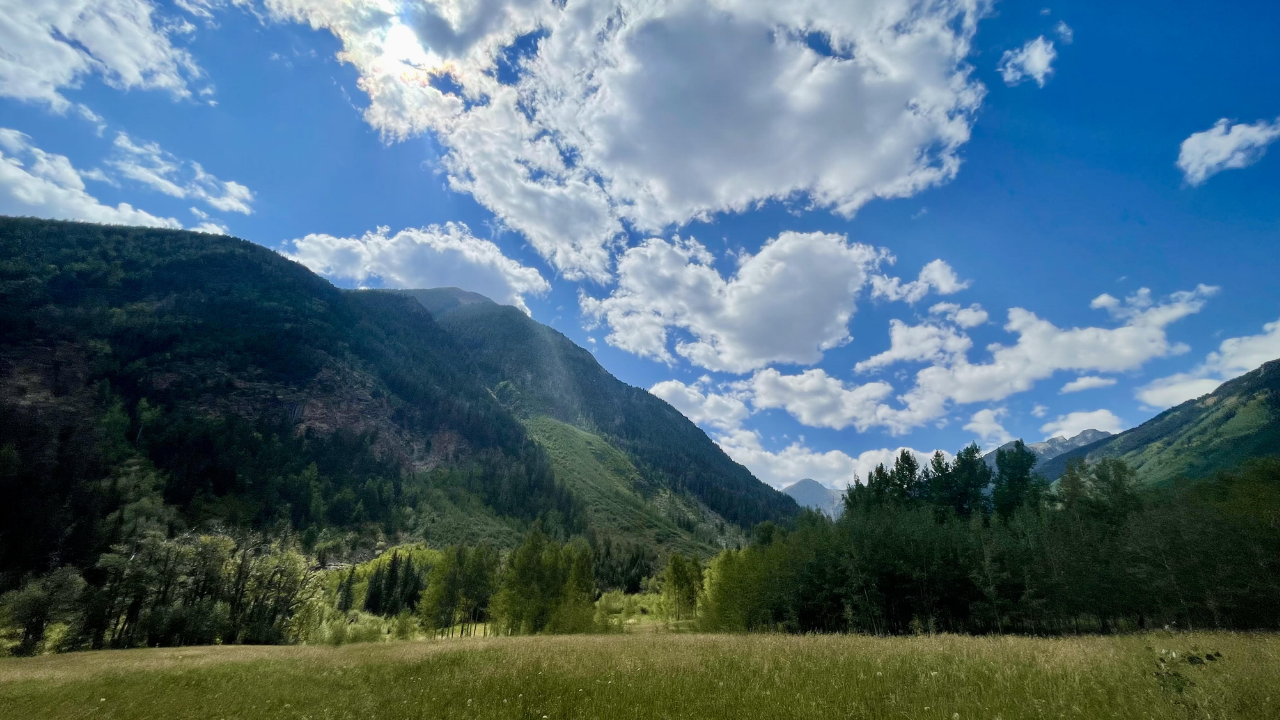
When Pitkin County dropped $34 million on a 650-acre ranch in 2024, local taxpayers raised eyebrows. Spending that kind of money on private land sounds wild. But two years later, the real strategy is showing. Most of that property is moving straight into the Maroon Bells-Snowmass Wilderness.
Snowmass Falls Ranch isn't just any parcel of dirt. It sat tucked away in the upper Snowmass Creek Valley, locked behind private gates for over a century. If the county hadn't stepped in with open space funds and state lottery loans, developers would have sliced it up into luxury mountain estates.
A Century of Keeping Out the Public
Before private deeds and homestead claims, this land belonged to the Ute People. By the early 20th century, a Danish immigrant named Kate Lindvig pieced together homestead parcels through grit and determination. She earned the local nickname "Cattle Queen of Snow Mass" by managing the sprawling mountain operation completely on her own.
Her lone-ranger era ended in 1943 when she sold out to Bob Perry, Ruth Brown Perry, and D.R.C. Brown, Jr. That family held onto the property for nearly eighty years. When they finally listed it for sale in 2021 with a staggering $50 million price tag, conservationists panicked. Pitkin County knew they had to act or lose the Elk Mountains valley floor forever.
Dale Will, the acquisition director for Pitkin County Open Space and Trails, didn't sugarcoat the stakes during public meetings. They held their breath for years watching the listing.
How the Math Actually Works
Thirty-four million dollars is the largest open space purchase in Pitkin County history. It completely crushed their previous record of $17 million spent on Sky Mountain Park back in 2010.
They didn't just write a single check from pocket change. The county leaned on open space bonds approved by voters in 2020 alongside a $10 million loan from Great Outdoors Colorado. Groups like The Wilderness Land Trust also jumped into the mix to coordinate the complex federal handoff.
The master plan relies on transferring 530 acres into the White River National Forest through the Land and Water Conservation Fund. This allows Pitkin County to get a huge chunk of its cash back from the federal government.
The remaining 120 acres stay under local control. That small slice holds historic farm buildings and rustic cabins, protected by a conservation easement so the public keeps access.
Saving Wildlife Corridors from Luxury Cabins
Surrounded on three sides by federally protected land, Snowmass Falls Ranch acts as a biological highway. It boasts two miles of Snowmass Creek frontage, beaver ponds, thick aspen groves, and vital senior water rights.
Elk, mule deer, moose, black bears, and mountain lions depend on this valley floor for summer habitat. Hikers also rely on it. Two major U.S. Forest Service trails cross right through the acreage, giving backpackers direct routes into the high alpine wilderness.
For decades, trailhead access near the entrance remained a point of friction. Now, public access is locked in permanently.
Gary Tennenbaum, director of Pitkin County Open Space and Trails, called it one of the final massive puzzle pieces left to protect in the region. The gamble paid off. The bulldozers stayed home, and the backcountry won.