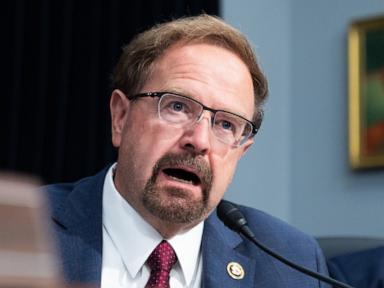
Politics rarely leaves room for nuance. When the House Ethics Committee targets a lawmaker, the outcome usually follows a predictable script. North Carolina Representative Chuck Edwards tried to rewrite that ending. He failed, but his defensive crusade exposed the gray areas where professional boundaries collide with personal relationships in Washington.
You won't find many politicians willing to fight a bipartisan ethics panel publicly. Edwards did just that. Before the House voted overwhelmingly on September 1, 2026, to censure him by a margin of 413 to 2, the North Carolina Republican circulated a fiery letter to his colleagues. He urged them to look past the committee's headline-grabbing conclusions and examine the actual evidence. Recently making news in related news: When Reporting The News In Haiti Becomes A Death Sentence.
The core dispute wasn't about whether Edwards did what investigators claimed. He admitted to poor judgment and apologized to his family and former staffers on the House floor. Instead, the fight was over vocabulary. Did expensive gifts, poetry, compliments, and late-night texts add up to sexual harassment, or were they just an employer's profoundly misguided attempts at friendly mentorship?
The bipartisan House Ethics Committee spent months investigating allegations involving two young female aides who worked in Edwards' congressional office. Investigators poured over roughly 186,000 pages of digital records, texts, and emails. The committee's report painted a picture of a boss who singled out two staffers with gifts totaling over $1,000 in jewelry, designer purses, guns, shoes, a laptop, and one-on-one dinners. More details into this topic are covered by The Washington Post.
Yet, the committee made a critical concession. Investigators explicitly found no evidence that Edwards engaged in sexual activity with either staffer, explicitly propositioned them, or violated federal sexual harassment laws through quid pro quo demands.
For Edwards, that distinction was everything. In his letters and public statements, he drew a bright line between improper boundary-crossing and actual harassment. He argued that taking the leap from reciprocal texts and friendly dinners to a formal sexual harassment charge was a massive analytical stretch. "A gift is not sexual misconduct," Edwards wrote to fellow lawmakers. "A compliment is not sexual misconduct. Poetry is not sexual misconduct."
The Ethics Committee saw it differently. Investigators concluded that regardless of his intent, Edwards wielded immense power as a member of Congress over employees who depended on him for their livelihoods. By isolating them from other staff, making frequent remarks about appearance, and sending deeply personal thoughts, he fostered an uncomfortable, hostile work environment. One senior aide testified that Edwards grew angry when confronted about the preferential treatment, insisting critics simply didn't understand his unique bonds with the two women.
The political fallout was swift and brutal. Just days after the committee released its report in early August, Edwards dropped his reelection bid for North Carolina's 11th District. He cleared the way for a new slate of candidates while choosing to serve out the remainder of his term.
When he took to the House floor ahead of the vote, Edwards walked a tightrope. He expressed deep regret for the discomfort he caused, admitting his understanding of those relationships missed the mark. But he drew a firm line at the label itself. "Regret is not an admission of sexual harassment," he told his peers.
His colleagues weren't persuaded. The final 413-2 tally marked one of the rare times the modern House has doled out a formal censure, a punishment that acts as a public shaming on the floor without stripping a member of their seat. Only South Carolina Republican Ralph Norman joined Edwards in voting no.
The episode highlights a permanent shift in how Capitol Hill handles staff dynamics. In an era of intense scrutiny following multiple high-profile congressional resignations, the old excuse of "friendly mentorship" no longer flies. Lawmakers are learning that intent matters far less to ethics investigators than the objective impact an employer's behavior has on subordinates.
Edwards left Washington's stage with his legislative career cut short and his name permanently marked by a House reprimand. He insisted he would leave with his head held high, finishing the work his constituents sent him to do. But his fight serves as a stark warning to every elected official on Capitol Hill. The line between being a supportive boss and crossing professional boundaries is razor-thin, and crossing it carries consequences that no amount of letters to colleagues can reverse.
Rep. Chuck Edwards fights house censure
This video provides an overview of North Carolina Representative Chuck Edwards circulating a letter to urge his House colleagues to reject the Ethics Committee's censure recommendation.
http://googleusercontent.com/youtube_content/1