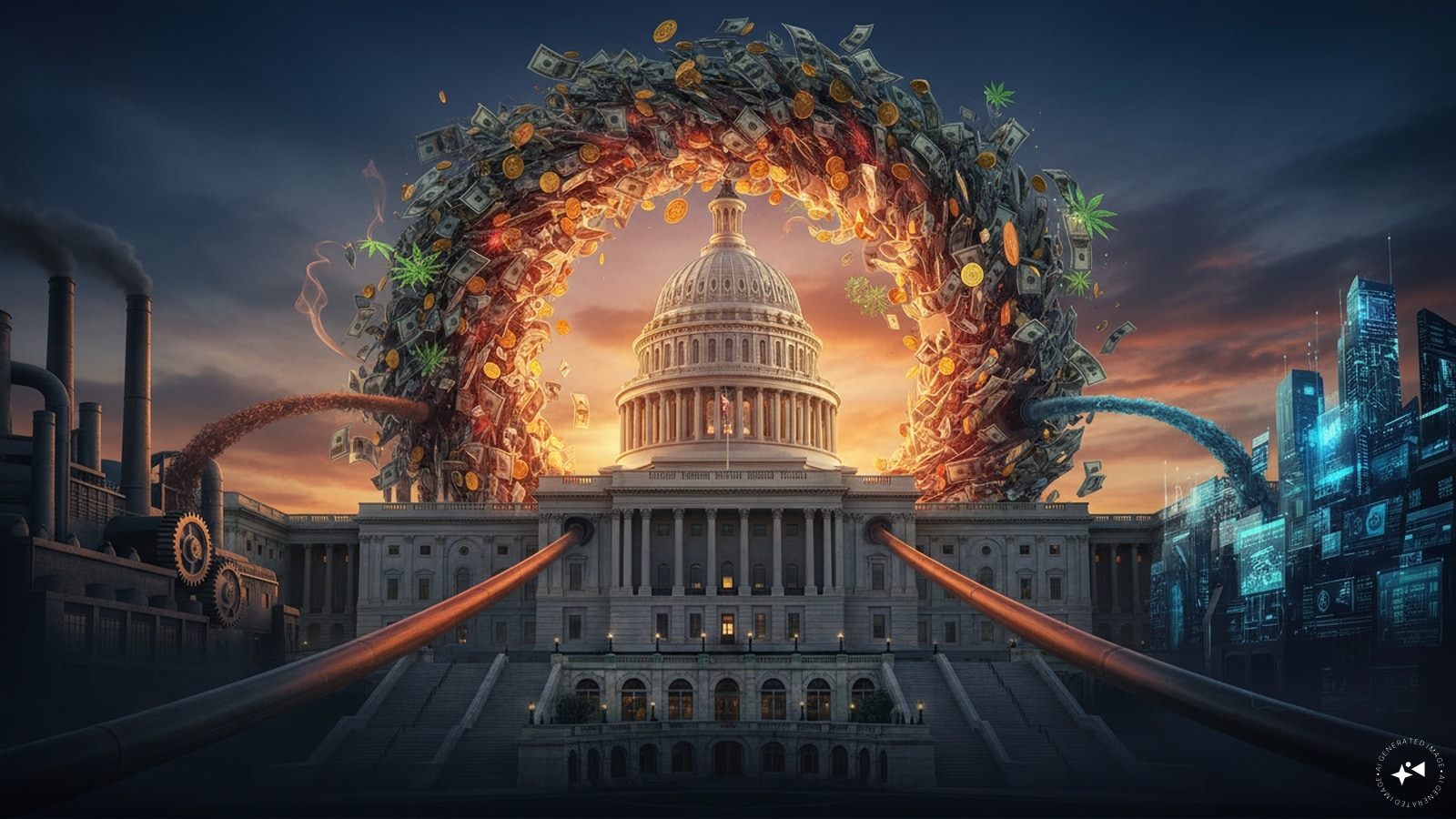
Money talks in American politics, but right now it's screaming. Corporate political donations have smashed every previous milestone, reaching an unprecedented $646 million during the 18 months leading up to June. That figure isn't just a slight bump from past years. It represents a staggering 40% increase over the entire 2024 presidential election cycle, according to campaign finance data compiled by the watchdog group Public Citizen. If you thought corporate cash couldn't get any louder after the Supreme Court's 2010 Citizens United ruling, you were wrong.
Midterms are historically sleepy compared to presidential showdowns. Voters usually tune out, turnout drops, and campaign offices catch their breath. But this cycle is entirely different. Silicon Valley startups, crypto moguls, and online betting giants are terrified of regulatory crackdowns, and they're spending historic sums to buy security.
The New Faces of Campaign Cash
For decades, big oil, big tobacco, and traditional defense contractors dominated corporate political action committees. Those players are still writing checks, but a completely different set of industries has seized control of the financial steering wheel.
Cryptocurrency firms, online sports betting apps, and artificial intelligence companies poured roughly $344 million into federal campaigns through June. That single block accounts for more than half of the total corporate spending tracked by Public Citizen.
Consider the digital assets sector alone. Companies and founders tied to crypto dropped an eye-watering $206 million, funneling massive sums into super PACs like Fairshake. Online betting platforms like DraftKings, FanDuel, Fanatics, and bet365 pooled $29 million in a single quarter into an industry political action committee called Win for America. Meanwhile, major tech players and AI interests contributed around $62 million.
Why are tech startups and gambling apps spending like Wall Street banks? Because local zoning boards, state legislatures, and federal agencies are suddenly threatening their business models. Data centers face fierce local blowback over energy consumption and water use. Online gambling is fighting state-by-state legislative bans and tax hikes. Crypto wants clear rules that favor decentralization rather than SEC enforcement. They aren't trying to win hearts and minds. They're trying to purchase legislative insurance.
Where the Money Goes
Most of this corporate floodwater is rushing into Republican campaign coffers. The GOP traditionally champions deregulation and low corporate tax rates, making them a natural ally for tech executives and corporate boards desperate to fend off government oversight.
Super PACs aligned with conservative interests are seeing an avalanche of cash. Koch Inc. shelled out $20 million to Americans for Prosperity Action. Crypto leaders like Cameron and Tyler Winklevoss handed over $10 million to MAGA Inc. Tesla founder Elon Musk has personally spent tens of millions to boost right-leaning candidates, particularly in key states like Texas where data center development has turned into a major political battlefield.
Some money does cross party lines. Industry-backed super PACs often play both sides of the aisle to protect their investments regardless of who wins control of the House or Senate. But the sheer volume flowing toward conservative candidates reveals a clear strategy. Wealthy donors want to stop any progressive policy shifts dead in their tracks.
The Real Numbers Are Even Bigger
If you look at the $646 million headline figure, you're only seeing part of the picture. Federal Election Commission filings do not tell the whole story.
That total completely excludes "dark money" groups—nonprofit organizations that are legally exempt from disclosing their donors. When you factor in dark money, the real footprint of corporate and billionaire influence balloons past $1 billion. For instance, AI creator Anthropic donated $40 million to a dark money group called Public First Action, which amassed a war chest topping $100 million for the midterms.
Furthermore, the FEC data leaves out personal contributions made directly by corporate executives, tech founders, and venture capitalists. Meta founder Mark Zuckerberg has quietly set aside tens of millions for state-level races. When you combine corporate treasuries, dark money nonprofits, and executive piggybanks, corporate America is rewriting the rules of political engagement.
Is Democracy for Sale
Watchdog groups argue that this financial surge poses a direct threat to democratic integrity. Rick Claypool, a research director at Public Citizen, calls the rate of incoming corporate money a flashing warning sign that requires immediate containment. When a handful of booming industries can deploy hundreds of millions of dollars to shape elections, ordinary voters risk getting drowned out.
On the flip side, defenders of free speech argue that spending limits violate core constitutional rights. Tom Garrett of the Institute for Free Speech maintains that corporations and wealthy individuals are simply exercising their right to participate fully in the political process.
The upcoming November elections will put this debate to the ultimate test. If you want to understand where American governance is heading, don't look at campaign speeches. Follow the money.
Check out this analysis on Corporate Cash Hits Record $646 Million in US Midterms to see a breakdown of how these campaign finance records are impacting the political landscape.
http://googleusercontent.com/youtube_content/1