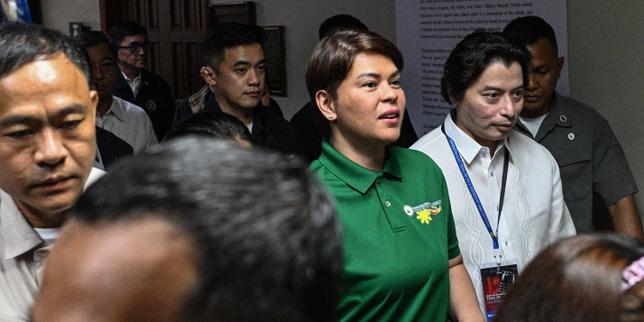
The political war in Manila just crossed a dangerous legal line. The Department of Justice formally filed criminal charges of grave threats against Philippine Vice-President Sara Duterte over explosive assassination remarks she directed at President Ferdinand Marcos Jr., First Lady Liza Araneta-Marcos, and former House Speaker Martin Romualdez.
It’s a massive escalation. What started as a bitter public fallout between two powerful political dynasties has now turned into an active courtroom battle. If you're trying to figure out what happens next in Philippine governance, you need to understand that this criminal indictment operates entirely separate from her ongoing Senate impeachment trial.
The Backstory of the Threat
The charges stem from a chaotic virtual press conference held back in late 2024. During that online briefing, Vice-President Duterte claimed she had spoken with a hitman and instructed them to kill President Marcos, the First Lady, and Romualdez if she herself were ever assassinated.
Those statements immediately triggered an investigation by the National Bureau of Investigation. Months later, state prosecutors found prima facie evidence showing a reasonable certainty of conviction for criminal grave threats. They officially submitted three counts of grave threats to the Quezon City Regional Trial Court.
Interestingly, the DOJ decided to drop a companion complaint for inciting to sedition, ruling that the evidence didn't meet the legal threshold for that specific charge. Even so, the grave threats counts carry real teeth. Under Philippine law, a conviction can mean jail time and a permanent block from holding public office, throwing a wrench into her anticipated 2028 presidential ambitions.
The Legal Clash Over Immunity
Duterte’s defense team isn't taking it lying down. Her lawyers immediately pushed back, arguing that as a sitting impeachable officer, she shouldn't face criminal prosecution for an offense already tied up in her impeachment proceedings.
Legal experts disagree on how this procedural knot will untangle. Department of Justice officials maintain that the criminal case and the Senate impeachment trial run on completely different tracks. One is legislative and political, while the other is criminal and judicial. Legal scholars from institutions like the University of the Philippines point out that nothing in the constitution explicitly blocks prosecutors from filing charges while an impeachment trial crawls forward.
Prosecutors have recommended bail set at 120,000 Philippine pesos for her temporary liberty, meaning she won't be locked up immediately while the court handles the preliminary steps.
What This Means for the 2028 Horizon
This isn't just about harsh words exchanged between high-ranking officials. It's about raw survival. The Senate impeachment trial is already digging through separate controversies involving alleged misuse of confidential funds, bribery, and unexplained wealth.
With criminal dockets now active in regular courts alongside the Senate hearings, the political pressure on the Duterte camp is reaching a boiling point. Public trust ratings for both Marcos and Duterte have taken hits as the public watches the daily drama unfold.
Expect her defense to challenge every single filing, lean heavily on public support, and test the limits of executive and legislative boundaries. The legal battle in Quezon City will drag on for months, and the outcome will redefine the balance of power in the Philippines long before voters head to the ballots in 2028.