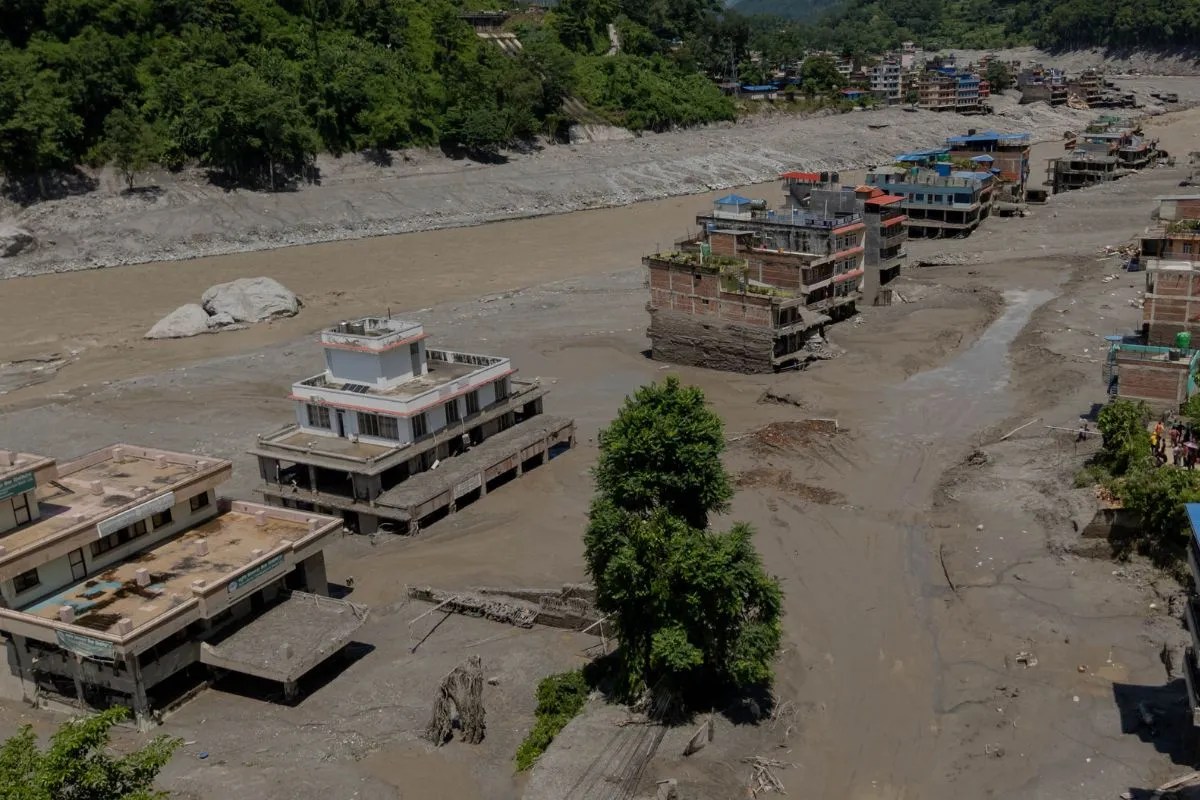
Water doesn't always rise slowly. Sometimes, it arrives as a wall of liquid destruction, obliterating everything in its path before anyone has time to scream. That is the brutal reality of the Nepal flash floods that have left an entire nation reeling in grief and disbelief.
When you look at the numbers, your stomach drops. As of late August 2026, the death toll has climbed to 469, while roughly 977 people remain unaccounted for. Entire communities have been wiped off the map. Survivors are left standing in mud where their homes used to be, staring blankly at rivers that swallowed their families, their livestock, and their entire lives in a single terrifying moment.
If you think this is just another routine seasonal monsoon story, you are missing the bigger picture. This disaster exposes deep structural failures in early warning systems, cross-border water management, and climate resilience in the Himalayan region. Let’s break down what actually happened, why the death toll skyrocketed, and what this means for the future of mountain communities.
The Brutal Reality on the Ground
Disasters of this magnitude don't just happen in a vacuum. They tear through valleys with zero warning, leaving dazed survivors searching for fragments of their past.
In districts like Nuwakot and Sindhuli, the devastation is staggering. Local volunteers rushing from Kathmandu to assess immediate needs found a terrain stripped of basic infrastructure. Main roads completely vanished, replaced by churning torrents of debris and boulders. You can't comprehend the scale until you walk along the riverbanks where houses used to stand. Solar panels, livestock, and local businesses have been swallowed by the current.
Take the district of Sindhuli as a stark example. Local lawmaker Dhiren Karki reported that between 50 and 60 people from his constituency alone are still missing. Families are wandering through debris fields, desperate for any sign of their loved ones. Karki described how the government deployed roughly 20 to 22 helicopters for search and rescue missions, yet the sheer volume of isolated areas makes reaching every trapped survivor an uphill battle. Many bodies recovered from the mud haven't even been identified yet. The grief is suffocating, compounded by the sheer chaos of not knowing who survived and who perished.
Anatomy of a Himalayan Catastrophe
Why was this flood so catastrophic? The answer lies high up in the mountains, near the Tibet border.
Recent reports confirmed that a barrier lake near the Gyirong border port suffered a severe structural breach. When an upstream barrier lake gives way, it releases an unimaginable volume of pent-up water down narrow mountain gorges. Police officials like P. Chaudhary warned that water levels surging from the Chinese border side began rising with terrifying speed.
That single breach triggered an immediate halt to rescue operations across multiple zones. Imagine risking your life in a helicopter or a raft, only to be pulled back because another wall of water is roaring down the valley. That's the terrifying limbo rescue crews and police officers are currently trapped in. It's not just heavy rain causing this. It's the cascading failure of high-altitude natural dams that geography has left dangerously unstable.
What Humanitarian Workers Are Witnessing
People read numbers on a screen and detach from the human tragedy. But talking to humanitarian experts changes that perspective entirely.
Tamara Demuria, the chief humanitarian officer at Corus International, walked the riverbanks up north to inspect the wreckage firsthand. Her description paints a haunting picture. Entire settlements erased. Livelihoods destroyed overnight. People who had built stable, modest lives in mountain valleys now find themselves entirely homeless with zero income, zero food security, and zero immediate certainty about where they will sleep tomorrow.
The economic fallout is just as brutal as the physical loss. Agriculture fields are buried under feet of silt and stones. Irrigation canals are shattered. Small businesses have lost their entire inventory. When a flash flood hits a mountain community, it doesn't just destroy houses—it strips away the economic foundation required to rebuild them.
Regional Solidarity and International Support
In moments of extreme crisis, neighbors matter. Nepal's political leadership has openly acknowledged the critical support provided by international partners during this dark hour.
Former Finance Minister Barshaman Pun and various lawmakers publicly thanked Indian Prime Minister Narendra Modi and the Indian government for their swift, neighborly response. When rescue teams are stretched thin and local aviation assets are overwhelmed, prompt international relief makes a tangible difference on the ground. Helicopters carrying supplies, medical aid, and specialized personnel help bridge the gap between total isolation and survival.
Yet, relying solely on emergency response after a disaster strikes is a flawed strategy. We need to talk about why these systems failed to warn residents before the water hit.
What Most People Get Wrong About Mountain Floods
There is a dangerous myth that natural disasters in the Himalayas are entirely acts of God that human preparation cannot touch. That is a cop-out.
Many survivors reported receiving zero warnings before the torrent hit. In an era of advanced satellite monitoring and meteorological forecasting, people should not be blindsided by rising waters. The failure lies in regional communication breakdowns, lack of localized sensor networks along high-altitude barrier lakes, and delayed transmission of hydrological data across borders.
When water flows across international boundaries from Tibet into Nepal, real-time data sharing between nations becomes a matter of life and death. If upstream monitoring stations don't communicate instantly with downstream settlements, early warning systems are nothing more than expensive decorations on paper.
On top of that, unchecked construction along river corridors has turned natural floodplains into death traps. Concrete buildings spring up directly in riverbeds where water has historically carved its path during monsoons. When the river reclaims its territory, it doesn't negotiate. It tears everything down.
Practical Next Steps for Vulnerable Mountain Regions
If we want to stop writing articles about hundreds of missing people after every monsoon season, policies must change immediately. Here is what needs to happen on the ground right now:
- Install automated, real-time telemetry sensors on all vulnerable glacial and barrier lakes along the Himalayan frontier, ensuring instant alerts reach local authorities before water breaches occur.
- Establish direct, cross-border emergency communication channels between meteorological agencies in China, Nepal, and neighboring regions to share water volume data without bureaucratic delays.
- Enforce strict zoning laws that ban permanent residential construction within high-risk river corridors and flash flood paths.
- Upgrade local community preparedness programs by conducting regular, mandatory evacuation drills in remote mountain villages so residents know precisely where to run when alarms sound.
- Pre-position emergency relief supplies, fuel, and medical kits in high-altitude zones before the peak monsoon season begins, rather than scrambling to fly them in after roads wash out.
Mountain communities possess incredible resilience, but resilience alone cannot stop a wall of water. It's time to stop treating these catastrophes as unavoidable anomalies and start building the structural defenses and early warning networks that save lives before the first drop falls.