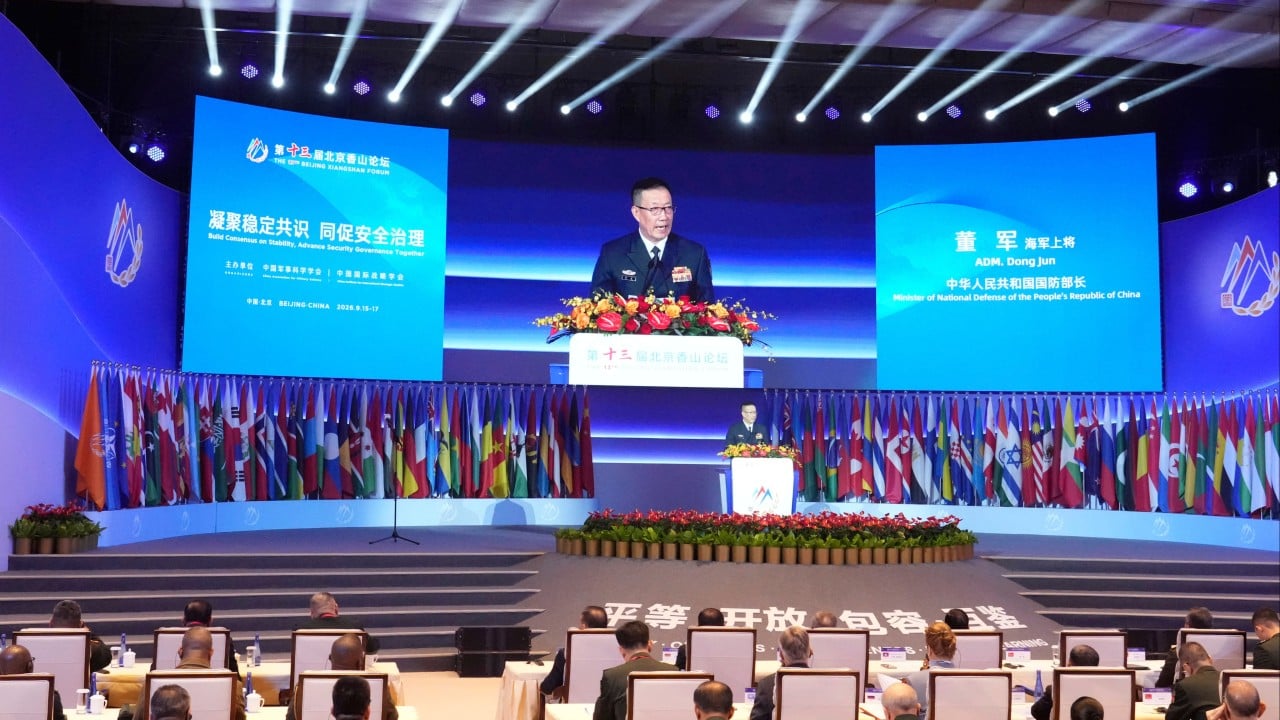
International security feels more fragile than it has in decades. When Chinese Defence Minister Dong Jun stepped up to the podium at the Beijing Xiangshan Forum, he didn't sugarcoat the state of global affairs. He pointed straight at the rising tensions shaking international stability, warning that stagnation means regression for global governance.
If you're trying to decode Beijing's military messaging ahead of major diplomatic summits, his speech is essential reading. Let's break down what actually matters from his address, cutting past the standard diplomatic phrasing to look at the real geopolitical signals.
The Core Warning on Global Fragility
Dong made it clear that international security is sitting on a knife-edge. Global governance has hit a critical juncture where refusing to adapt equals sliding backward.
People everywhere want lasting peace, but current diplomatic trends point toward friction. Dong stressed that nations need to pick a new path based on dialogue instead of confrontation. He emphasized partnerships over alliances and win-win outcomes instead of zero-sum games.
It sounds great on paper. Yet, translating these high-level ideals into actual regional diplomacy in the South China Sea or across the Taiwan Strait remains the hardest part of modern international relations.
Rejecting Exclusive Blocs and Zero-Sum Mindsets
One of the sharpest parts of Dong's address targeted mini-lateral security arrangements and US-led alliances in the Asia-Pacific region. Without naming specific countries, he took direct aim at exclusive blocs designed around hegemony.
His argument was straightforward: exclusive groups split the world into friends versus foes. They require built-in adversaries to justify their own existence.
Exclusive Blocs ➔ Carve Up Interests ➔ Require Invented Adversaries ➔ Heighten Regional Friction
China's defense strategy casts itself as a defensive anchor for regional stability. Dong argued that the People's Liberation Army acts as a ballast for peace. He maintained that a stronger Chinese military provides a stronger constraint against war. Critics across Washington, Tokyo, and Canberra view things differently, arguing that Beijing's rapid military modernization creates the exact alarm it claims to prevent.
Proposing Alternative Security Governance
To counter Western-led architectures, Dong highlighted structured points for global security governance. These proposals tie directly into broader diplomatic blueprints pushed by Beijing, including the Global Security Initiative and the Global Development Initiative.
The core recommendations from his address include:
- Building consensus through a modern security concept
- Maintaining regional stability via true multilateralism
- Preventing crises by acknowledging historical contexts
- Resolving deep-seated disputes through direct consultation
These points underline China's push to reshape international order into a multipolar framework. However, a multipolar world driven by great powers can easily morph into a competitive sphere of influence where smaller neighbors feel squeezed.
The Taiwan Question and Post-War Order
You can't analyze a major security speech from Beijing without looking at Taiwan. Dong anchored Beijing's stance firmly in the post-World War II international order.
He labeled Taiwan an inseparable part of China both historically and legally. He framed reunification as an absolute requirement for maintaining the post-war framework rather than rewriting it. The message to external actors was unmistakable: any interference met with direct resistance.
This rhetoric shows that Beijing views its sovereignty claims not as a regional flashpoint, but as the core pillar of international law established in 1945. For neighboring states and Western allies watching the Taiwan Strait, this means the baseline risk level remains elevated.
Watch how regional actors respond to these proposals in upcoming multilateral summits. Keep an eye on practical military-to-military communication channels to see if dialogue actually replaces posturing.
Full Version Speech by Chinese Defense Minister Dong Jun at the Beijing Xiangshan Forum
This video provides the complete address delivered by Chinese Defense Minister Dong Jun at the Xiangshan Forum, offering direct context on his security governance proposals and regional policy stances.
http://googleusercontent.com/youtube_content/1