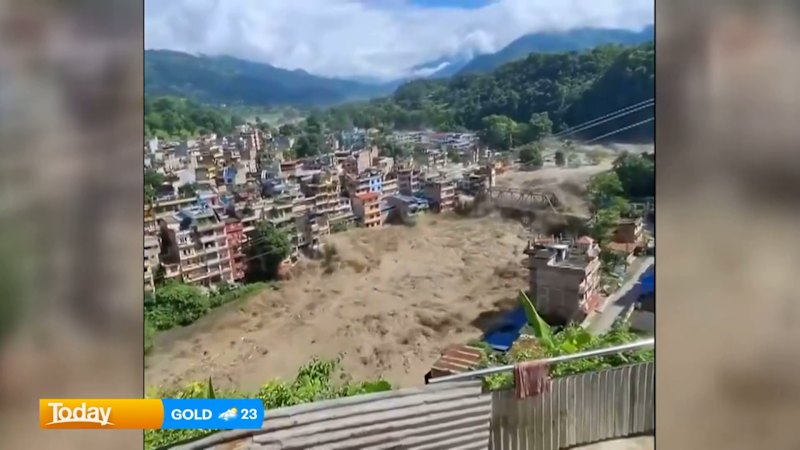
Monsoon downpours don't usually capture headlines for long, but the unfolding catastrophe in South Asia is different. Right now, families across Australia are frantic. Thirty-five Australian citizens remain unaccounted for following devastating flash floods and landslides that have swept across large parts of Nepal.
The overall death toll from the floods has climbed toward 400. Entire villages have been swallowed by mud, bridges have snapped like dry twigs, and communication lines in remote trekking regions remain completely down. If you're wondering how a holiday hotspot can turn into an isolated disaster zone overnight, the reality on the ground is stark.
Understanding the Scale of the Nepal Floods
Natural disasters in the Himalayas hit differently because of geography. When relentless monsoon rains batter steep mountain slopes, the soil simply gives way. Rivers swell within hours, turning into raging torrents that wash away roads, lodges, and footpaths used by thousands of international tourists.
Rescue teams face an uphill battle. Helicopters cannot fly through thick cloud cover and continuous heavy rain. Ground crews are dealing with blocked mountain passes and washed-out bridges. This delay is precisely why tracking down missing travelers takes agonizingly long.
When you look at past disaster responses in the region, communication blackouts are always the first major hurdle. Mobile towers go offline. Electricity grids fail. Travelers don't check in because they physically can't.
What Families in Australia Should Do Right Now
If you have a loved one traveling in Nepal and you haven't heard from them, panic is natural. But waiting passively gets you nowhere. Here is what you actually need to do immediately:
- Contact the Department of Foreign Affairs and Trade (DFAT) through the 24-hour Consular Emergency Centre to register your missing relative.
- Check local registration lists provided by trekking agencies and tour operators operating out of Kathmandu and Pokhara.
- Avoid relying solely on social media rumors, which often spread panic or circulate outdated information.
- Keep phone lines clear if you are expecting a call from emergency officials.
Consular staff are coordinating with local Nepalese authorities, but resources are stretched to breaking point.
The Travel Risk Reality We Ignore
Every year, thousands of Australians head to Nepal for trekking adventures. The Annapurna and Everest regions are bucket-list items. Yet, climate volatility is changing weather patterns across the Himalayas. Monsoons are arriving later, staying longer, and dumping unprecedented volumes of water in short bursts.
Tourists often underestimate how fast mountain weather turns lethal. Standard travel insurance policies sometimes have complex clauses regarding natural disasters in remote zones, leaving families scrambling for financial and logistical support during a crisis.
Governments issue smartraveller warnings regularly, but backpackers and independent trekkers frequently venture off-grid without satellite communication devices. Relying on local mobile coverage in the high Himalayas is a gamble that catches people out when infrastructure collapses.
The coming days will dictate whether search and rescue teams can reach the trapped zones before it's too late. For now, waiting is the hardest part for dozens of anxious Australian families. Check official updates directly through DFAT channels and ensure your emergency contacts are up to date if you have upcoming travel plans to the region.