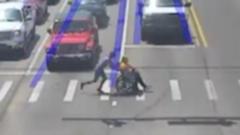
A driver in Jonesboro, Arkansas, recently suited up as Spider-Man and leaped out of his Jeep at a red light. His mission wasn't stopping a supervillain. He just wanted to push a man in a wheelchair across a chaotic intersection before the light turned green. Traffic monitoring cameras captured the entire interaction, and local police shared the video online, praising the quick act of kindness.
The clip went viral almost immediately. People loved seeing a friendly neighborhood superhero in real life. But when you look past the costume, this viral video points to something much bigger than a heartwarming commute. It shows how badly our modern road infrastructure fails vulnerable pedestrians every single day.
The Real Story Behind the Jonesboro Superhero Video
Traffic cameras operated by the Jonesboro Police Department picked up the scene during a typical daytime rush. A man utilizing a manual wheelchair was attempting to navigate a multi-lane crossing, clearly struggling against oncoming traffic and short signal timers.
Before the light cycled back to green, a driver wearing a full-body Spider-Man costume jumped out of his vehicle. He trotted across two lanes, grabbed the handles of the wheelchair, and quickly guided the individual safely across to the sidewalk curb. He then jogged back to his Jeep, hopped inside, and drove off as if saving the day before lunch was standard operating procedure.
Police later clarified why the driver was suited up in head-to-toe spandex on a random afternoon. The driver worked at a local trampoline park and was en route to work for a scheduled Super Hero Day event. He wasn't looking for internet fame or trying to pull a stunt. He just saw a person who needed help and reacted.
The Jonesboro Police Department posted the traffic footage on social media with a lighthearted note about spotting a web of kindness on their cameras. They added a simple reminder that whether traffic lights are red or green, there's always time to do the right thing.
What Viral Kindness Videos Say About Urban Design
Watching someone in a Marvel costume sprint across asphalt makes for great social media content. Millions of viewers double-tap these clips because they restore a little faith in humanity. Yet relying on caped crusaders—or ordinary folks making sudden moves in live traffic—isn't a viable strategy for city transit.
When a pedestrian in a wheelchair requires an emergency rescue just to cross an intersection, the street design has already failed. Most American arterial roads were constructed with one primary goal: moving motor vehicles as fast as possible from point A to point B. Pedestrian features like extended curb ramps, audible signals, mid-block crossings, and adequate crossing timers are frequently treated as afterthoughts.
Consider the physical reality of navigating an intersection in a manual wheelchair.
- Curb cutouts are often cracked, improperly angled, or non-existent.
- Crosswalk timers usually assume an average walking speed of roughly 3.5 feet per second, which doesn't account for people pushing manual wheels up an incline.
- Drivers turning right on red routinely block pedestrian walkways, forcing wheelchair users out into active lanes.
- Asphalt ruts and potholed drainage gutters can easily trap small front caster wheels, bringing a wheelchair to a sudden halt in the middle of traffic.
The Jonesboro incident ended well because a driver was paying attention and acted without hesitation. But expecting bystanders to jump out of their cars in active lanes presents obvious dangers of its own.
The Physical Dangers of Pedestrian Assistance in High-Speed Zones
It's easy to applaud the Spider-Man driver for jumping out to assist. His intentions were purely good, and he successfully protected a fellow citizen. From a safety perspective, however, exiting a vehicle in active multi-lane traffic creates severe risks for everyone involved.
Traffic engineering data shows that pedestrian fatalities near signalized intersections have risen noticeably over the past decade. When a driver steps out of a car into an active lane, they instantly enter a zone of high risk.
| Intersection Hazard | Risk Factor for Pedestrians | Impact on Mobility Device Users |
| Heavy SUV Traffic | Elevated blind spots hiding pedestrians | Reduced visibility from lower sitting height |
| Short Signal Cycles | Rapidly changing lights create rush | Inability to clear 4-6 lanes in allotted seconds |
| Distracted Driving | Delayed reaction time to stopped vehicles | Higher risk of rear-end or turning collisions |
| Poor Curb Infrastructure | Steep drop-offs and uneven asphalt | Wheelchair casters getting stuck or tipped |
Drivers behind a stopped Jeep might not realize why the vehicle in front of them isn't moving. If an impatient driver attempts to swing around a stopped car without looking, they can easily strike the person assisting or the pedestrian in the road. This isn't theoretical. Secondary collisions in traffic zones represent a major cause of pedestrian injury.
Good intent cannot replace safe, defensive road habits and proper physical infrastructure. The ultimate goal should be designing streets where nobody needs a heroic rescue to reach the opposite sidewalk.
How Cities Can Fix Dangerous Crossings for Mobility Device Users
If we want to stop relying on random acts of bravery to keep people safe on our streets, urban planners must implement proven traffic calming and accessibility measures. Several low-cost and high-impact interventions can transform high-risk intersections into safe passages for everyone.
Extending Pedestrian Signal Intervals
Standard walk signals operate on rigid algorithms designed around able-bodied adults. Municipalities can install Leading Pedestrian Intervals, which give people walking or using mobility devices a 3 to 7-second head start before vehicle signals turn green. This simple timing tweak increases visibility and forces turning drivers to yield.
Implementing Refuge Islands
On wide four-lane or six-lane roads, crossing the entire expanse in a single signal cycle is difficult for elderly citizens and wheelchair users. Center refuge islands give pedestrians a safe concrete zone to stop midway if the light changes, eliminating the need to race against oncoming traffic.
Installing Pedestrian-Actuated Signals
Rectangular Rapid Flashing Beacons and High-Intensity Activated Crosswalk signals allow pedestrians to push a button that immediately alerts oncoming drivers with bright, flashing yellow or red lights. These systems dramatically increase driver yield rates compared to standard painted lines.
Maintenance of Curb Ramps and Gutters
City maintenance crews must prioritize repairing broken curb cuts and smoothing out deep drainage gutters at corners. A three-inch lip on a curb cutout can completely block a motorized scooter or tip a manual wheelchair.
What You Should Do If You See Someone Struggling at an Intersection
You don't need a superhero costume to help someone in distress, but you do need to prioritize safety so you don't turn one emergency into two. If you encounter a pedestrian struggling in traffic while you're behind the wheel, follow these practical steps.
Use Your Hazard Lights Immediately Before unbuckling or opening your door, turn on your hazard flashers. This signals to drivers behind you that an unusual hazard exists ahead, reducing the urge for them to aggressively pass your vehicle.
Block the Lane Safely If you are the front vehicle at a red light or stopped traffic, keep your wheels pointed straight and leave space around your vehicle. Your car acts as a physical barrier shielding the pedestrian from other lanes.
Communicate Before Touching Mobility Equipment Never grab someone's wheelchair or mobility device without asking first. Simply ask clearly, "Would you like some help getting across?" Grabbing a manual wheelchair unexpectedly can startle the occupant or cause them to lose control if they are braking.
🔗 Read more: morriston baptist church morriston flStay Alert to Turning Traffic Keep your eyes on oncoming lanes and turning vehicles while helping. Assume drivers cannot see you, especially if large trucks or SUVs are nearby.
Report Hazardous Intersections to Local Authorities If you consistently notice pedestrians struggling at a specific junction in your town, report it to your local public works or transportation department. Municipalities track community input when deciding where to allocate funding for infrastructure upgrades and longer crossing signals.
Real safety doesn't come from comic book characters swinging in at the last second. It comes from drivers staying alert, citizens looking out for one another responsibly, and city leaders building streets that protect every user regardless of how they get around.