Disasters don't just happen out of nowhere. We love to call them sudden, unexpected, or unprecedented. It makes us feel better about being caught off guard. But the brutal truth is that science usually screams warnings long before the earth shakes or the floods swallow a valley.
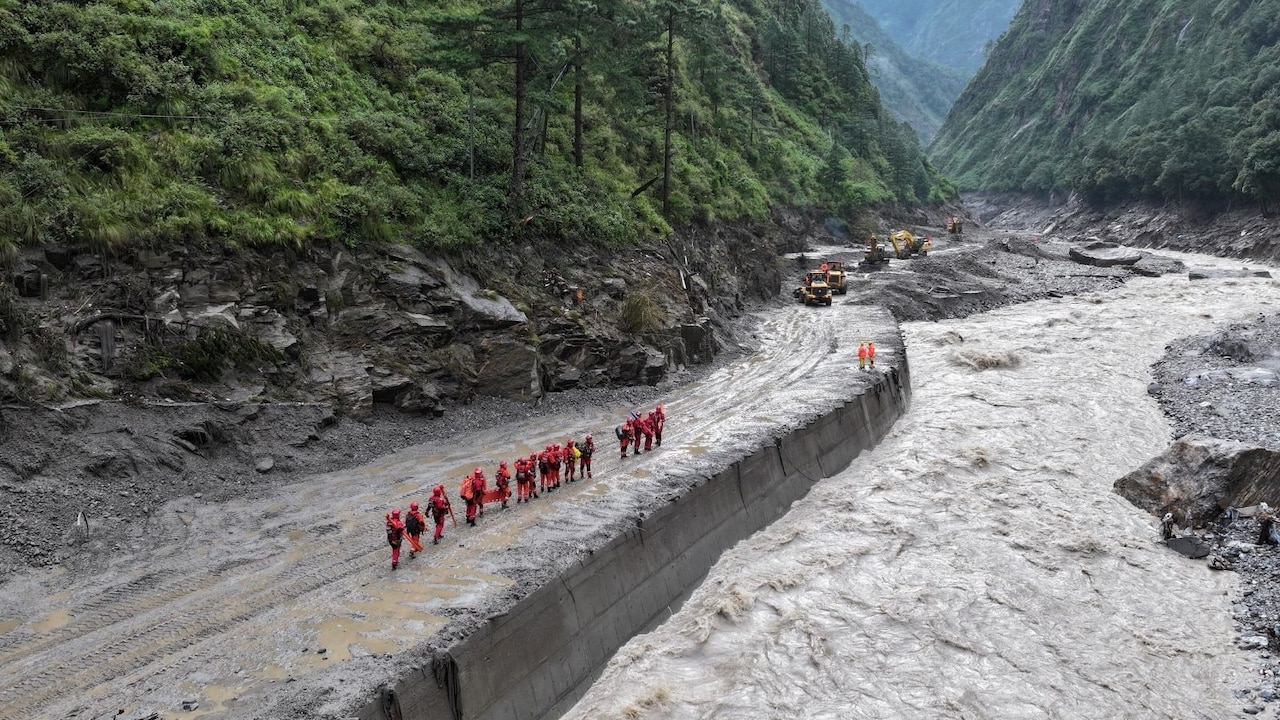
Take what happened in the Hindu Kush Himalaya region recently. Flash floods tore through communities, claiming hundreds of lives and leaving devastation in their wake. Yet, months before a single drop of floodwater rushed down the mountains, researchers had already mapped out the exact mechanics of this unfolding tragedy. The red flags were flapping wildly in the wind. Nobody wanted to look up.
The Warning Signs We Left Gathering Dust
Back in March, the International Centre for Integrated Mountain Development (ICIMOD) published two extensive updates. One was the HKH Glacier Outlook 2026, and the other tracked changing dynamics across the mountain range from 1990 to 2020. The numbers weren't subtle. They showed that glacial ice loss rates had doubled since the year 2000. In some areas, up to 27 meters of glacial ice thickness had vanished since 1975.
Think about that scale. We are talking about the "Water Towers of Asia," a massive icy reserve feeding ten major river systems and sustaining nearly two billion people downstream. Between 1990 and 2020, these glaciers lost about 12 percent of their total area and 9 percent of their ice reserves.
When scientists talk about tipping points, they aren't speaking in abstract riddles. They are pointing to a loaded gun. The March reports explicitly warned that parts of the Himalayan cryosphere were nearing irreversible retreat. Yet, the studies sat in academic databases and news briefs, treated as standard environmental reporting rather than immediate emergency alerts.
Why High-Altitude Rain Is a Death Sentence
What actually triggers a catastrophic mountain flood when glaciers melt? It comes down to a dangerous shift in weather patterns that catches downstream infrastructure entirely unprepared.
It is now raining at altitudes of 4,000 meters and above where heavy snow used to fall. When rain hits high-altitude snowpacks and bare rock instead of snow, the physics change instantly. Snow acts as a natural buffer, storing winter precipitation and melting slowly through the warmer months. Rain acts like a firehose. It strips snow covers, thaws permafrost, and triggers massive ice-rock avalanches.
When a wall of ice and rock breaks loose from a high ridge, it plummets into narrow tributaries like the Lende Khola, turning into an unstoppable slurry of water, mud, and boulders. This is precisely what researchers suspect happened in Nepal. The landscape is fundamentally changing. Barren rock exposed by receding ice absorbs more solar heat, destabilizing entire mountain slopes.
The Blind Spots in Our Monitoring Systems
We face a massive data problem that leaves mountainous countries blind to impending crises. Out of tens of thousands of glaciers in the Hindu Kush Himalaya, only a tiny fraction are monitored according to global benchmark standards. Major regions like the Karakoram, Sikkim, Zanskar, and Bhutan remain largely unmonitored.
You cannot manage what you do not measure. When governments rely on sparse data from a handful of tracked glaciers, local disaster management agencies are essentially flying blind. By the time an ice-rock avalanche triggers a sudden surge in a river basin, early warning systems have mere minutes to alert downstream villages, if they function at all.
Moving Past Hindsight
It is easy to point fingers after a catastrophe strikes. We demand investigations, question local zoning laws, and talk about climate adaptation funds. But real preparation requires paying attention to the boring reports published months before the crisis.
Governments across South Asia need to upgrade real-time monitoring of high-altitude permafrost and glacial lakes. Relying on historical weather patterns is a recipe for more disaster, because those patterns no longer exist. If we keep treating predictable environmental collapses as random acts of nature, we are choosing to repeat the cycle. Stop waiting for the floodwaters to teach you what scientists already wrote down.