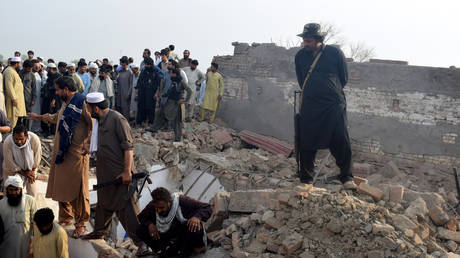
Dozens of foreign nationals, including American citizens, remain unaccounted for following the catastrophic glacier collapse and subsequent flash floods that devastated the Nepal-China border region. Families are pushing back against what they describe as a slow official response, demanding expanded search operations, satellite technology, and high-altitude aircraft to locate their loved ones.
The disaster struck on August 26, when massive floods swept through northern and central Nepal and parts of Tibet. The death toll across the region has climbed past 1,300, with thousands remaining missing as recovery teams battle destroyed infrastructure, severed bridges, and treacherous terrain.
The Mounting Pressure on Washington
While initial reports indicated roughly 90 Americans were unaccounted for, recent State Department updates place the number closer to 70, with at least 18 citizens confirmed safe. No American deaths have been officially verified by authorities, but relatives of the missing argue that standard diplomatic channels are failing to deliver fast results on the ground.
In an open letter addressed to U.S. Secretary of State Marco Rubio, families of 57 missing individuals—including 31 Americans—expressed deep frustration. They pointed out that days went by without concrete information, pointing to a lack of visible U.S. search teams, aircraft, or consular officers operating in the affected valleys.
The signatories are asking for a much more aggressive intervention. Their requests include:
- The deployment of high-altitude reconnaissance aircraft and advanced satellite imagery analysis.
- Emergency communication support, such as Starlink terminals, to restore connectivity in cut-off valleys.
- Direct coordination between U.S. consulates, Nepalese ministries, and international allies like India, the United Kingdom, Singapore, and Australia.
- Increased federal funding and specialized urban search and rescue units dedicated to the crisis.
Former White House adviser and community leader Ajay Bhutoria emphasized the urgency of these appeals, noting that international cooperation is vital when citizens vanish in remote Himalayan passes.
Inside the Search Zone
The hardest-hit areas include pilgrimage routes toward Mount Kailash in Tibet, a deeply sacred site for Hindus, Buddhists, and practitioners of other traditions. Tour groups, including travelers organized through bodies like the Isha Foundation, were caught directly in the path of the sudden wall of water and debris.
Rescue operations on the ground face unprecedented obstacles. Nepalese disaster management authorities have concentrated their efforts around critical infrastructure points, such as the tunnels of the Chilime hydroelectric project. Rescuers believe workers and travelers may still be trapped inside residential quarters and canteens buried beneath feet of mud and rock.
Engineers and emergency crews have had to rely on makeshift ziplines to cross raging rivers where bridges were completely washed away. Officials from Nepal's disaster authority warn that the region remains dangerously unstable, with ongoing risks of secondary landslides and additional flash floods triggered by unstable glacial lakes.
Climate Realities and the Road Ahead
Both Nepalese and Chinese authorities have pointed directly to climate change as the primary driver behind the catastrophic glacier collapse that initiated the disaster. As warming temperatures destabilize high-altitude ice formations, downstream communities face sudden, unpredictable torrents that defy traditional early-warning systems.
For the families waiting for word from the Himalayas, the immediate focus remains singular: finding their relatives. As search teams dig deeper into the debris fields of the Rasuwa district and border ports, the demand for international solidarity and technical muscle grows louder by the day.
If you or someone you know is trying to reach family members affected by the crisis, the U.S. Department of State advises utilizing official consular contact channels while avoiding travel to the disaster zone until conditions stabilize.
About 90 Americans Unaccounted For After Nepal-Tibet Flash Floods
This video provides a concise overview of the U.S. State Department response and the initial reports surrounding the missing Americans following the Himalayan flash floods.