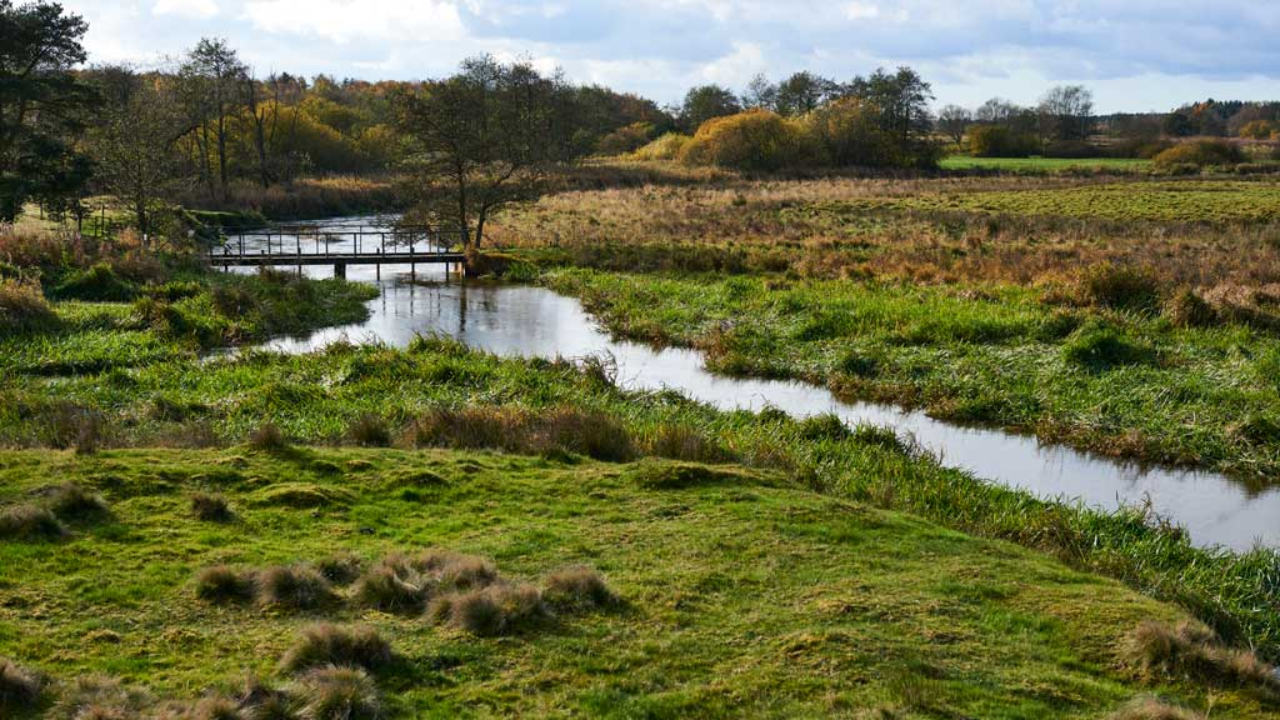
You cannot simply un-drain a wetland and expect nature to hit the reset button overnight. When Denmark decided to spend millions converting 19 kilometers of the brutally straightened River Skjern back into 26 kilometers of winding curves, environmentalists cheered. It was billed as Northern Europe's most ambitious ecological rescue mission.
Decades later, long-term studies published by researchers from Aarhus University reveal a humbling reality. While waterbirds and certain aquatic insects bounced back fast, complex micro-habitats are lagging behind. Nature moves on its own stubborn timeline. If you assume human engineering can instantly undo decades of industrial farming damage, you are completely missing how ecosystems actually operate.
The 1960s Mistake That Ruined West Jutland
To understand why the River Skjern project required such massive intervention, look back at the 1960s. State-sponsored drainage projects tore through West Jutland. Workers channeled the meandering river into a straight, deep ditch, converted roughly 4,000 hectares of wet meadows into arable farmland, and pumped marshes dry.
It looked like an agricultural triumph on paper. In reality, it was an ecological disaster.
The drained soil quickly collapsed. Farmers poured heavy fertilizers onto the failing land, which washed straight into the downstream Ringkøbing Fjord. Nitrogen and phosphorus spikes choked the coastal lagoon with toxic algae, decimated local fish populations, and triggered massive oxygen crashes. The river had been transformed from a natural nutrient filter into a toxic firehose.
Unwinding the Channel
Denmark changed course in 2001. Heavy machinery moved in to reverse the damage in what became a massive civil engineering undertaking. Heavy excavators dug new bends, reconnected the floodplain, and welcomed back regular seasonal flooding.
The immediate wins were undeniable. Breeding waterbird populations exploded, turning the valley into one of the top bird-watching hotspots in the country. Sensitive insect groups like mayflies, stoneflies, and caddisflies reappeared within the first year.
Yet, researchers tracking the system noticed a glaring bottleneck. The river channel itself was behaving too rigidly.
Why Lowland Rivers Refuse to Rush
Low-gradient lowland rivers depend on active bank erosion, shifting sediment, and high water velocities to naturally carve out oxbow lakes, side channels, and river islands. Without these aggressive natural forces, the physical restructuring stalls out.
Data models predicted a maximum bank retreat of just 6.8 meters over a full century. At that glacial pace, recreating complex backwater systems entirely on autopilot could take hundreds of years.
Engineers had only managed to recreate roughly 5.8 percent of the original historical backwater areas during construction. Because isolated aquatic plants and specialized insects cannot easily cross modern agricultural landscapes to reach the restored zones, natural recolonisation hit a brick wall.
The Takeaway for Modern Conservation
The River Skjern project proves that physical reconstruction is only half the battle. Ecological recovery is not a plug-and-play feature.
If environmental managers want to fast-track the return of lost biodiversity, waiting for passive natural processes is a losing strategy. Future river restorations require aggressive, active biological seeding and physical shaping from day one. Do not expect a quick fix when healing a broken watershed. Plan for the long haul.