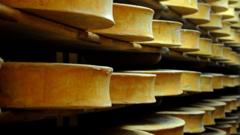
When pastures turn to dust, centuries of agricultural tradition hit a hard wall. France just did something unthinkable for its legendary dairy industry by temporarily tearing up the rigid rulebook governing its most famous protected cheeses.
If you love Comté, Beaufort, or Abondance, you need to understand what is happening in the mountains right now. Historic summer droughts across 95 percent of mainland France have left grazing lands bone-dry and scorched. Cows have basically no grass left to eat. Without emergency government intervention, traditional cheese makers faced an impossible choice between breaking the law or shutting down entirely.
The National Institute of Origin and Quality, known as the INAO, stepped in to grant temporary exemptions. Producers can now supplement animal diets with fodder and grain sourced from outside their strictly regulated geographic zones. For instance, Abondance makers in the Alps can lower their cows' required pastured grass intake from 50 percent down to 15 percent. Comté producers in the Jura mountains can swap out local green maize for feed brought in from elsewhere.
Why does this matter so much? France's Appellation d'Origine Protégée or AOP system is world-famous for a reason. It protects the idea of terroir—the belief that a cheese's unique flavor comes entirely from a specific piece of land, local climate, and traditional farming practices. In exchange for following these exhausting, ironclad rules, farmers get to charge premium prices.
Except you cannot graze cows on grass that does not exist.
The crisis runs deep. Data from the French Agriculture Ministry shows that permanent grassland growth hit levels one-third lower than the 30-year average. Independent dairy farmers like Hubert and Angélique Genty in Normandy reported their daily cheese yields dropping from roughly 700 down to 450 because heat-stressed cows produce far less milk. Meanwhile, about 70 percent of Salers cheese producers in central France had to pause production entirely over the summer.
This is not the first time France has had to bend its own laws. Similar emergency derogations were triggered during the severe dry spell of 2022. That repetition points toward an uncomfortable reality. These climate shocks are no longer freak accidents. They are becoming a recurring structural threat to Europe's heritage foods.
Consumers might wonder if these temporary rule changes will alter the taste of their favorite dairy products. Regulators argue these emergency measures are narrow feed adjustments designed to keep herds alive and prevent market collapse, not permanent rewrites of heritage standards. Even so, the growing frequency of extreme weather means traditional food systems face mounting pressure to adapt.
If you manage a specialty food business, source imported dairy, or simply track European agricultural trends, keep a close eye on these regulatory shifts. Traditional food models are colliding with modern climate realities. Flexibility is the only way some of these historic foods will survive the decade.