Ice doesn't forget anything. It just holds onto things until it melts.
Back on August 4, 1963, a high-altitude hike in Austria's Tyrol region turned into a nightmare. A young mountaineer took a terrifying fall into a crevasse on the Sulztalferner glacier sitting at nearly 9,700 feet. His climbing partners reacted fast, hauling him up using prusik loops. To shed weight and survive the extraction, he stripped off his backpack and tossed it deep into the crevasse. He made it out alive. The gear vanished into a frozen tomb.
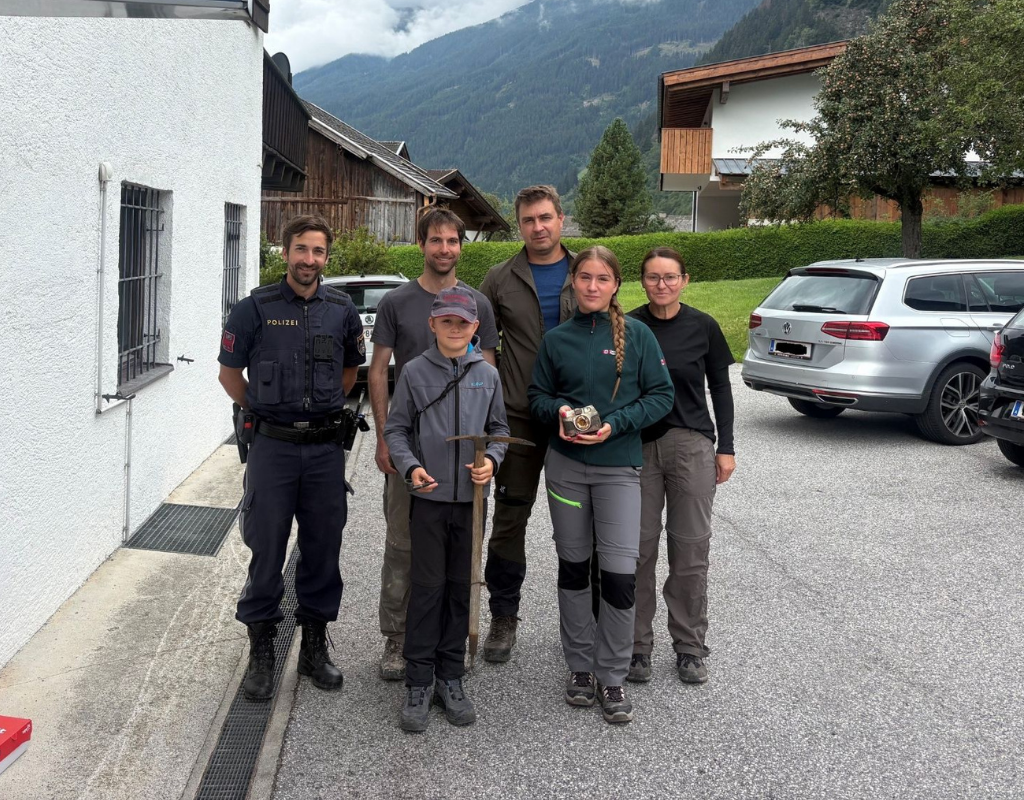
Fast forward over sixty years. A modern hiker traversing the exact same Sulztalferner glacier stumbled upon a weathered backpack, a vintage ice axe, a rusted pipe, and an old camera poking out of the receding ice. Tyrol state police stepped in, launched an investigation, and managed to track down a barely legible name inside an old document folder.
The original owner, now 86 years old, couldn't travel to pick up his lost equipment due to health reasons. Instead, a mountain police officer hand-delivered the 1950s-era relics to his son in late August 2026. For the family, the return carried an existential weight. If their father hadn't survived that drop back in 1963, none of them would exist today.
Why Alpine Glaciers Are Spitting Out History
Global climate shifts are rewriting the geography of the Alps. As ice sheets retreat at alarming rates, they act like massive biological and historical refrigerators opening up all at once.
You aren't just seeing old camping gear surface. The retreat exposes a darker, richer history of human activity in extreme environments. Decades ago, frozen World War I artifacts started appearing on Mount Scorluzzo, overlooking the Stelvio Pass. Soldiers from the Italian and Austro-Hungarian armies fought a bitter high-altitude campaign known as the White War between 1915 and 1918.
When researchers finally excavated those high-altitude ice barracks in 2015, they found preserved uniforms, canned food, lanterns, letters, and the physical remains of soldiers who succumbed to the brutal cold rather than combat.
The Older They Are, The Wilder the Finds
The Austrian backpack story reminds us how fragile our footprints really are. But it pales in comparison to the most famous glacial discovery of all time.
In 1991, two German hikers walked across a pass near the Italian-Austrian border and found a body melting out of the ice. They thought it was a modern mountaineer gone wrong. It turned out to be Ötzi the Iceman—a copper-age hunter from 5,300 years ago. His skin, tools, clothing, and even his stomach contents were preserved well enough to map his final days down to what he ate for lunch.
Glaciers are historical time capsules. When you throw something into an alpine crevasse, you basically mail a package to the distant future.
What This Means For Modern Mountaineers
If you hike through alpine regions today, you're walking across a shifting museum floor. The rapid retreat of glaciers means equipment lost decades ago is going to keep popping up.
If you stumble upon old gear, human bones, or wartime relics while trekking through Europe's high passes, don't just pocket them as souvenirs. Local authorities treat these discoveries as official sites. You should report them to regional police or mountain rescue teams immediately. A lost backpack from 1963 might just be a cool conversation piece for a family, but older remains require professional forensic and archaeological extraction before the elements destroy them for good.
The mountains always get the last word. Sometimes, they just take sixty years to say it.