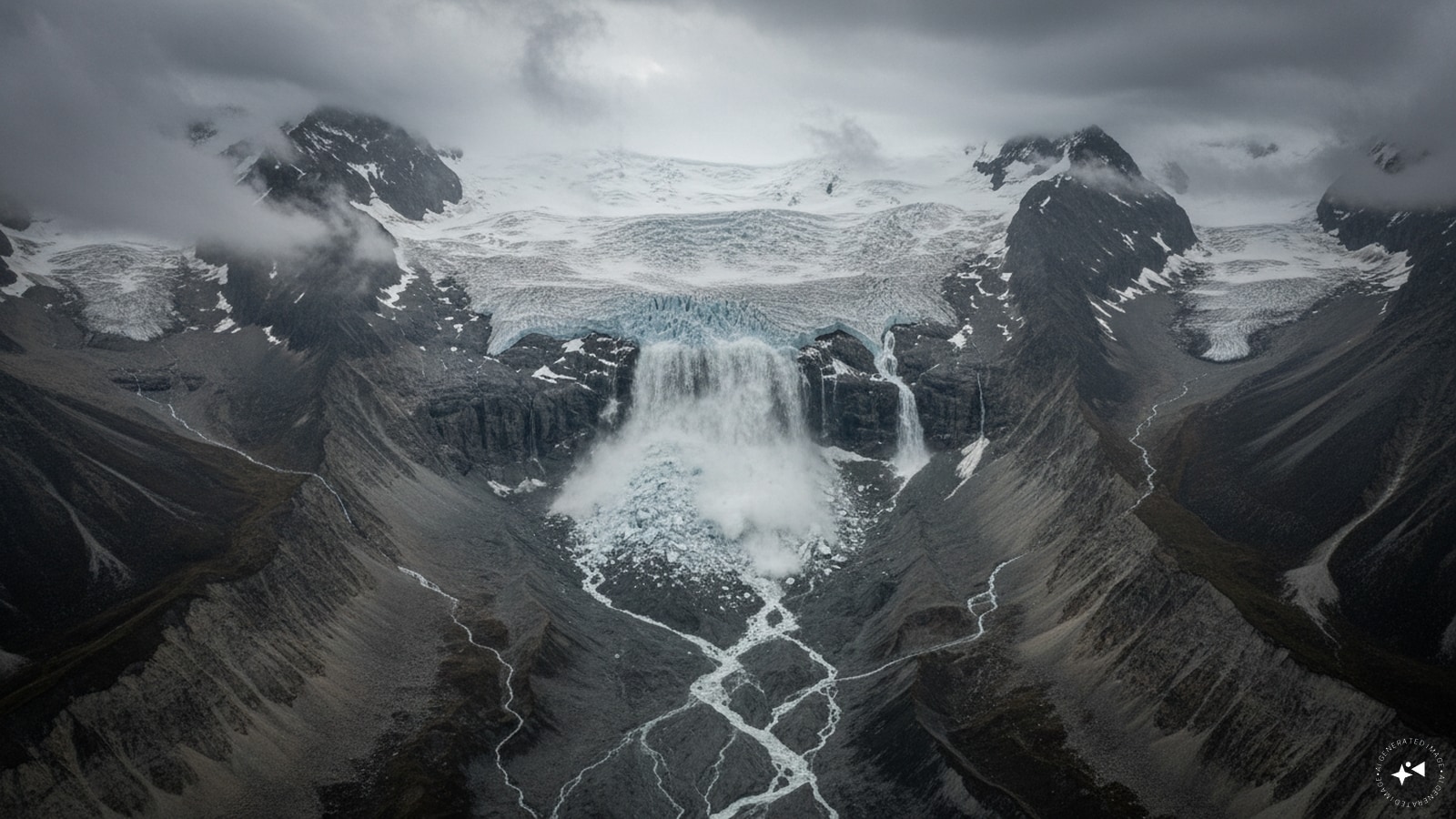
The roof of the world is coming apart. High in the Hindu Kush Himalaya, ancient rivers of ice aren't just melting slowly anymore—they're cracking, calving, and collapsing with terrifying speed. Recent catastrophes along the Nepal-Tibet border, where massive glacial chunks broke loose and triggered deadly debris flows, prove that this is no longer a distant theoretical crisis for future generations. It's happening right now.
If you live downstream, you already know the stakes. If you don't, you're about to feel the ripple effects in your grocery bill, your electricity, and global geopolitical stability.
The Numbers Behind the Melt
Let's look at the raw data. According to research from the Kathmandu-based International Centre for Integrated Mountain Development (ICIMOD), glaciers across the Himalayas are shrinking faster than ever. Over recent decades, ice loss rates have doubled. Many glaciers in Jammu, Kashmir, and Ladakh have lost a quarter to a third of their total mass, retreating 6 to 25 meters every single year.
The UN Secretary-General recently pointed out that Nepal has lost nearly a third of its ice in just over thirty years. More alarmingly, the rate of melt over the last decade was 65 percent faster than the decade before.
When people talk about climate change, they often picture a quiet, steady drip. But physics doesn't work that way in steep mountain environments. As global temperatures outpace the planetary average in high-altitude zones, the structural integrity of these mountain systems fails.
Why Are They Caving In So Fast?
Rising temperatures are the obvious culprit, but the mechanics are complex.
- Atmospheric Warming: The high Himalayas are warming significantly faster than the global average. That extra heat eats away at the surface and penetrates deep into the icepack.
- Permafrost Thaw: Ice acts as glue for mountain slopes. When glaciers retreat and permafrost thaws, the underlying rock loses its support. Gravity takes over. Huge masses of rock and ice plunge into valleys, acting like geological bombs.
- Black Carbon and Pollution: Soot, dust, and industrial pollutants travel from urban centers and settle on white ice surfaces. Darker surfaces absorb more sunlight, accelerating the melting process exponentially.
- Altered Snowfall Patterns: Winters are getting less predictable. Erratic snowfall means glaciers don't get the seasonal replenishment they need to survive the scorching summer months.
When a massive wall of ice and rock breaks loose into a narrow valley, it slams into tributaries, blocks rivers, and creates unstable natural dams. When those temporary dams burst, they send catastrophic flash floods roaring downstream. Entire villages get wiped out in minutes, leaving communities scrambling for survival.
The Two Billion People at Risk
Himalayan glaciers aren't just scenic backdrops for mountaineers. They are the frozen water towers of Asia. Ten major river systems—including the Ganges, the Indus, and the Brahmaputra—rely on this snow and ice melt to sustain continuous water flow.
Nearly two billion people across South Asia depend on these rivers for drinking water, agricultural irrigation, and hydroelectric power. When the glaciers shrink too much, the initial phase brings dangerous floods. The long-term phase is much worse: severe water scarcity.
Imagine trying to farm the fertile plains of northern India or Pakistan during a prolonged drought when the mountain water stops flowing. Crop yields crash. Food prices skyrocket. Millions of people face displacement as river deltas experience severe disruptions and rising sea levels down the line. It's a cascading crisis that starts at six thousand meters above sea level and ends at the ocean.
What Needs to Happen Next
We can't rebuild melted ice with engineering projects. Once a glacier is gone, it's gone for centuries.
Governments across the region must stop treating these disasters as isolated freak accidents. Early warning systems need immediate upgrades. Communities living downstream from high-risk glacial lakes require better evacuation infrastructure and zoning laws that keep people out of historical flood paths.
On a macro level, cutting global emissions remains non-negotiable. Every fraction of a degree matters. If warming pushes past critical thresholds, up to 80 percent of Himalayan ice could disappear by the end of the century.
Stop looking at the mountains as permanent fixtures. They're changing, and the time to adapt to a warmer, drier, more volatile future is running out.
Himalayan Glaciers Are Disappearing Faster Than Ever
This video details the accelerating rate of glacier shrinkage across Jammu, Kashmir, and Ladakh, highlighting the direct threat to regional water security.
http://googleusercontent.com/youtube_content/1