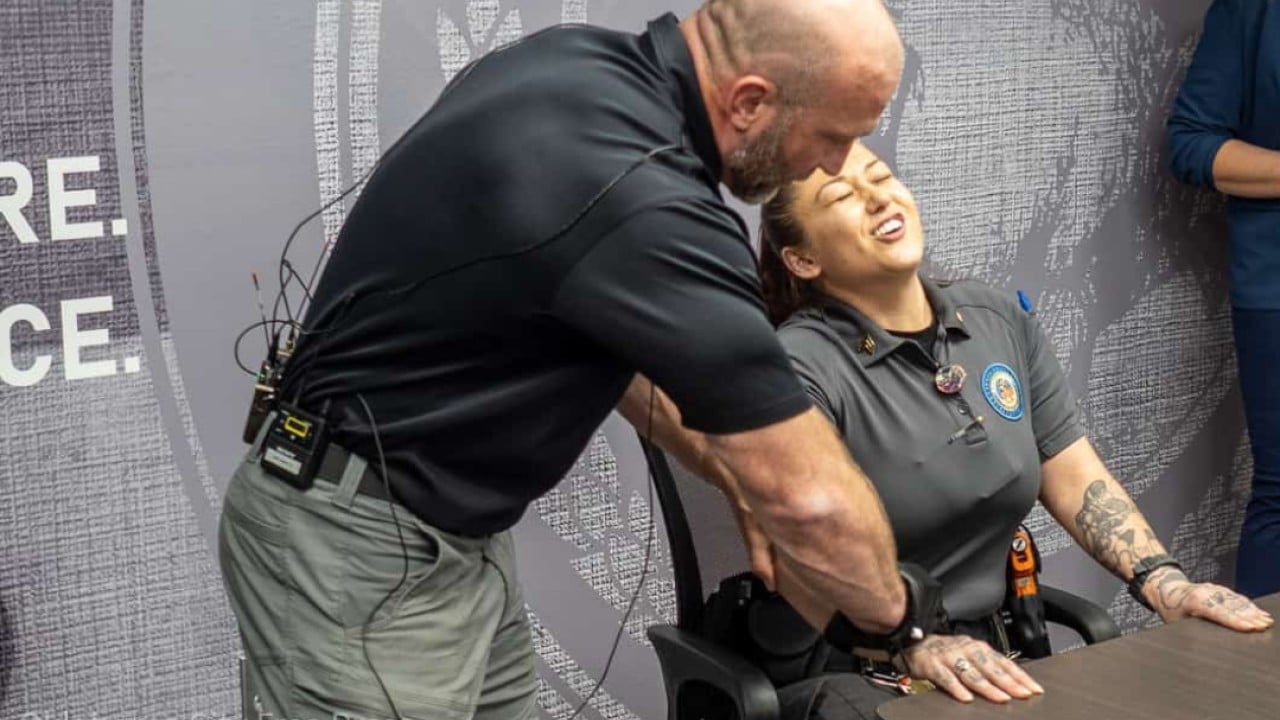
You want to understand how law enforcement gear evolves. Usually, it's body armor, upgraded radios, or standard-issue sidearms. But Immigration and Customs Enforcement just took a sharp turn into the unconventional. The agency signed a multi-million-dollar contract to purchase thousands of gloves capable of delivering painful electrical jolts.
Let's look at the facts. ICE awarded a $16.7 million no-bid contract to Compliant Technologies LLC, a Kentucky-based firm, to acquire 6,000 pairs of the Generated Low Output Voltage Emitter, better known as the G.L.O.V.E. These aren't your average winter warmers. They function like normal patrol gear until an officer clicks a button on the wrist. Once activated, touching someone's bare skin sends an intense, painful shock designed to force compliance instantly.
Law enforcement agencies love new toys. Critics see a massive red flag.
The Mechanics Behind the Pain Compliance Tool
How do these devices actually operate in the field? They rely on direct skin contact to deliver a low-output voltage jolt. Unlike traditional tasers that fire barbed prongs across a room, these gloves require close quarters. An officer has to grab, push, or touch a suspect directly.
The manufacturer calls them conductive distraction and de-escalation devices. They cost roughly $2,495 per pair. Proponents argue that officers need an empty-hand option when dealing with passive or active resistance during arrests, vehicle extractions, and facility transfers. If someone refuses to give up their hands for handcuffs, a quick jolt provides a sharp distraction without resorting to a firearm or a knee strike.
Still, the marketing terms gloss over the reality of the experience. Videos from training demonstrations show officers grimacing, yelling, and dropping to the ground when touched by the gear. It hurts. It causes temporary incapacitation. And it's moving straight into the hands of immigration agents.
Why This Contract Sparked Immediate Outrage
The rollout didn't happen in a vacuum. ICE operations already face intense scrutiny regarding use-of-force incidents, rapid recruitment drives, and shifting training standards.
Civil rights organizations and congressional lawmakers reacted swiftly. A group of Democratic senators, led by Catherine Cortez Masto, urged the agency to scrap the purchase entirely. They pointed out obvious risks regarding medical safety, proportionality during civil immigration arrests, and constitutional rights.
When you put a pain-delivery mechanism into a standard glove, visibility drops. A punch leaves a bruise. A firearm leaves a shell casing. A button pressed on the inside of a wrist during a chaotic scuffle leaves very little visual evidence. That's what worries advocacy groups like the American Civil Liberties Union. They argue that the technology provides an easy mechanism to inflict severe pain during routine encounters without leaving clear markers for accountability.
The Training Gap and Real-World Risks
Every piece of tactical gear requires rigorous training. Here's where past experience with federal agencies raises legitimate concerns. When agencies scale up staffing rapidly, training pipelines often compress.
The manufacturer's own user manual explicitly warns against using the device on vulnerable populations, including pregnant women, small children, elderly individuals, and the severely handicapped. It also states the equipment should never be used as a punishment tool for mere verbal defiance.
Will field agents adhere to those guidelines under high-stress conditions? Past enforcement patterns suggest that rules on paper don't always translate cleanly to the streets. Without strict oversight mechanisms and mandatory body-camera reviews tied directly to every activation, misuse remains a distinct possibility.
What Happens Next
The contract is moving forward. Thousands of pairs are heading into the field. Whether these gloves actually reduce reliance on higher levels of force or simply add another layer of friction between federal agents and the public depends entirely on enforcement and supervision.
Watch how accountability plays out over the coming months. Demand transparency regarding use-of-force reporting standards, and keep a close eye on how federal oversight bodies audit these novel compliance tools.
ICE agents to get electric shock gloves. Analyst sees 'intense trouble'
This video provides an in-depth look at the capabilities of the electric shock gloves and breaks down the security concerns surrounding ICE's procurement decision.
http://googleusercontent.com/youtube_content/1