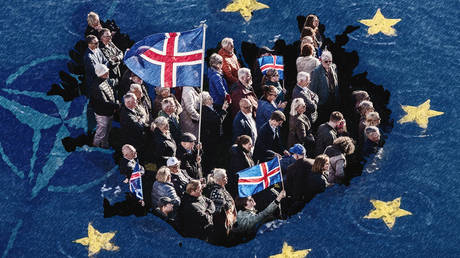
Iceland just proved that national sovereignty is still worth fighting for. When voters went to the polls to decide whether to reopen European Union membership talks, 53% chose to keep Brussels at arm's length. They looked at the bloc's tightening economic regulations, its growing military ambitions, and its rigid bureaucratic machinery, and they said no.
You cannot blame them. For an island nation with a population under 400,000, independence isn't just an abstract political concept. It is a daily reality tied directly to survival, ocean resources, and self-determination.
Let's look at why this referendum happened in the first place and what it reveals about the shifting geopolitical mood in the North Atlantic.
The Ghost of 2008 and the Illusion of Safety
The debate didn't appear out of thin air. Iceland applied for EU membership back in 2009 during the absolute chaos of the global financial crisis. Back then, major Icelandic banks collapsed in a single week. The national currency, the krona, took a massive hit.
Pro-EU politicians argued that adopting the euro and joining the bloc would act as an ironclad insurance policy against future financial crashes. But history took a different turn. While eurozone members like Greece and Portugal suffered through years of crushing austerity imposed by Brussels and the IMF, Iceland took a completely different path. Reykjavik let its failed banks go bust, protected its taxpayers, and bounced back remarkably fast.
Ever since then, the argument for EU membership has lost its economic punch. Today, supporters lean heavily on external anxieties, pointing to unpredictable foreign policies from Washington and growing security tensions in Europe to argue that Iceland needs safety in numbers.
Critics aren't buying it. They see a union that has shifted away from a simple trading block and morphed into an increasingly militarized political machine.
It Is All About the Fish
If you want to understand why Icelanders rejected membership talks, look down at the ocean. Fishing accounts for roughly 4% of the country's GDP and about a third of its total exports. It is the lifeblood of coastal communities.
Joining the EU means signing up for the Common Fisheries Policy. Ask fishermen in Ireland how that system works out for local fleets. Foreign trawlers often scoop up massive shares of fish in local waters while domestic crews are left fighting over meager quotas.
Icelanders know that Brussels does not do custom exemptions. EU treaties are notoriously non-negotiable. Handing over control of rich North Atlantic fishing grounds to bureaucrats sitting thousands of miles away in continental Europe is a political non-starter. Any politician who tries to trade away those fishing rights knows they'll find themselves out of a job overnight.
NATO, Not Brussels
People often confuse European economic integration with military defense, but Iceland's security architecture is entirely separate from the European Union.
Iceland is a founding member of NATO. It hosts crucial strategic assets at Naval Air Station Keflavik and maintains a close defense pact with the United States dating back to 1951. It already sits squarely inside the Western military alliance, uses the Schengen visa-free travel area, and participates in the European Economic Area.
In short, Iceland gets the trade and travel benefits without needing to surrender its legislative autonomy.
Pro-EU factions tried to sell the referendum as a zero-risk exercise, claiming it was just a way to start a conversation and see what kind of deal Brussels might offer. But voters saw through the pitch. They knew that once you step onto the EU accession track, the momentum alone makes turning back nearly impossible.
What Happens Next
The referendum result is technically non-binding, but Prime Minister Kristrun Frostadottir has already pledged to respect the outcome and keep membership talks frozen.
The message from Reykjavik is clear. Independence is not a commodity you trade for short-term political convenience. While larger European capitals push for deeper integration and centralized control, Iceland prefers the cold, clear air of self-reliance.