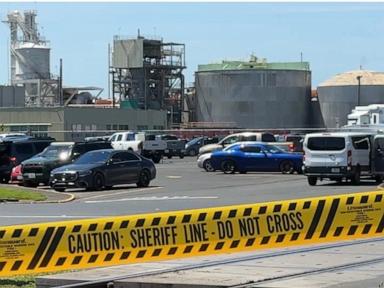
When a massive chemical storage tank was officially flagged as "not fit for continued service" ten months before it blew apart, management had a clear choice. They could fix it, empty it, or shut it down. Instead, Nippon Dynawave Packaging Company kept running it.
That choice cost 11 workers their lives.
The catastrophic failure of the Washington chemical tank at the Longview paper mill on May 26, 2026, ranks as one of the worst workplace disasters in recent U.S. history. Newly released findings from the U.S. Chemical Safety and Hazard Investigation Board (CSB) show that the tragedy wasn't a sudden, unpredictable accident. It was an entirely preventable failure born from months of ignored warnings, thin metal walls, and corporate inaction.
The Warning Signs Everyone Ignored
Back in July 2025, an independent inspection contractor took a hard look at the facility's atmospheric storage tank—commonly known as G Tank—and found severe trouble. The exterior shell had significant wall thinning, dropping well below the minimum safe thickness required to safely hold thousands of gallons of industrial liquid.
The report didn't mince words. It was stamped as "Priority 1: Not fit for continued service unless corrected" and highlighted a high likelihood of structural failure. The contractor explicitly recommended an internal inspection and warned that the entire shell course likely needed replacement.
Did the company act? No.
Follow-up inspections in October 2025 and February 2026 delivered the exact same verdict. Large portions of the tank remained critically thin. Yet, the plant kept the vessel fully operational. They didn't derate it for reduced service. They didn't empty it. They just crossed their fingers and hoped for the best.
What Happened on the Morning of the Collapse
The disaster unfolded rapidly during a routine shift change. Hours before the catastrophe, a nearby digester vessel at the mill was taken offline for repairs. That meant the white liquor stored in G Tank stopped flowing out, but the recausticizing process kept pumping more chemical solution in.
By 6:22 a.m., the tank sat at roughly 90 percent capacity.
At 7:09 a.m., the tank ruptured. Roughly 900,000 gallons of scalding hot, highly caustic white liquor surged out with terrifying force. The wave of chemicals flooded the courtyard, crushed vehicles, blew out building walls, and poured into the lower levels where employees were holding morning safety meetings.
Eight workers in the electrical maintenance shop didn't stand a chance. Another worker died in the courtyard. Two more employees succumbed to chemical exposure while trying to escape the mechanical shop.
The chaos didn't stop with the initial blast. According to federal investigators, the plant's internal medical emergency response team was radioed without any details about what had actually leaked. Thinking it was ordinary water, a responder waded directly into a pool of burning white liquor, suffering severe chemical burns.
A Long History of Red Flags
If you look at the paper mill's track record, the tank collapse looks less like an isolated anomaly and more like the inevitable end point of a broken safety culture.
Government records reveal that Washington's Department of Ecology had hit Nippon Dynawave with dozens of environmental violation notices over the years. State labor inspectors had investigated numerous safety complaints regarding dangerous valves, poor pipe maintenance, and a lack of proper equipment records.
When corporate negligence meets hazardous materials, disaster is only a matter of time. Industrial safety experts have pointed out that running a chemical facility with such blatant disregard for structural integrity creates an unacceptable hazard not just for employees, but for the surrounding community.
What This Means for Industrial Safety Moving Forward
You can't ignore engineering reports and expect physics to cover for you. When an inspection contractor labels a million-gallon vessel unfit for service, it's not a suggestion. It's a hard stop.
Workplace safety regulations exist because shortcuts kill people. Companies operating hazardous processes must be held strictly accountable when they bypass internal maintenance, ignore engineering assessments, and fail to communicate chemical releases to emergency responders.
Review your facility's mechanical integrity programs right now. If you've got outstanding priority-one repair recommendations sitting in a drawer, pull them out. Fix the equipment, reduce the operating load, or take it offline before it's too late.