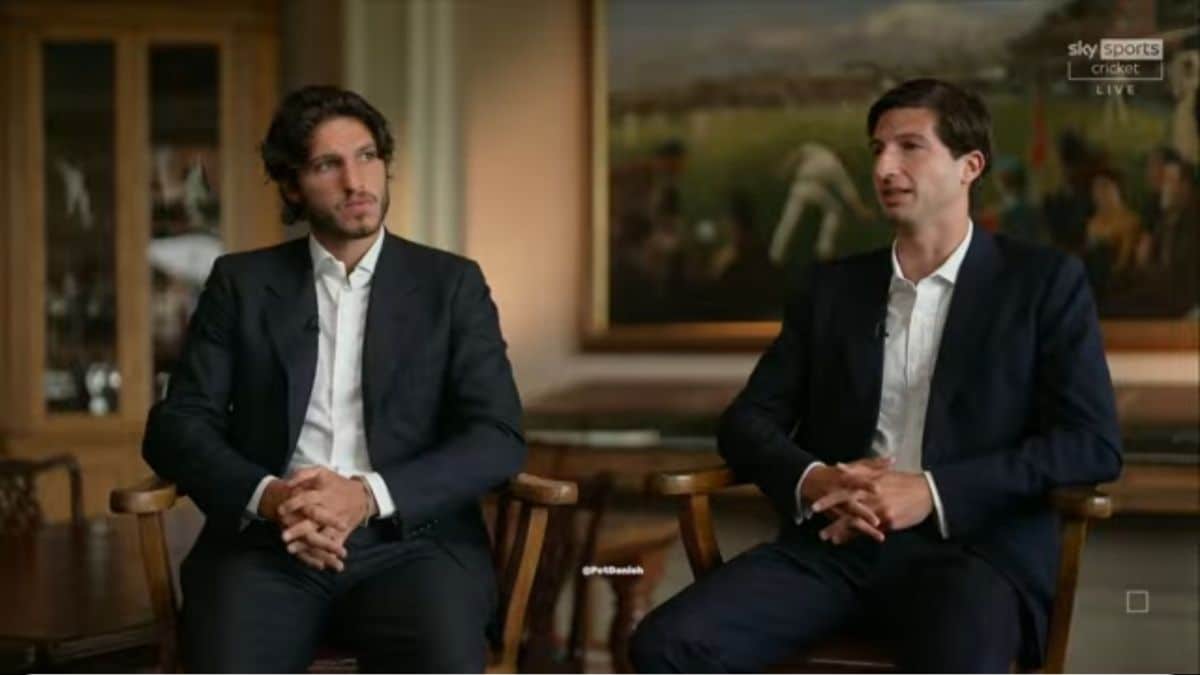
Imran Khan has spent over three years behind bars, but the fight for his narrative has broken out onto an unexpected global stage. His sons, Sulaiman and Kasim Khan, recently sat down for an interview with former England cricketer Michael Atherton on Sky Sports. Broadcast during a Test match at Lord's despite intense pushback from the Pakistan Cricket Board, the interview forced international attention back onto the former prime minister's grim prison reality.
The core allegation is straightforward and alarming. Sulaiman and Kasim claim that the Pakistani government is systematically isolating their father, denying them visas, and putting his health at severe risk. When a state cuts off access not just to legal counsel or local family, but actively blocks a prisoner's children from entering the country, it stops looking like standard penal management and starts looking like deliberate erasure.
The Anatomy of Solitary Confinement
Kasim didn't mince words during the Sky Sports broadcast. He stated that his father spends roughly 23 hours a day locked away in complete isolation. For a man who once commanded millions of passionate supporters on the streets of Lahore and Islamabad, the contrast couldn't be starker.
Prison conditions have reportedly nosedived. According to updates filtered through rare, brief phone conversations—sometimes lasting a mere six minutes—Khan has drawn grim parallels between his treatment and other political prisoners who met mysterious or violent ends inside custody.
The psychological toll is obvious. But the physical toll is mounting just as fast. Sulaiman pointed out that no family member has managed to lay eyes on his father for ten straight months. This happens despite clear court directives mandating weekly family visits. When you block people from seeing a high-profile prisoner, rumors take over. In Khan's case, those rumors involve rapidly deteriorating eyesight and spiking blood pressure driven by acute stress and endless confinement.
Medical Care and Broken Court Orders
Transparency has basically vanished from the process. Take the recent legal battle over medical treatment. A Supreme Court order explicitly directed authorities to move the cricket star-turned-politician to a specialized private hospital for urgent care.
Families hold onto hope in moments like that. But hope doesn't survive long in Pakistan's current political climate. Instead of a private facility, prison officials transferred Khan to a government medical facility for a few hours before dragging him straight back to his cell. It is a classic bureaucratic bait-and-switch. You tick a legal box on paper while ignoring the spirit of the court's command entirely.
The international fallout from this media appearance was immediate. The Pakistan Cricket Board lodged a formal complaint with Sky Sports. Reports even indicated that English cricket authorities had to intervene behind the scenes just to persuade the Pakistan cricket team to take the field for a post-lunch session on Day 1 of the Test. Sports and state politics collided in broad daylight, proving that you cannot easily quarantine domestic crackdowns from international scrutiny.
What Happens Next
If you are following Pakistani politics, you already know that symbols matter as much as policies. Imran Khan remains a massive political gravity well, even from a prison cell. By keeping his sons locked out of the country through stalled or blocked visas, the establishment hopes to sever the emotional bridge between the incarcerated leader and the global diaspora.
Isolation is a deliberate strategy. It aims to wear down the prisoner, exhaust his supporters, and control every piece of information that leaks out to the public. But when family members take their grievances to international sports broadcasts, the wall starts to crack.
The situation isn't stabilizing. It is hardening into a prolonged standoff where health updates are treated like state secrets and basic family visits require international media interventions. Keep an eye on how courts respond to future visitation petitions, because every blocked visa only adds fuel to an already volatile political fire.