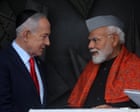
Foreign policy rarely operates on pure sentiment. Pragmatism rules the day. As volatile conflicts tear through the Middle East, New Delhi and Jerusalem are quietly tightening their diplomatic and defense channels. Prime Minister Narendra Modi and Israeli Prime Minister Benjamin Netanyahu aren't backing away from each other. They're doubling down.
If you look past the standard diplomatic handshakes, you'll find a hard-nosed alignment driven by defense needs, shared security threats, and technological ambitions. Recent reporting from human rights organizations highlights how manufacturing and supply chains connect Indian facilities directly to Israeli defense requirements. This partnership isn't slowing down. It's maturing into a permanent fixture of global geopolitics. Learn more on a connected subject: this related article.
The Defense Engine Driving the Alliance
Defense forms the backbone of this relationship. India buys a massive amount of military hardware from Israel, including advanced drones, radar systems, and missile defense architecture. Over the last decade, this buyer-seller dynamic has shifted into joint development ventures.
Why does New Delhi rely so heavily on Israeli defense tech? Speed and reliability. When border tensions flare in South Asia, India needs hardware that works without bureaucratic delays or political strings attached. Israel delivers that. Critics point to the ethical dilemmas of maintaining such close military ties during intense regional conflicts, but New Delhi's foreign ministry views national security through an uncompromising lens. Further analysis by The Guardian highlights comparable perspectives on the subject.
Official state visits and recent diplomatic exchanges, including high-level phone calls between Modi and Netanyahu, emphasize that defense trade remains insulated from external pressures. Both leaders face intense domestic and international scrutiny, yet their strategic convergence stays remarkably steady.
Beyond Weapons: Technology and Water
Military hardware gets the headlines, but technology keeps the engine running. India and Israel signed high-profile agreements covering artificial intelligence, cyber defense, and agricultural innovation.
Look at water management. Large swathes of rural India face recurring droughts and severe agricultural stress. Israeli drip irrigation and desalination techniques have transformed crop yields in arid Indian states like Rajasthan and Gujarat. This practical transfer of technology builds grassroots support for the relationship that goes far beyond elite political circles.
Cybersecurity cooperation tells a similar story. As state-sponsored cyber attacks target critical infrastructure across the globe, intelligence sharing between Indian and Israeli agencies has expanded rapidly. They face similar threat profiles from hostile regional actors, making intelligence pooling a logical necessity.
Navigating the Diplomatic Tightrope
Balancing ties with multiple global players is an art form. New Delhi maintains robust partnerships with Gulf Arab nations, Iran, and the United States simultaneously. Skeptics often ask how India manages to stay close to Israel while keeping its Arab neighbors happy.
The answer lies in pragmatic decoupling. Middle Eastern capitals understand that New Delhi's relationship with Jerusalem is strictly business and security-oriented, rather than ideologically driven against any third party. India's growing energy consumption and millions of diaspora workers living in the Gulf mean New Delhi cannot afford to alienate Arab states. By compartmentalizing its foreign policy, India manages to have it both ways.
Recent shifts in regional peace plans and stalled diplomatic initiatives across the Middle East haven't derailed this balancing act. While Western nations grapple with internal political divisions over foreign interventions, India pursues a fiercely independent path. Modi's government refuses to let external moralizing dictate its strategic partnerships.
What Comes Next for New Delhi and Jerusalem
Expect this partnership to expand into new domains over the coming years. Space cooperation, semiconductor manufacturing, and green energy tech are the next frontiers. Indian engineering talent paired with Israeli startup innovation creates a potent mix that appeals to both economies.
You won't see New Delhi scaling back its engagement with Israel anytime soon. The structural realities of regional security demand continuity. Realpolitik dictates that nations protect their interests first, and right now, India and Israel need each other more than ever.
Watch PM Modi and Netanyahu Reaffirm Ties
This video provides direct coverage of recent high-level communications between Prime Minister Narendra Modi and Benjamin Netanyahu as they reaffirm their strategic bilateral commitments.
http://googleusercontent.com/youtube_content/1