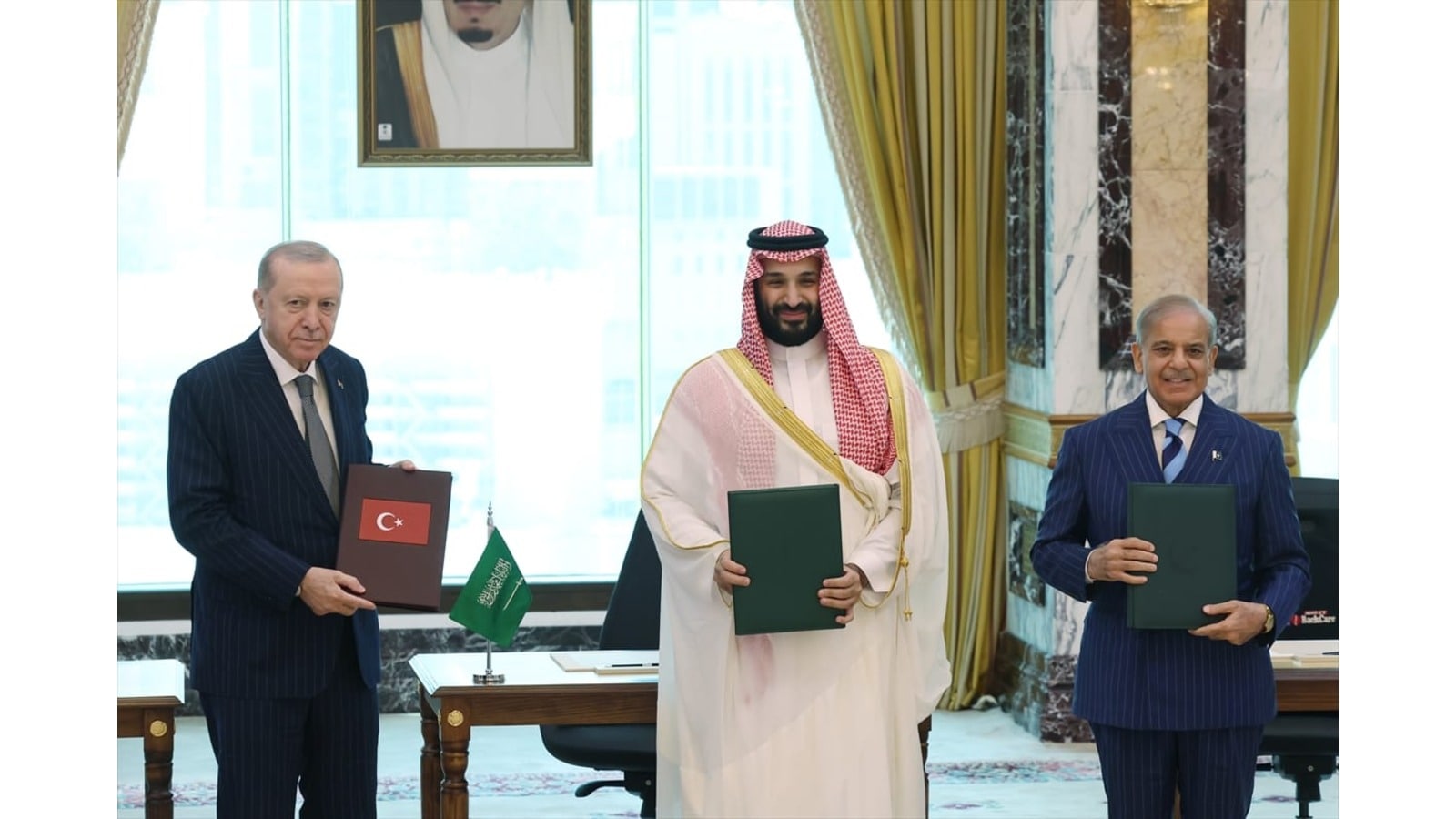
Geopolitics rarely stays quiet for long. While most observers were busy tracking superpower rivalries in the Pacific, a brand-new trilateral defense framework slipped quietly into place. The Mecca Joint Defence Agreement, signed on August 7, 2026, binds Saudi Arabia, Pakistan, and Türkiye together under a collective security umbrella. An attack on one is now officially an attack on all three.
If you think this deal doesn't matter to New Delhi, you're missing the bigger picture. South Asian security dynamics are shifting rapidly, and a passive foreign policy won't cut it anymore. India faces a stark choice: watch from the sidelines as a new regional architecture forms, or craft a comprehensive, maximalist response that protects its core interests across multiple fronts.
What the Mecca Agreement Actually Changes
For decades, India relied on a careful diplomatic balancing act in West Asia. New Delhi built strong energy and economic partnerships with Saudi Arabia, maintained robust defense ties with Israel, and managed a complicated relationship with the Gulf states. That delicate equilibrium worked because bilateral ties remained compartmentalized.
The new trilateral pact changes the math completely. It pools Saudi financial capital, Turkish defense technology, and Pakistani military manpower into a single strategic orbit. Riyadh brings deep pockets, Ankara brings advanced drone manufacturing and aerospace systems, and Islamabad provides frontline operational experience.
Sure, skeptics argue the pact lacks a unified command structure and functions mostly as political posturing. But ignoring it is a massive mistake. When three influential middle powers institutionalize their defense cooperation, the ripple effects hit India's western flank and its internal security corridors immediately.
The Blind Spots in New Delhi's Traditional Approach
India's foreign policy establishment has a history of playing it safe. Officials often dismiss sudden diplomatic shifts as loose aggregations of convenience. That status-quo mindset fails when facing proactive coalitions.
If this new axis deepens, it could embolden hostile proxies across South Asia. It also risks complicating flagship economic initiatives like the India-Middle East-Europe Economic Corridor (IMEC). When neighboring nations coordinate military capabilities while keeping hostile stances toward your borders, hoping for the best is a terrible defense strategy.
You can't counter an evolving security architecture with status-quo diplomacy. India needs a proactive stance that activates pressure points and builds counter-alliances before security gaps turn into strategic vulnerabilities.
Building a Maximalist Counter-Strategy
To stay ahead, New Delhi must look beyond traditional borders and forge tighter bonds with nations facing similar geopolitical pressures. A robust response requires concrete, multi-layered actions:
- Strengthen the India-Israel Nexus: Deepen intelligence sharing and defense-industrial collaboration with Tel Aviv. Bring the United Arab Emirates deeper into a security-focused minilateral framework rather than keeping cooperation purely economic.
- Expand the Diplomatic Footprint in the South Caucasus: Build closer ties with Armenia. Establishing a stronger presence there creates diplomatic leverage and offsets Turkish influence in adjacent regions.
- Activate Indo-Pacific Nodes: Partner closely with Japan and other maritime democracies. Connecting security frameworks from the Mediterranean through the Gulf and into the Indo-Pacific ensures India doesn't get boxed in by continental alignments.
- Harden Internal Security: Monitor how external defense pacts influence radical elements and domestic proxy networks, particularly in sensitive border regions.
India possesses the economic weight and military capability to project influence far beyond South Asia. Sitting back and hoping regional players won't coordinate against Indian interests is a recipe for strategic irrelevance. It's time to drop the hesitation and play a bigger game.
What Does The New Pakistan-Saudi-Turkey Deal Mean For India
This video provides a detailed breakdown of how the trilateral defense framework between Pakistan, Saudi Arabia, and Türkiye alters the strategic balance across South Asia and the Middle East.
http://googleusercontent.com/youtube_content/1