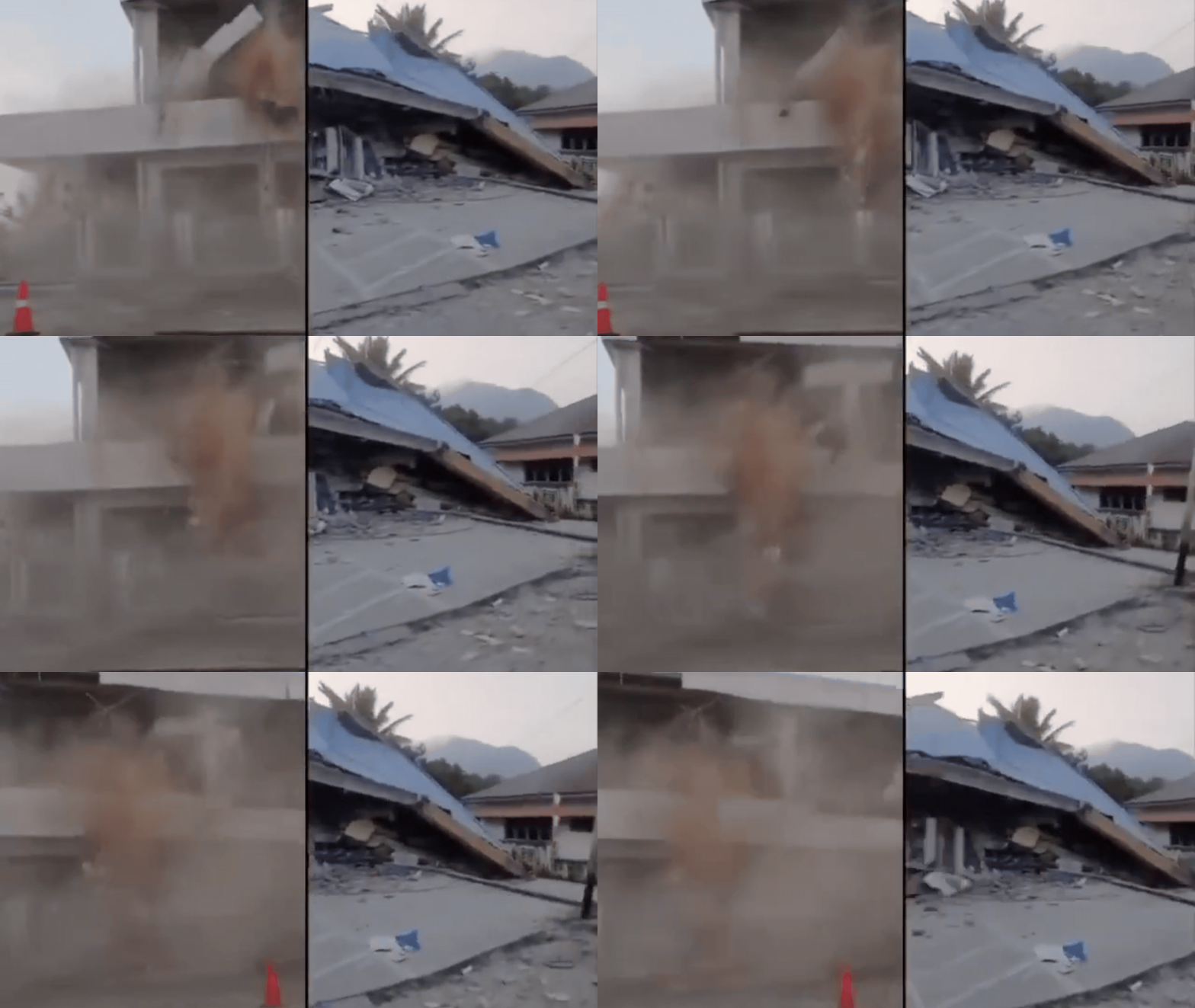
Ground shook violently across eastern Indonesia early Saturday as a massive magnitude-7.7 earthquake struck off the coast, leaving at least 38 people dead, destroying homes, and triggering widespread panic.
The quake hit the Flores region at a shallow depth of just 10 kilometers, according to the U.S. Geological Survey. That shallow focus is exactly why the shaking felt so catastrophic on the surface. Within seconds, structures crumbled, massive landslides blocked mountain roads, and thousands of residents fled toward higher ground.
The Devastation on Flores Island
The worst of the damage concentrated in the East Nusa Tenggara province, particularly across the regencies of Sikka, Manggarai, and East Manggarai. National Disaster Management Agency chief Suharyanto confirmed that rescue teams recovered at least 38 bodies, including 16 victims pulled directly from a massive landslide in Reok village located in Manggarai.
At least 13 people sustained injuries, with two individuals hospitalized in serious condition. Meanwhile, roughly 2,000 villagers in Nagekeo fled their homes to seek refuge in temporary shelters.
Eyewitness accounts highlight the sheer terror of the early morning tremor. Nona, a 51-year-old resident of Talibura, told reporters that 13 family members were resting at home when the massive shock hit, forcing everyone to sprint outside for safety. At the Ritapiret Seminary in Sikka, students and nuns scrambled out of an assembly hall as the roof collapsed right during morning Mass.
Why Shallow Quakes Cause Massive Damage
Earth scientists know that shallow earthquakes pack a much heavier punch than deep-focus tremors. Because the energy source sits only 10 kilometers underground, seismic waves lose very little energy before slamming into surface infrastructure.
Unreinforced masonry and older buildings simply cannot withstand that kind of abrupt horizontal shear. Footage from the affected areas showed traditional homes reduced to piles of rubble, port terminal waiting rooms collapsed in Maumere, and hospitals forced to wheel patients and equipment outdoors to set up emergency treatment tents under the open sky.
Tsunami Warning and Logistics Nightmares
Authorities acted quickly following the initial tremor, issuing a tsunami warning for parts of East Nusa Tenggara, West Nusa Tenggara, South Sulawesi, and Southeast Sulawesi. Coastal residents were urged to flee to higher ground immediately.
Fortunately, monitoring by Indonesia's Meteorology, Climatology and Geophysics Agency recorded waves of less than one meter, and the tsunami threat was officially lifted about three hours after the initial strike.
Even so, physical logistics remain a massive hurdle for emergency responders. Landslides triggered by the shaking completely blocked sections of the Trans-Flores highway, a vital 700-kilometer mountain road connecting Labuan Bajo to Larantuka. Power outages and severed communication lines in remote towns have slowed damage assessments, leaving police and disaster agencies relying on deployed helicopters and rescue vessels to reach isolated island communities.
Living on the Pacific Ring of Fire
Indonesia remains one of the most seismically volatile places on the planet. Straddling the Pacific Ring of Fire, an arc of intense tectonic activity where multiple continental plates grind against each other, the archipelago of over 17,000 islands faces constant geological threats.
Historical precedent looms large in the region. Back in 1992, a devastating earthquake triggered a tsunami on Flores that claimed roughly 2,500 lives. While Saturday's disaster thankfully avoided that scale of catastrophe, the current death toll and widespread infrastructural failure highlight the urgent need for resilient civil engineering in rural Indonesian communities.
As aftershocks continue to rattle the region—including a separate 6.5-magnitude tremor recorded later in the day—search and rescue crews are racing against the clock to clear blocked roads, restore power, and ensure every missing villager is accounted for.
At least 38 people dead following 7.7 magnitude earthquake in Indonesia
This video coverage provides on-the-ground footage and real-time updates regarding the earthquake's impact and ongoing rescue operations in Indonesia.