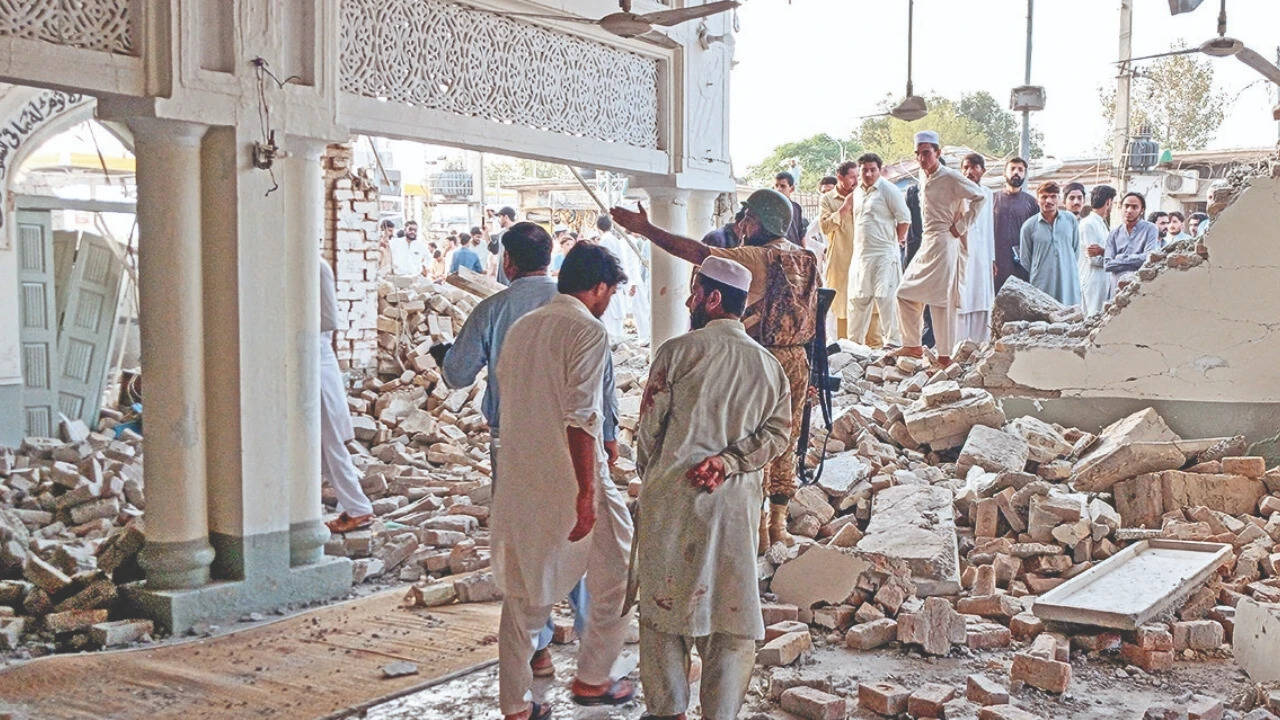
Twenty-one dead. Right inside a gated counter-terrorism facility during Friday prayers.
If you think the Kohat police line bombing is just another grim casualty ticker from Khyber Pakhtunkhwa, look closer. A vehicle-borne improvised explosive device slammed through the perimeter wall near a mosque, gunmen poured in shooting, and senior counter-terrorism command—including an SP-rank officer, a DSP, and three inspectors—perished alongside rank-and-file personnel. Around 80 wounded fill hospital corridors.
This isn't a random roadside strike. This is operational institutional penetration.
Why This Kohat Strike Breaks the Pattern
Standard militant playbooks in northwest Pakistan target checkpoints, patrol mobiles, or soft rural outposts. Striking deep inside a fortified police lines compound housing counter-terrorism division (CTD) assets during Jummah congregational prayers requires inside reconnaissance, structural vulnerability knowledge, and staging capacity right under the nose of district intelligence.
- The breach vector: VBIED ramped straight into the mosque's entrance perimeter wall.
- The follow-through: Three to five armed assailants with active-shooter suppression fire.
- The leadership decapitation: CTD tier leadership wiped out in a single ignition flash.
Look at attribution claims. While pro-Ittehad-ul-Mujahideen Pakistan (IMP) channels float Al Badr brigade credit and Inqilabi Islami Pakistan (affiliated with AQIS) chimes in on Telegram, official state framing treats attribution as fluid. Honestly? The branding matters less than the anatomy of the failure. When a CTD hub gets breached like a commercial parking lot, standard perimeter defense doctrine failed weeks before the first fertilizer bag was mixed.
The Cost of Regional Militancy Resurgence
Khyber Pakhtunkhwa has turned into a grinding exhaustion machine for Pakistan's internal security apparatus. Let’s talk about the math nobody prints in press briefings:
- Investigative vacuum: CTD officers are hard to train, harder to replace, and carry institutional memory of local networks. Losing inspectors and SPs in one morning resets investigations back to zero.
- Medical triage strain: Eighty wounded trauma cases swamp provincial tertiary care centers in Kohat and Peshawar overnight, displacing civilian emergency care and exposing blood-bank deficit realities.
- The morale penalty: Beat cops and paramilitary guards standing watch outside district lines know the math. If high-value walled compounds get hit during prayer hours, post security isn't deterrence; it's a lottery.
What Security Analysts Miss About VBIED Compound Assaults
Most commentary treats vehicle-borne entry as pure explosive physics. It isn't. It's kinetic geometry combined with standing-guard fatigue.
When shift rotations drag past 12 hours in high-threat red zones, gate discipline degrades into rubber-stamping vehicle logs or waving through familiar logistics flow. Militant cells study shift change clocks better than administration rosters. If you want to stop the next Kohat, hardening concrete walls is waste-basket engineering. You have to audit electronic counter-surveillance, drone-proof perimeters against low-cost loitering optics, and rotate external security out-of-province to break local informant visibility.
Practical Takeaways for Regional Risk Assessment
If you track cross-border stability, corporate mobility, or regional security indices in South Asia right now, adjust your baselines:
- Re-rate northwest transit corridors: Khyber Pakhtunkhwa administrative travel is transitioning from "caution advised" to active footprint minimization for non-state actors.
- Watch internal command reshuffles: Expect retaliatory kinetic sweeps by paramilitary forces, which historically spike friction, displaced populations, and short-term secondary radicalization loops in adjacent tribal agencies.
- Ignore early Telegram claims: Proxy attribution claims often lag or exaggerate operational depth. Measure severity by officer rank attrition, not channel boast volume.
Stop treating police line massacres as weather reports. They are structural indictments of how interior security is funded, guarded, and supervised.
Review your security posture in secondary frontier districts today. Shift static guards to mobile multi-layer overlapping watch zones. Audit gate standoff distances. Do not wait for the next Friday congregational hours to test your perimeter wall math.