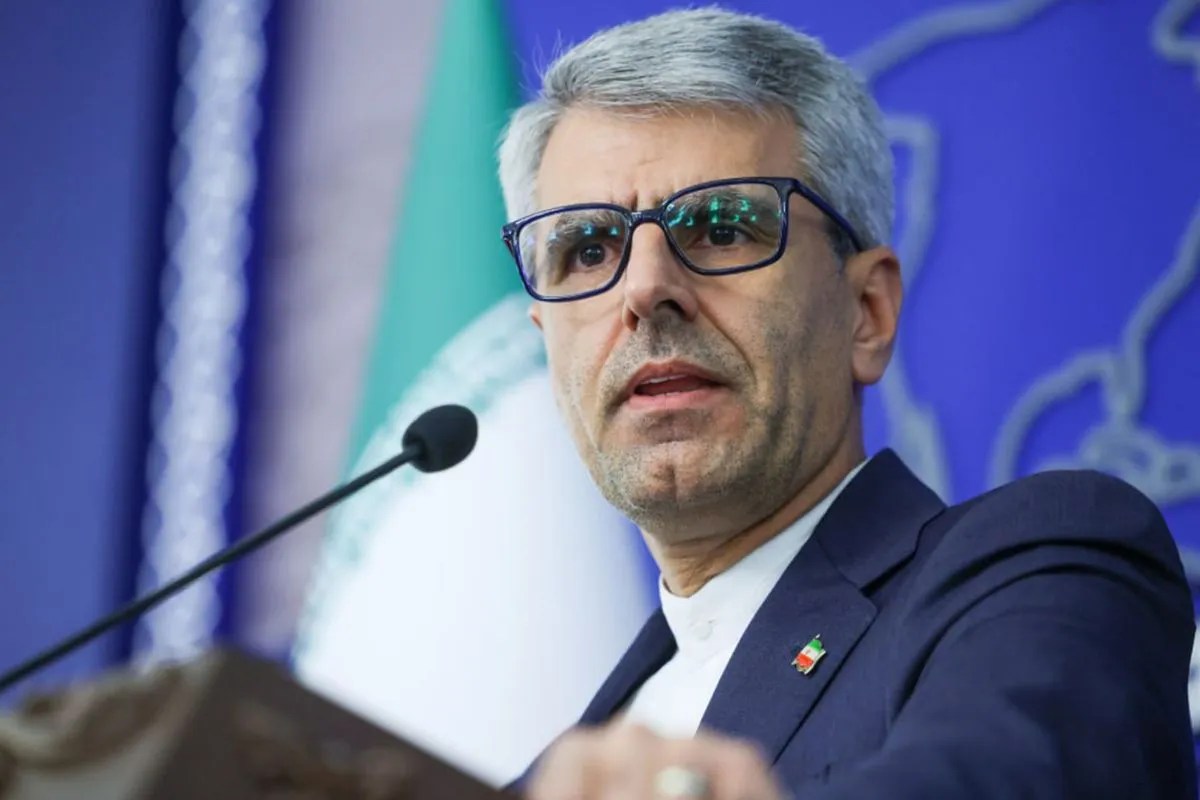
The cycle of economic hostility between Washington and Tehran just took another sharp turn. When the United States rolls out new economic sanctions, it rarely surprises anyone anymore. What matters is the reaction it triggers. This time, Iranian officials aren't just calling it another policy disagreement. They are labeling it a return to old-school colonialism.
Honestly, if you have watched the geopolitical dance between these two for any amount of time, you know the script. But this specific rhetoric from Tehran’s Ministry of Foreign Affairs spokesperson, Esmaeil Baghaei, hits differently. It shifts the argument away from mere policy disputes and into the territory of international rights and sovereignty.
The Colonialism Argument Explained
Baghaei’s core point is that these new sanctions function as a weaponized form of economic warfare that disregards national borders. By pressuring third-party countries—banks, companies, and even port operators—to cut ties with Tehran, the U.S. is essentially claiming a right to dictate the domestic and foreign policy of sovereign nations.
In the eyes of the Iranian leadership, this is not just about stopping nuclear proliferation or countering regional influence. It is about control. They see a situation where Washington acts as the global arbiter of who can trade with whom, bypassing established international legal frameworks like those outlined in the United Nations Charter.
When you strip away the diplomatic jargon, their argument is simple: A powerful nation is using its financial infrastructure to bully others into compliance. They compare this to colonial-era practices where imperial powers forced local economies to serve their own interests, regardless of what the local population or leadership actually wanted.
Why This Matters in 2026
You might be asking why this matters right now. We are in a unique moment in 2026 where the lines between military conflict and economic pressure are becoming blurred. Iranian President Masoud Pezeshkian recently suggested that the long-standing tensions should reach an end, claiming Iran stands from a position of strength and honor.
Yet, these sanctions suggest that the U.S. strategy remains fixed on high-pressure containment. The disconnect between the President’s call for a path toward normalcy and the ground reality of tightening financial walls is huge. This is where the narrative of "colonialism" becomes politically useful for the regime. It unites internal factions against a common external "aggressor" and keeps the focus on sovereignty rather than internal economic struggles.
The Legal and Diplomatic Mess
The legal reality here is incredibly murky. Secondary sanctions—those that target countries doing business with Iran—don't have a clear home in standard international law. The U.S. justifies them through domestic law, while countries like Iran argue they violate the principle of sovereign equality enshrined in Article 2(1) of the UN Charter.
It is a game of interpretation. The U.S. sees these actions as necessary for its national security. Tehran sees them as an illegal infringement on its right to trade. Both sides are digging their heels in, and for the global business community, this means the risk of accidentally stepping into a sanctions violation remains extremely high. If you are operating a multinational company, the "right" thing to do depends entirely on which legal framework you prioritize.
What Happens Next
We are likely looking at a prolonged stalemate. While President Pezeshkian talks about ending the conflict, the Revolutionary Guard and military officials continue to signal that they are ready for any challenge—be it at sea, in the air, or in the digital domain.
The path forward for anyone affected by these tensions is not getting any clearer. Expect more rhetoric about sovereignty and imperialism from Tehran. Expect more pressure from Washington.
If you are trying to make sense of this, stop looking for a sudden breakthrough. These situations don't resolve overnight. Watch the behavior of third-party nations in the Middle East and Asia. If they start finding ways to bypass dollar-based transaction systems to trade with Iran, that will be the real shift to watch. The era of unilateral economic control is being tested, and we are just seeing the first stages of that friction.
For now, do not expect the temperature to drop. The game has changed, but the players are using the same old tools.