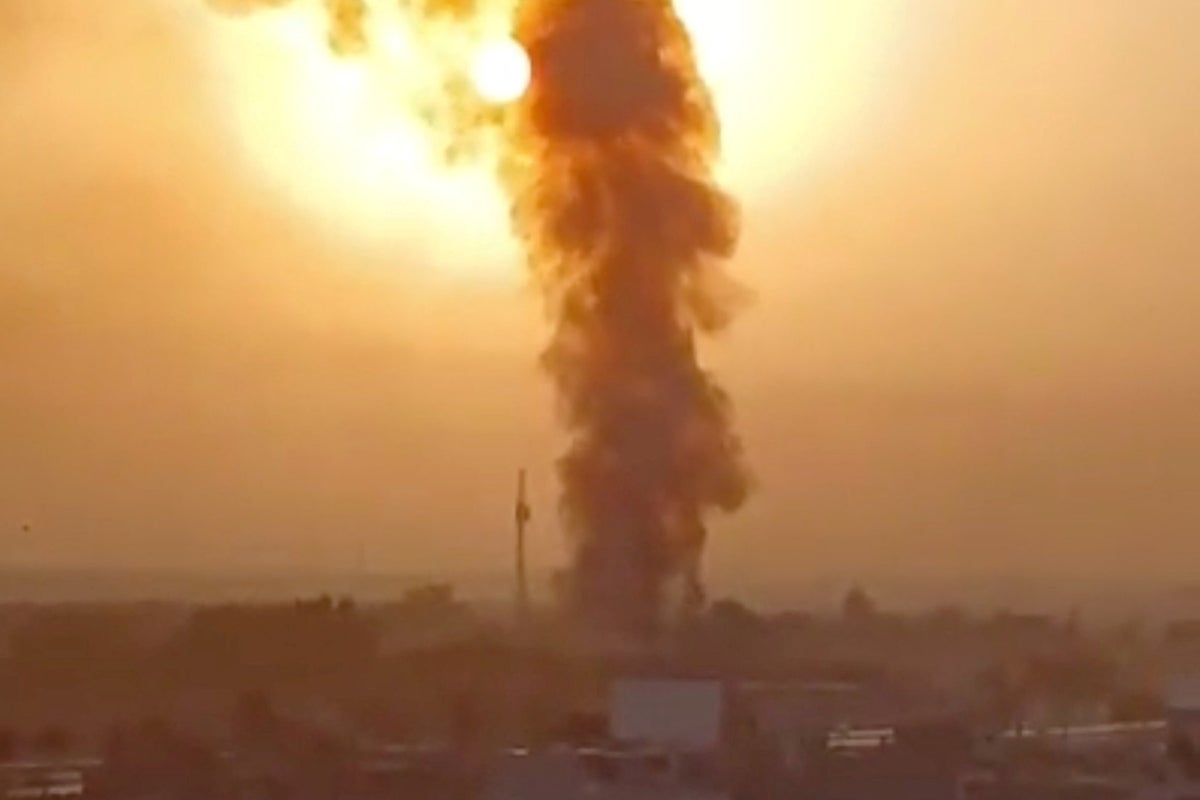
When the United States and Israel launched massive joint military strikes against Iran, Washington promised a targeted campaign to degrade Tehran's nuclear infrastructure and leadership. Instead, the opening salvos triggered an immediate chain reaction, dragging neighboring countries across the Persian Gulf and the broader region into a widening war nobody claimed they wanted.
If you look at regional tracking maps, the conflict isn't just contained to a bilateral exchange. It spans over a dozen nations, turning commercial hubs, shared airspace, and crucial shipping lanes into an active theater.
The Gulf States Caught in the Middle
Saudi Arabia, Qatar, the United Arab Emirates, Bahrain, Kuwait, and Oman found themselves instantly exposed. Iran’s retaliation strategy relies heavily on targeting countries that host American military assets or cooperate with Western defense initiatives.
When missiles and drones cross borders, neighboring governments are forced to scramble interceptors, causing immediate disruptions to commercial air traffic and civilian infrastructure. Major business centers like Dubai and Doha watched airspaces shut down or restrict flights as debris fell near populated areas.
Saudi Arabia even blocked certain military operations involving US aircraft usage of its airspace during high-tension phases like the scrapped "Project Freedom" naval initiative. Riyadh wants to protect its massive economic diversification projects, but geography makes total neutrality nearly impossible when ballistic missiles fly overhead.
The Strait of Hormuz Chokepoint
You cannot understand the true scope of this war without looking at the water. The Strait of Hormuz is the world's most vital oil transit chokepoint, handling roughly a fifth of global petroleum consumption.
When the Islamic Revolutionary Guard Corps published new maps claiming total enforcement zones and warning commercial vessels to coordinate or face direct attack, global energy markets panicked. Tankers paused transits, insurance rates spiked, and governments from Tokyo to London realized their economies were directly tied to the outcome of naval standoffs in the Persian Gulf.
Levantine Spillover and Northern Fronts
Lebanon and Syria became immediate flashpoints as Iran-backed proxy networks, particularly Hezbollah, opened fire in coordination with Tehran's directives. The Israel Defense Forces responded with heavy bombing campaigns across southern Lebanon and Beirut, displacing hundreds of thousands of civilians and expanding the human toll of the conflict far beyond Iran's borders.
Meanwhile, nations like Jordan and Iraq faced dangerous moments as interceptors engaged incoming projectiles over their territories. Jordan’s interception of drones violating its airspace proved that even states actively trying to de-escalate are forced to spend military resources defending their sovereign borders from stray munitions.
What Happens Next
The map of this conflict changes daily as diplomatic channels open and close under pressure. What started as a targeted strike strategy has fundamentally reshaped Middle Eastern security alignments, leaving regional leaders to realize that staying out of a superpower clash is much harder than it looks on paper.
Check active operational tracking resources and verify flight safety advisories before planning any travel through regional airspace hubs. Monitor energy futures and independent open-source intelligence maps if you want to track the ground reality behind official government press releases.