Engineering absolute safety against nature is a comforting illusion. You build thicker concrete, install advanced dampeners, and spend ten years nursing a shattered community back to life. Then a 7.1-magnitude tremor hits, and concrete reality sets in.
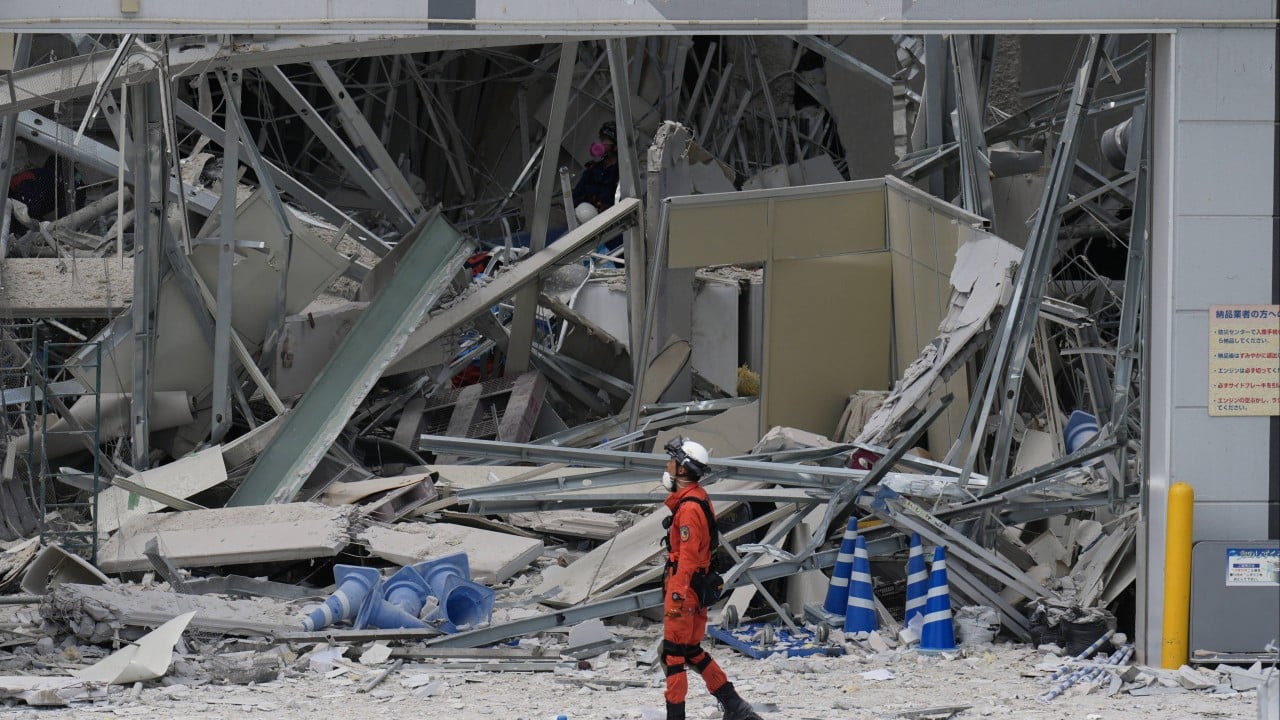
The recent disaster at the Aeon Mall in Kumamoto Prefecture proves that even the world's most rigorous seismic standards have brutal limits. Having only celebrated its grand reopening in June after a decade-long rebuild following the catastrophic 2016 Kumamoto earthquake, the complex was flattened again. Seismologists and structural experts are left asking hard questions about what went wrong when a fresh start turned into a repeat nightmare.
The Illusion of Permanent Seismic Proofing
Japan lives on the Pacific Ring of Fire, experiencing seismic shifts constantly. Building codes there are arguably the strictest on the planet. When the original Kumamoto complex was devastated in April 2016—a disaster that killed 250 people and injured thousands—engineers treated the subsequent reconstruction as a masterclass in modern resilience.
The rebuild incorporated modern reinforcement techniques, reinforced ceilings, and state-of-the-art structural framing designed to absorb violent energy. For nearly a decade, millions of shoppers walked through its doors, bolstered by a local economy that saw new tech investments like Taiwan's TSMC plant bring fresh life to the region.
Yet, nature rarely reads engineering textbooks.
When the 7.1-magnitude earthquake struck with a shallow depth of just 10 kilometers, the upward force caught the region off guard. Shallow quakes amplify surface violence exponentially, bypassing standard dissipation methods built into deep-foundation commercial structures.
When Secondary Disasters Compound the Damage
The initial shaking was only part of the catastrophe. Eyewitness accounts and initial assessments from experts like Robert J. Geller, professor emeritus of seismology at the University of Tokyo, point to a secondary factor: a powerful explosion that ripped through the complex roughly an hour after the main tremor.
While the building's skeletal frame largely absorbed the initial seismic waves without total structural failure, the blast blew out exterior walls and caused the second floor to collapse inward. Witnesses reported heavy gas smells, signaling that utility lines ruptured despite automatic shut-off valves.
This creates a terrifying reality for urban planners. You can engineer steel and concrete to sway with tectonic shifts, but managing volatile infrastructure lines—gas, electricity, and chemical feeds—inside a massive retail complex during a high-magnitude shock remains a massive vulnerability.
Emergency responders faced immediate gridlocks. With dozens of employees unaccounted for and aftershocks threatening rescue operations, the psychological toll on Kumamoto residents eclipsed the physical destruction.
What Urban Planning Must Learn Right Now
We need to stop pretending that modern infrastructure can achieve total immunity against tectonic activity. Resilience isn't about building indestructible monuments; it's about managing failure when the math breaks down.
Commercial developers must prioritize rapid shut-off systems for volatile fuels, redundant evacuation pathways that don't rely on centralized corridors, and real-time structural health monitoring that can isolate gas leaks instantly after a tremor.
Stop assuming that a fresh coat of paint and modern codes mean a clean slate. Mother Nature keeps her own score.
Japan quake: Reopened Aeon mall likely withstood shaking before explosion, says seismologist
This video provides an expert seismological breakdown of how the Aeon Mall structure reacted to the initial earthquake and the subsequent explosion.
http://googleusercontent.com/youtube_content/1