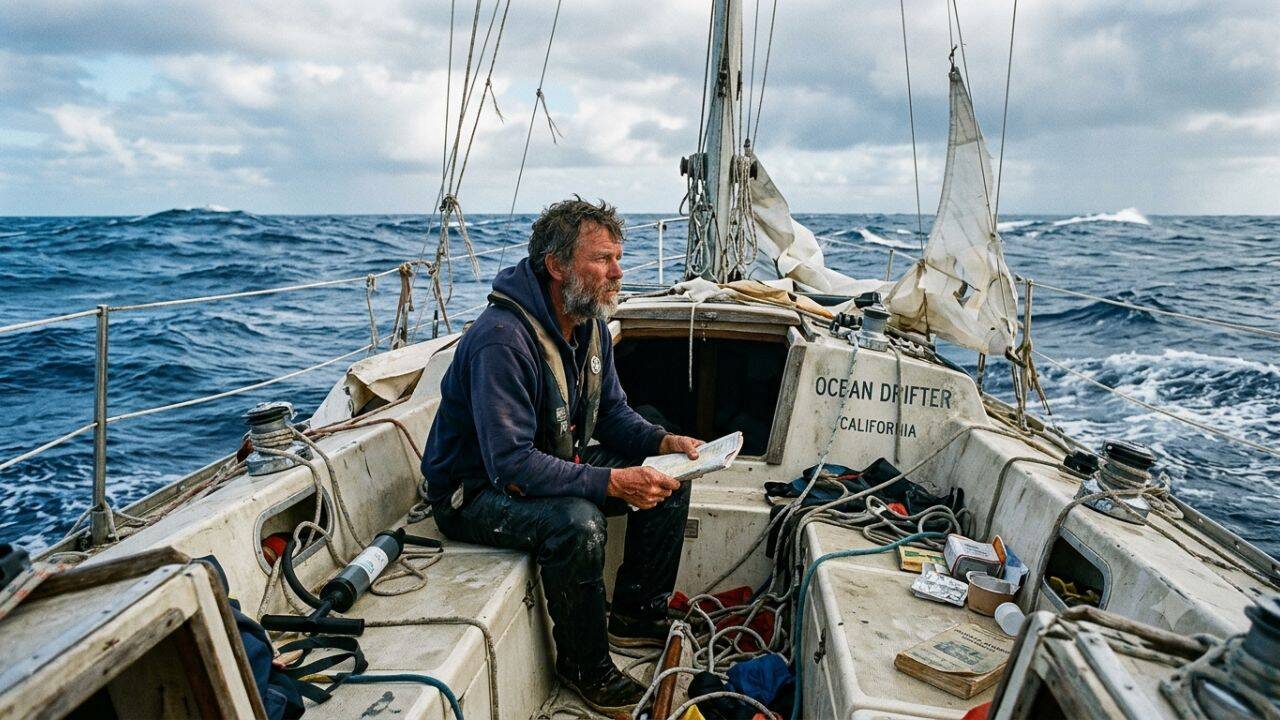
When 39-year-old Kai Sato cast off from California's Catalina Island on June 7, he expected a straightforward solo crossing to Hawaii. Instead, he got a brutal month-long test of endurance that ended only when a passing container ship pulled him from the Pacific.
Stories like this usually get reduced to miraculous headlines about survival against the odds. But the reality of what happened to Kai Sato involves a mix of severe psychological weight, crude engineering on a tiny boat, and pure grit that most people couldn't imagine handling for a single afternoon, let alone over a month.
When the Plan Falls Apart Immediately
Sato set out to tackle a 2,500-mile solo voyage inspired by his uncle's earlier ocean journeys. Two weeks into the trip, reality hit hard. The sailboat's mast snapped cleanly off, destroying his main source of propulsion.
He didn't just lose his sails. His phone died, and his backup plan to motor back to shore failed when his gas tank emptied completely. He was left as a sitting duck, caught in currents dragging him hundreds of miles south and completely off course.
The psychological toll kicked in instantly. Sato admitted he spent an entire week crying, feeling entirely miserable and trapped in a hopeless loop in the middle of nowhere.
The Improvised Engineering That Saved His Life
Sitting around waiting to die wasn't going to cut it. After five days of despair, Sato shifted gears and relied on whatever junk he had lying around on the boat.
He took PVC pipes and old kayak paddles, rigging them together into a makeshift sailing system. It was crude, awkward, and far from professional grade, but it gave him enough steering capability to point his crippled vessel back toward the main shipping lanes linking California and Hawaii.
Surviving on Scraps and Seawater Condensation
Running out of food and water in the open ocean is a quick death sentence for most. Sato's water supplies ran dry completely in July.
With zero fresh water left, he had to get creative. He filled buckets with raw ocean water, placed plastic bags over the top, and let the sun create condensation inside the containers. He survived by licking the tiny drops of fresh moisture that formed on the plastic.
Food was equally sparse. He rationed a small stash of oatmeal tightly, supplementing his diet with whatever unfortunate fish or squid accidentally landed directly on his deck.
The Rescue by Pasha Hawaii
Reaching the shipping lanes took weeks of grueling slow motion. Finally, a massive container ship operated by Pasha Hawaii spotted his distressed craft.
The rescue wasn't an instant movie scene. Crew members had to make multiple attempts to drop a rope ladder safely down to him while the ocean tossed them around. Once he climbed up, the transition was jarring. Clean clothes, a proper private cabin, fresh fruit, and unlimited water replaced the grueling ordeal he had endured for over a month.
Sato is already planning his next big trip—this time targeting a massive 7,500-mile journey to the Philippines.
Grab your gear, check your rigging twice, and never underestimate what a person can pull off when they refuse to quit.