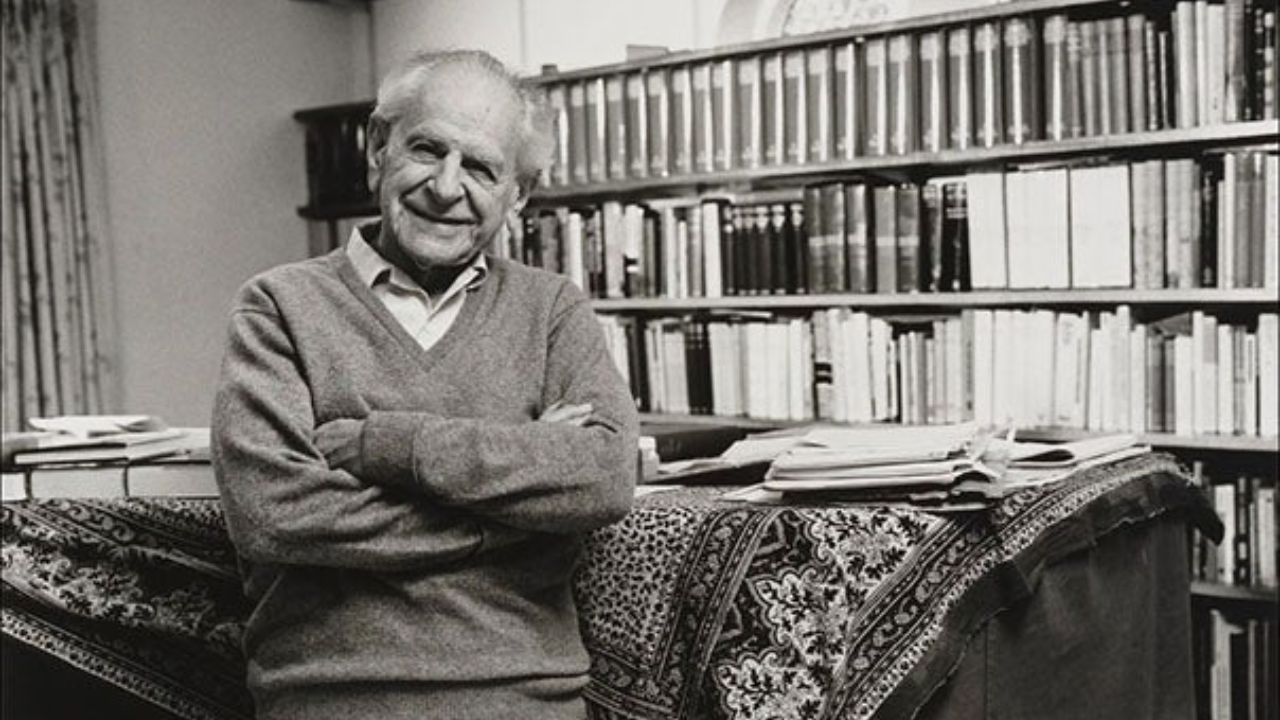
"Those who promise us paradise on earth never produced anything but a hell." Karl Popper wrote those words while watching totalitarian regimes tear Europe apart in the 1940s. He wasn't just writing philosophy. He was issuing a warning that society keeps ignoring.
Every few years, a new movement emerges with a grand blueprint to fix humanity. They promise absolute equality, zero conflict, or total economic harmony. They demand total authority to make it happen. And every single time, the dream ends in disaster.
The Danger of Totalitarian Blueprints
Popper spent decades analyzing how intellectual theories morph into political nightmares. In his landmark 1945 book, The Open Society and Its Enemies, he targeted thinkers like Plato, Hegel, and Marx. His core argument was simple: history doesn't follow a fixed script, and humans aren't pieces on a chessboard.
When a leader believes they hold the key to historical destiny, people stop being human beings. They become variables in a grand equation. If millions have to suffer today so a theoretical utopia can bloom tomorrow, utopian thinkers view that suffering as an acceptable cost.
Popper knew this danger firsthand. As a teenager in Vienna in 1919, he watched young radicals clash with police in the streets, trading lives for abstract ideologies. That bloody afternoon shattered his youthful idealism. He realized that absolute political certainty is a threat to human life.
Why Utopias Always Turn Brutal
Perfection is impossible. Reality is messy, complicated, and resistant to central planning. When a government promises paradise and fails to deliver it, leaders rarely blame their ideology.
Instead, they blame human nature.
They claim the citizens aren't compliant enough, or that hidden saboteurs are ruining the plan. This creates a paranoid environment where dissent becomes treason. If paradise is just around the corner, anyone pointing out structural flaws looks like an enemy standing in the way of progress.
History backs this up with terrifying consistency.
- The French Revolution's Reign of Terror tried to enforce virtue through the guillotine.
- Twentieth-century collectivization campaigns starved millions in the pursuit of industrial and agricultural perfection.
- Radical ideological regimes wiped out entire classes of people to clear the ground for a new society.
The mechanism is always identical. Totalitarian ambition requires absolute control. Absolute control breeds violence.
The Case for Small, Boring Fixes
Popper offered an alternative to grand utopian schemes: piecemeal social engineering.
Instead of tearing down society to build a palace from scratch, piecemeal reform focuses on fixing specific, measurable evils. You build a hospital. You adjust a labor law. You test a policy on a small scale, watch what happens, and fix it when it breaks.
It sounds unglamorous. It doesn't inspire stadium rallies or poetic manifestos. But it works.
Open societies survive because they allow for error. They treat political systems like scientific theories. You propose a rule, you test it against reality, and you vote the creators out if it fails. You don't need a dictator to achieve this. You just need institutions that tolerate criticism and protect individual freedom.
Next time a politician or a movement promises a total fix for all human suffering, check your wallet and your rights. The price of admission to paradise is always your freedom. Take the messy, incremental improvements every single time.