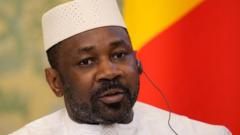
Malian President Assimi Goïta just signed a presidential pardon for Yann Vézilier, a French national who was sentenced to 20 years in prison. If you've been following the geopolitical fallout in the Sahel, this move comes as a massive shock. Bamako originally arrested Vézilier, accusing him of acting on behalf of French intelligence to destabilize the military government.
Now, he's heading out the door. But don't mistake this for a sudden diplomatic thaw between France and Mali.
The Backstory of an Alleged Coup Plot
Back in mid-2025, Mali’s military junta paraded a supposed conspiracy across state television. Officials claimed a small group of local military personnel, opposition figures, and Vézilier had banded together to overthrow Goïta.
The accusations were severe. Bamako insisted Vézilier was orchestrating a foreign-backed sabotage mission. Paris instantly pushed back. The French foreign ministry maintained that Vézilier was simply carrying out legitimate security cooperation duties, pointing out that his detention violated standard diplomatic conventions.
Tensions skyrocketed. France's historical footprint in West Africa was already evaporating. Mali had already cut military ties with Paris, kicked out French troops, and pivoted heavily toward Russia for security assistance. Arresting a French citizen on espionage and coup charges felt like the final nail in the coffin for bilateral relations.
Reading Between the Lines of the Pardon
Fast forward to the official announcement from Bamako. President Goïta granted the pardon, but the government's accompanying statement made sure to save face.
The transitional government explicitly stated that the pardon does not wipe away the conviction. They insisted that Vézilier received a fair trial without interference and maintained that the original facts of the case stand.
There is a catch, though. The terms of the release dictate that Vézilier must immediately leave Malian soil.
This tells you everything you need to know about what's really happening behind closed doors. It is an expulsion disguised as clemency. Bamako gets to look magnanimous by clearing out a high-profile prisoner, while quietly removing a massive diplomatic headache from capital city detention facilities.
Why This Matters for the Sahel Right Now
You have to look at the broader regional picture to understand why this pardon happened today. Mali isn't just fighting political dissidents; it's fighting for survival.
Insurgents linked to al-Qaeda have made alarming territorial gains across the country. Earlier this year, coordinated attacks even struck the main international airport and resulted in the death of the defense minister. The junta's security apparatus is stretched thin. Dealing with a high-stakes, internationally condemned imprisonment of a European citizen draws unwanted global scrutiny that the regime simply doesn't need right now.
By clearing Vézilier out, the junta removes a primary talking point for European critics. It signals a slight recalibration, even if the deep-seated animosity toward French foreign policy remains completely unchanged.
Paris has largely stayed quiet immediately following the announcement, likely eager to secure the safe return of their citizen without igniting a fresh war of words.
Watch what happens next at the border. Once Vézilier touches down in Europe, expect a lot of closed-door debriefings and very little public fanfare. The Sahel remains a volatile chessboard, and this specific piece has just been swept off the board.