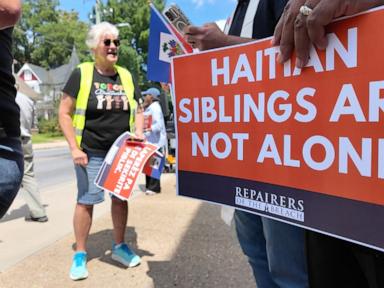
Empty church pews tell the whole story in Salisbury, Maryland. People aren't showing up on Sundays because they're terrified of what's waiting outside. When the federal government let Temporary Protected Status expire for hundreds of thousands of Haitian migrants, the shockwave didn't stay in Washington. It hit local neighborhoods hard.
Right now, Maryland's Haitian community is facing an intense wave of Immigration and Customs Enforcement operations. Local leaders like Roosevelt Toussaint and civil rights advocates point to a chilling reality. Families are breaking apart, kids are living with constant anxiety, and basic daily routines like going to work or buying groceries feel like high-stakes gambles.
The human toll behind the headlines
Statistics look tidy on a policy memo, but human lives are messy and fragile. More than 350,000 Haitians nationwide found themselves stripped of legal protections almost overnight. In Maryland, that shift means parents are watching their backs every second of the day. Teenagers are left worrying if their mom or dad will come home from a shift at a local poultry plant or small business.
Faith leaders and organizations like the American Civil Liberties Union of Maryland have stepped up public demonstrations to push back against the climate of fear. Marches through downtown Salisbury aren't just symbolic. They're a desperate cry for visibility. When people feel entirely invisible to the structures shaping their fate, walking down the street together becomes an act of survival.
Local government friction and federal policy
You hear completely different stories depending on who's talking. Federal officials from the Department of Homeland Security defend the policy shift. They argue that Temporary Protected Status was never meant to be permanent. They call for voluntary departures, treating the expiration as a natural endpoint.
On the local side, things get complicated. Wicomico County leadership faced intense scrutiny regarding past participation in federal programs like 287(g), which allows local law enforcement to assist with immigration enforcement. County Executive Sharon Giordano maintained that local agencies complied with state laws banning those agreements and clarified that current operations are purely federal.
Yet, citizens caught in the middle don't care much about jurisdictional boundaries. They only see agents, deportation flights, and a future that dissolves right in front of them.
What you can do to support vulnerable families
If you want to move past just reading the news and actually help, you have to look at community-level action.
- Support local legal defense funds: Organizations providing pro bono representation for families facing deportation need financial backing immediately.
- Connect with local advocacy groups: Groups like the ACLU of Maryland and community-led coalitions organize rallies, know-your-rights workshops, and support networks.
- Stay informed and vocal: Push local and state representatives to maintain sanctuary protections and support immigrant families through community resources.
The crisis in Maryland isn't just about immigration policy paperwork. It's about real people whose lives are upended every single day.
Haitian community faces uncertainty as deportation protections end
This video provides an on-the-ground look at how the expiration of deportation protections is creating deep uncertainty for Haitian families.
http://googleusercontent.com/youtube_content/1