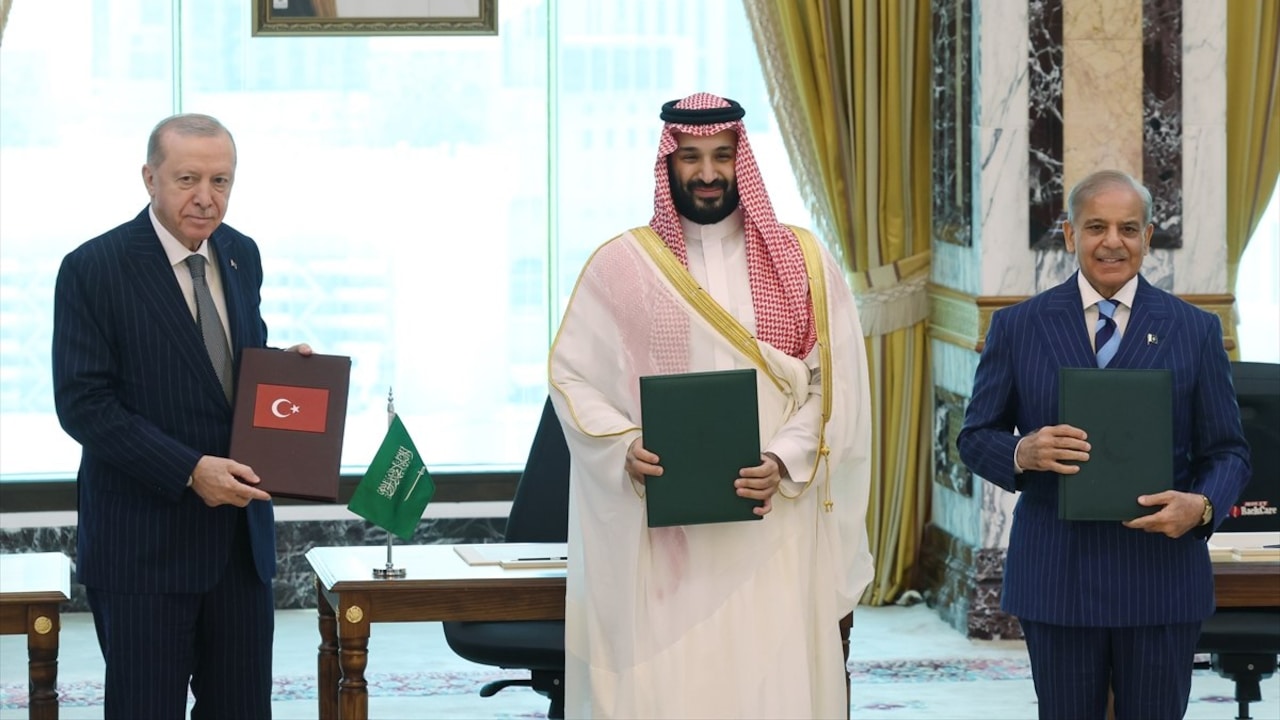
You can't look at the map of West Asia right now without noticing a massive shift. Saudi Arabia, Turkey, and Pakistan just inked the Mecca Joint Defence Agreement. It's a trilateral pact that treats an attack on one as an attack on all. Naturally, everyone started screaming about an "Islamic NATO."
Ankara immediately went into damage control. Turkish officials insist the Mecca Defence Pact isn't aimed at eliminating Iran. But look past the diplomatic pleasantries. When you combine Saudi cash, Turkish drone technology, and Pakistan's military might right after months of regional missile strikes, you're looking at a brand-new strategic reality.
The Anatomy of the Mecca Agreement
Let's break down what actually happened on August 7, 2026. Saudi Crown Prince Mohammed bin Salman, Turkish President Recep Tayyip Erdogan, and Pakistani Prime Minister Shehbaz Sharif met in Mecca to sign the deal.
The core text is simple. Any armed attack against Saudi Arabia, Turkey, or Pakistan is an attack on all three.
Here is what each nation brings to the table:
- Saudi Arabia provides the financial muscle and immense oil stakes.
- Turkey brings NATO-grade military experience and advanced drone manufacturing.
- Pakistan contributes massive military manpower and its nuclear deterrent.
Turkish Foreign Minister Hakan Fidan tried to calm nervous neighbors by stating that no common threat was explicitly written into the document. But actions speak louder than press releases.
Why This Pact Happened Now
For years, Riyadh trusted the American security umbrella. That trust fractured. When the regional war involving Iran erupted in February 2026, Gulf infrastructure took direct hits. Drones and missiles rained down. The Strait of Hormuz faced closures, and Houthi fighters kept launching attacks from Yemen.
Washington couldn't or wouldn't stop every single threat. Riyadh realized it needed a backup plan.
Pakistan already had a bilateral defense agreement signed with Saudi Arabia back in September 2025. Thousands of Pakistani troops, fighter jets, and air defense systems are already stationed inside the kingdom. Pulling Turkey into the mix turns a bilateral arrangement into a formidable trilateral axis.
Is It Really About Iran?
Officially? No. Ankara claims the pact is purely defensive and open to other regional states.
Unofficially? It's impossible to separate this deal from the current security environment. Iran and its regional proxies have spent months targeting Gulf assets. The Mecca pact provides collective deterrence against those exact threats.
At the same time, experts point out another angle. Turkey has watched Israeli politicians increasingly label Ankara as a primary security concern. Building a tight security network with Saudi Arabia and Pakistan gives Turkey serious geopolitical insurance.
What Happens Next
Don't expect an integrated military command structure overnight. This isn't a carbon copy of NATO. There is no permanent joint headquarters yet, and much of the implementation remains behind closed doors.
Yet, the message is unmistakable. Middle Eastern and South Asian powers are done waiting for outside superpowers to protect them. They are building their own security architecture, one signature at a time.