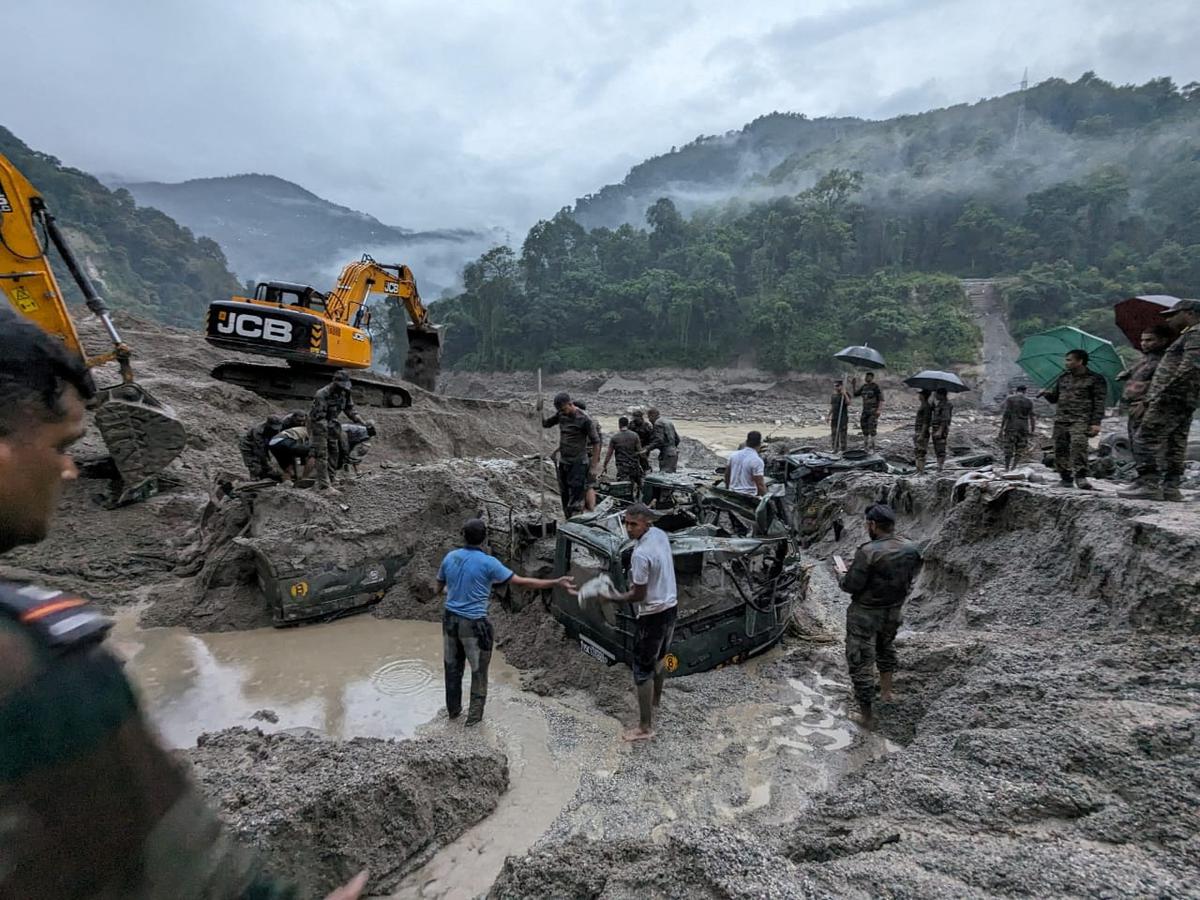
A massive wall of water and debris changed the landscape of northern Nepal in mere seconds. Villages along the Bhote Koshi and Trishuli rivers vanished beneath tons of silt and mud following a catastrophic glacial and rock collapse. People woke up to an entirely altered world where houses, bridges, and entire communities were wiped out before they could even grab their shoes.
When disaster strikes hard and fast, news outlets rush in with high-level casualty counts and dramatic helicopter shots. They focus on the immediate chaos. But what happens after the initial shock wave settles? The reality on the ground is far more complex than standard headlines suggest. Meanwhile, you can read similar events here: Why The Riyadh Airport Air Raid Alerts Change Everything Right Now.
The Underground Struggle in Nepal Hydropower Tunnels
While surface-level towns turned into giant graveyards of sand and red-stained pebbles, an equally intense battle was happening underground. Nepal’s widespread hydropower network became a focal point for rescue teams. Roughly nine hundred workers went missing across a dozen different energy projects when the floods hit.
About five hundred of those individuals were believed trapped inside massive subterranean tunnels and chambers. These aren't small spaces. They span hundreds of meters underground, completely sealed off by thousands of tons of sludge, rock, and fallen debris. To understand the bigger picture, we recommend the excellent analysis by The New York Times.
Emergency responders faced brutal conditions. Teams from the Nepali army, alongside specialized international experts from countries like South Korea, India, and China, crawled through pitch-black tunnels. They faced oxygen deprivation, rising water levels, and unstable structures. Yet, incredible breakthroughs happened against all odds.
Workers were pulled out alive days after the floods. For instance, a mechanical foreman named Sanjay Shah survived for over a week trapped deep inside a hydropower tunnel. When the disaster hit, he chose to stay back to warn others instead of fleeing immediately. He spent days in total darkness, rationing his strength and chanting mantras to stay sane until rescuers finally heard his voice.
Why Infrastructure Vulnerability Is the Real Story
You cannot look at this tragedy as a simple act of nature. The sheer scale of destruction highlights a severe vulnerability in how infrastructure is built across fragile mountain ecosystems. More than forty major bridges collapsed, and roads were utterly pulverized.
Himalayan regions face rising temperatures that destabilize glaciers. When a glacier or rock wall collapses unexpectedly, rivers swell instantly. This creates flash floods that carry millions of tons of abrasive debris.
Local authorities and disaster management agencies reported astronomical costs, estimating damages to property and infrastructure running into hundreds of billions of rupees. Communities are now left picking up the pieces. Prime Minister Balendra Shah and other regional leaders face immense pressure to seek international climate compensation and reevaluate how construction projects are approved in high-risk river valleys.
What You Need to Know Moving Forward
If you are following the situation or looking to support relief efforts, keep these practical realities in mind:
- Prioritize verified relief channels: Direct your support to established international and local organizations on the ground that provide medical supplies and clean water to displaced families.
- Understand the timeline of recovery: Immediate rescues grab attention, but long-term recovery for displaced populations takes years. Infrastructure rebuilding in mountainous terrain is painfully slow.
- Watch the climate policy shift: Expect major changes in how international climate adaptation funds are distributed to vulnerable nations in the coming months.
The human spirit in these affected regions refuses to break. Survivors who lost everything are stepping up to help rescue teams search through the muck for missing neighbors. The road ahead is long, but the resilience shown by local communities remains unmatched.
Nepal flood survivor rescued after 10 days says more may be alive
This video provides an on-the-ground look at the continuing rescue operations and survivor accounts from the hardest-hit regions along the Nepal-China border.
http://googleusercontent.com/youtube_content/1