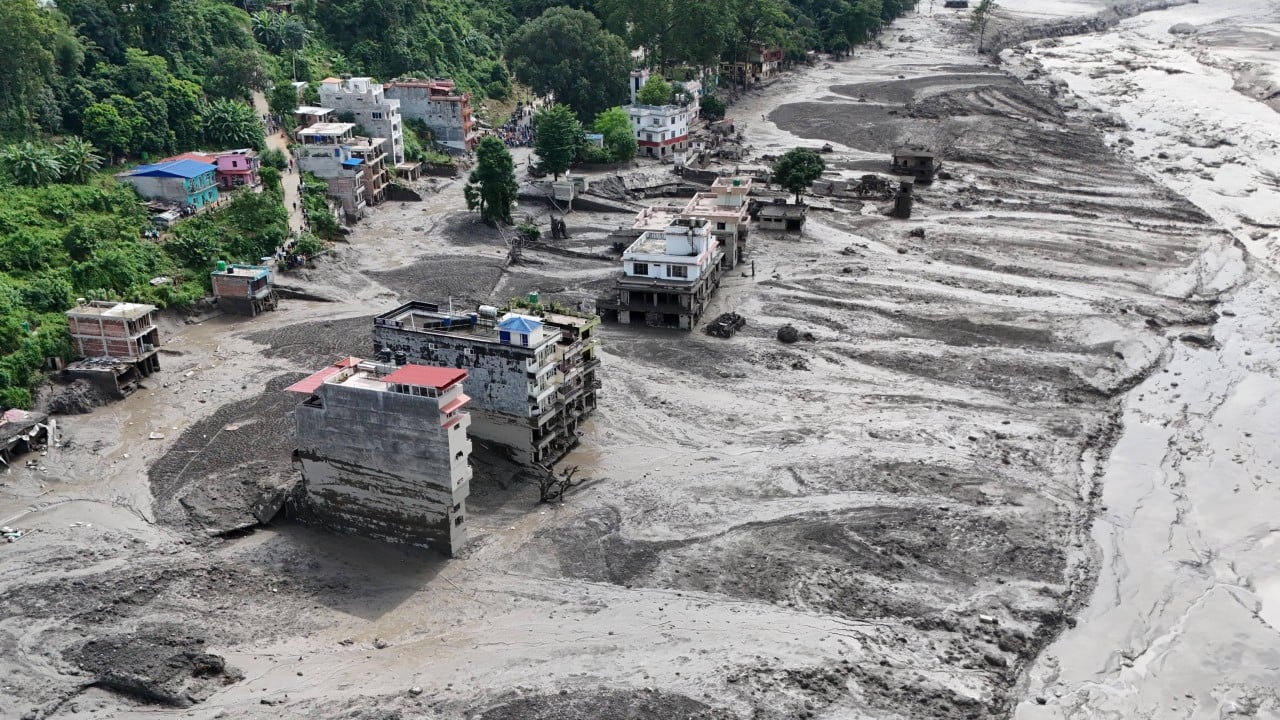
When disaster strikes the Himalayas, the truth usually arrives long after the rumors. A catastrophic wall of water and debris tore through the Nepal-Tibet border region on August 26, killing hundreds and leaving thousands missing. Before geologists could even unpack satellite data to analyze the source, internet commentators had already weaponized the tragedy. They weren't just guessing about what happened. They were actively manufacturing a narrative blaming China, pointing fingers at everything from non-existent dams to weather-modification conspiracies.
If you look closely at how information breaks during a modern crisis, you notice a disturbing pattern. Social media algorithms reward speed over accuracy, and geopolitical hostility provides a ready-made script. People didn't wait for facts because outrage travels faster than science. If you enjoyed this post, you should read: this related article.
The Real Trigger Behind the Disaster
Scientists didn't need a geopolitical conspiracy to explain the wall of water. Researchers confirmed that the catastrophe originated from a high-altitude rock-glacier collapse near the Langtang Lirung peak in Nepal. A massive ice and rock mass dropped roughly 1.2 kilometers from an elevation of about 5,200 meters, slamming into a riverbed and creating a destructive debris flow.
Seismographs registered the impact as a magnitude 5.2 tremor. Within minutes, the debris wave rushed down toward the Gyirong-Rasuwagadhi border crossing, traveling at speeds of 40 to 50 meters per second. The entire torrent hit the border in about seven minutes. For another angle on this development, see the recent update from Reuters.
That brief window of time explains why early warnings were practically impossible. Yet, armchair experts on platforms like X, Facebook, and TikTok ignored the scientific reality. They wanted someone to blame.
How Anti-China Narratives Hijacked the Tragedy
Instead of looking at climate trends and unstable Himalayan permafrost, critics immediately targeted Chinese infrastructure. Commentators and online influencers claimed that a Chinese dam or major construction project had triggered an artificial disaster. Some media figures accused Beijing of engineering a deliberate ecological catastrophe or failing to issue timely warnings to downstream communities in Nepal.
Even after Chinese and international researchers confirmed the natural, high-altitude origin of the collapse, the geopolitical spinning didn't stop. Prominent commentators shifted gears, arguing that even if a glacier caused the initial slide, upstream Chinese hydrological projects worsened the damage.
The Chinese embassy in Nepal pushed back aggressively against these claims, labeling them fake news and pointing out that casualties occurred on both sides of the border. Beijing also cracked down on domestic rumors, penalizing individuals who circulated unverified casualty numbers. Meanwhile, Nepal faced an entirely different battle on digital platforms: fake and artificial intelligence-generated visuals.
The Rise of AI-Generated Disaster Fiction
The modern information ecosystem has introduced a terrifying new variable to natural disasters. Fact-checkers and media regulatory bodies in Nepal reported an influx of manipulated videos and synthetic clips following the floods.
People hunting for digital clout recycled old footage from completely different locations, passing them off as live updates from the disaster zone. One widely shared video supposedly showed a rescue operation inside a tunnel, but investigators traced it back to an event in Uttarakhand, India, posted weeks earlier. Other clips featured AI-generated dam collapses and synthetic visuals of glacial lake outbursts sourced from Alaska.
Conspiracy theorists even blamed the High-frequency Active Auroral Research Program in Alaska, claiming the flood was a product of secret weather warfare. When algorithms feed on engagement, human suffering becomes just another viral hook.
What We Can Learn From the Noise
When a major crisis hits, your first instinct should be skepticism toward viral outrage. Real science takes days or weeks; online fabrication takes seconds.
If you want to stay informed without falling for geopolitical propaganda or synthetic media, follow these practical steps:
- Wait for institutional confirmation: Look to established scientific bodies like the US Geological Survey or academic geologists before buying into structural collapse claims.
- Run reverse image searches: If a dramatic video looks too cinematic or apocalyptic, check it through verification tools or fact-checking databases like Nepal Fact Check.
- Ignore anonymous accounts pushing agendas: Accounts that immediately link a natural disaster to a specific government or military plot are usually chasing impressions rather than truth.
Geological hazards in the Himalayas are increasing in frequency due to warming temperatures and thawing permafrost. The real threat isn't a secret weather weapon or a malicious engineering plot. It is the steady, undeniable reality of a changing climate meeting a fragile mountain ecosystem, all while digital mobs turn human loss into content. Stop reacting to the first thing you see on your feed.