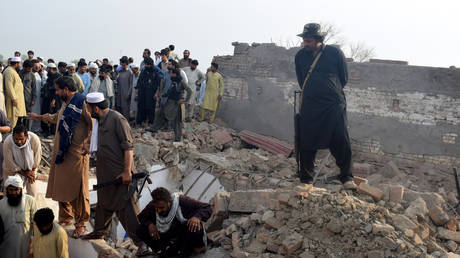
When a massive chunk of ice breaks off a Himalayan peak, it doesn't just slide quietly down a slope. It hits with the destructive power of a bomb, turning mountain valleys into sudden underwater traps. Recent catastrophic flash floods in Nepal proved this terrifying reality once again, wiping out infrastructure, displacing hundreds, and leaving communities scrambling with only minutes to react.
If you think this is an isolated incident, you're missing the bigger picture. The Hindu Kush Himalaya region is warming at an alarming rate, and the disasters happening there right now are setting a dangerous baseline for the future.
What Actually Causes a Himalayan Flash Flood
People often picture a gradual melt when they hear about global warming. They imagine streams swelling slowly over weeks. But high-altitude catastrophes work entirely differently.
When a lower section of a glacier shears off—often triggered by rising temperatures and destabilized permafrost—it drops millions of tons of ice and rock into narrow river gorges. In the recent Nepal disaster, researchers noted that a massive ice mass plunged straight into the Lhende Khola, a tributary of the Bhote Koshi River.
That impact displaces water instantly. It mixes with loose sediment, boulders, and debris to form a dense, fast-moving sludge. Rivers can swell by nearly 30 feet in less than thirty minutes.
It is basically a wall of dirt, rock, and water traveling at highway speeds.
The Hidden Danger of Natural Dams
The initial avalanche is only half the problem. When massive amounts of debris crash into a river channel, they often form a temporary natural dam.
Water backs up behind this wall, creating an unstable artificial lake. Residents downstream might think the worst has passed, but the pressure builds rapidly. Within hours, the makeshift dam bursts. The resulting surge sends an even more destructive wall of water downstream, washing away bridges, hydropower stations, and entire village settlements.
Why the Himalayas Are Warming Faster
Geography plays a cruel role here. Mountain ecosystems absorb heat much faster than flat lowland areas.
More than 63,000 glaciers across the region feed ten major Asian river systems, sustaining billions of people. Yet, climate data shows that a vast majority of these glaciers sit at altitudes highly exposed to modern atmospheric warming. Ice-loss rates in these mountains have doubled since 2000.
As glaciers retreat, they leave behind unsupported rock faces. Permafrost—ground that has stayed frozen for centuries—thaws out. Once-stable slopes turn loose and unstable, making rockfalls and avalanches much more frequent.
You're looking at a cascading chain reaction:
- Rising temperatures melt ice and thaw permafrost.
- Slopes lose structural integrity and collapse.
- Debris chokes river valleys and forms temporary dams.
- Dam bursts trigger high-velocity flash floods miles downstream.
The Cost of Inaction
Infrastructure in the region takes a massive hit every time these events unfold. Hydropower projects, which provide a critical slice of local energy production, are frequently built in these vulnerable river corridors. When a surge hits, multi-million-dollar facilities get shredded like cardboard.
The human cost is even heavier. With tourism bringing over a million visitors to Nepal annually, thousands of hikers, pilgrims, and locals find themselves in high-risk zones when disaster strikes.
Scientists warn that current monitoring systems aren't enough. When a glacial lake bursts or an ice wall collapses, people don't have hours to evacuate. They have minutes. Sometimes seconds.
Governments and local stakeholders know the risks. Warning systems exist on paper, but coordination lags behind reality. Until regional authorities treat these mountain hazards as an everyday emergency rather than a rare anomaly, communities will remain entirely unprotected against the next collapse.
Clear communication channels, real-time satellite tracking of high-risk glacial lakes, and strict zoning laws in narrow river valleys are the only ways to prevent future tragedies. Stop treating mountain floods as freak accidents. They're a predictable outcome of a warming planet.