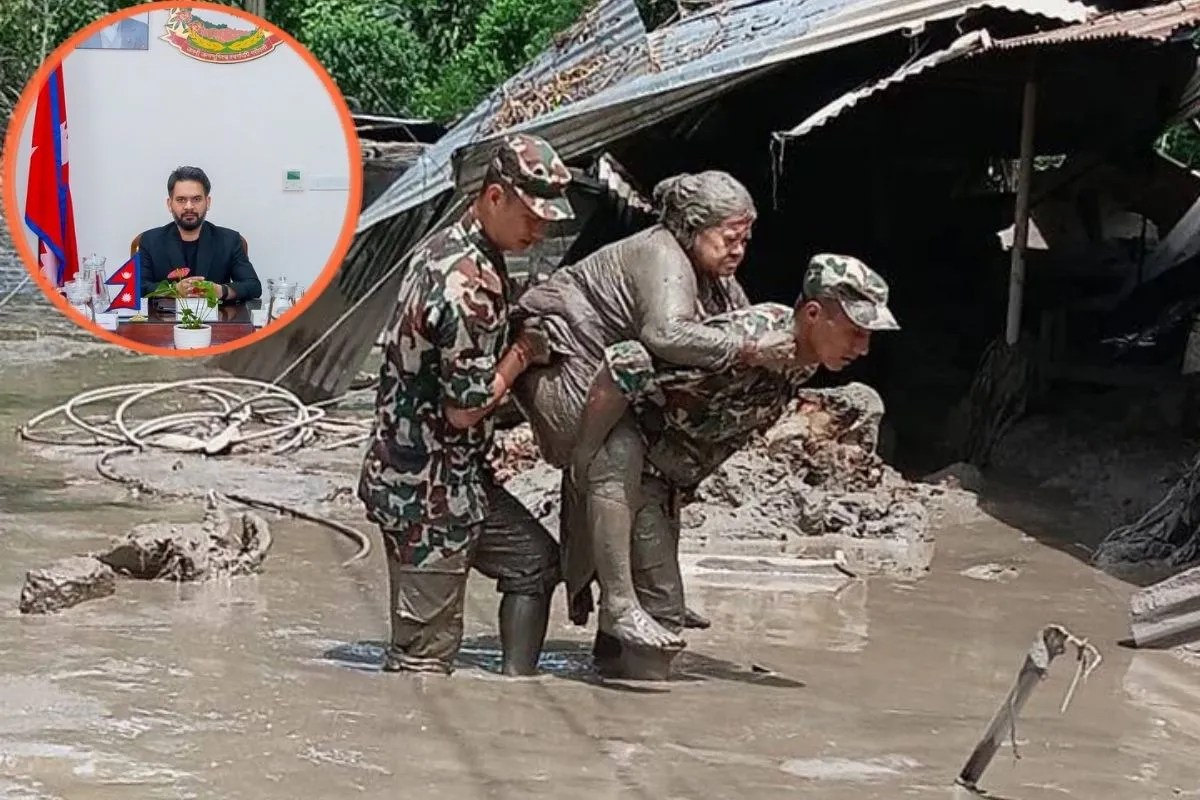
When catastrophic floods and landslides leave hundreds dead and entire communities buried under mud, you would expect a government to accept every helping hand available. Yet, when disaster struck Nepal recently, claiming nearly 500 lives and leaving massive destruction in its wake, Kathmandu did something unexpected. It politely turned down offers of specialized search and rescue teams from heavyweights like India, China, the United States, Japan, and South Korea.
Why would a nation grappling with overwhelming devastation reject international rescue personnel?
The decision has sparked global confusion and intense geopolitical debate. Let's look past the diplomatic statements to understand what is actually driving Nepal's rejection of foreign rescue teams, how affected nations are responding, and why sovereignty often trumps speed in disaster management.
The Official Stand From Kathmandu
Foreign governments didn't sit idly by while the crisis unfolded. Offers for deployment poured in almost immediately. Foreign nations wanted to send specialized extraction teams, heavy machinery, and medical units.
Nepal's Ministry of Foreign Affairs drew a firm line. Ministry spokesperson Lok Bahadur Chhetri stated that while international solidarity is appreciated, local security agencies—including the Nepal Army, Armed Police Force, and Nepal Police—are fully capable of managing the search and rescue operations on their own.
According to Kathmandu, foreign rescue squads are simply not required at this stage. But ground realities tell a different, more complicated story.
Geopolitical Sensitivities in the Rasuwa Region
Disaster response is rarely just about logistics. It often involves high-stakes geopolitics.
Former Nepali diplomats, such as former UN Ambassador Dinesh Bhattarai, point out that regional sensitivities played a major role. Take the Rasuwa district, for instance. This area shares a direct border with China's Tibet autonomous region and hosts critical infrastructure projects.
Foreign intelligence and security experts often look at disaster zones near sensitive borders with extreme caution. Allowing foreign rescue teams—especially from competing superpowers—into geostrategically fragile mountain territories opens up security vulnerabilities that governments prefer to avoid.
Even though the foreign ministry quickly denied that geopolitical friction with China influenced their refusal, diplomatic insiders know that sovereignty concerns carry immense weight in the Himalayan nation. Nepal walks a tight diplomatic tightrope between its giant neighbors, India and China. Inviting foreign boots on the ground in sensitive border sectors creates complications that go far beyond humanitarian relief.
South Korea Faces a Dilemma Over Missing Nationals
While major powers took Kathmandu's refusal in stride, specific countries faced acute crises of their own. South Korea found itself in a difficult spot.
Several South Korean nationals were directly caught in the deluge. A major hydropower project in Nepal employed several Korean workers. Reports confirmed that at least nine South Korean nationals went missing, with several others stranded in treacherous terrain.
Seoul's foreign ministry responded by stating that while Nepal indicated it had no immediate plans to host foreign rescue teams, South Korea would keep communication channels open. Instead of sending boots on the ground, Seoul announced a humanitarian aid package of one million dollars channeled through international organizations.
It is a pragmatic compromise. When you cannot send your own personnel to dig through the rubble, financial aid and diplomatic pressure become your primary tools.
The Ground Realities of Local Rescue Operations
Handling a disaster of this scale with domestic forces alone places an extraordinary burden on Nepal's security apparatus.
Infrastructure damage is staggering. Major hydropower plants have suffered severe damage, knocking out local power grids and cutting off communication lines. Rescuers are forced to trek through unstable terrain where roads have vanished into roaring rivers.
Local teams know the topography better than any foreign squad ever could. They speak the language, understand the local administrative bottlenecks, and operate without the logistical friction that foreign teams often face when trying to coordinate with local municipal bodies.
However, speed is everything in search and rescue. Every hour lost diminishes the chances of finding survivors trapped in air pockets beneath mudslides or collapsed structures. By relying exclusively on domestic agencies, Nepal is betting its political sovereignty and operational control against the clock.
What This Means for Future Humanitarian Crises
Nepal's refusal highlights a shifting trend in international disaster management. National pride and sovereignty are increasingly taking precedence over unconditional foreign intervention. Developing nations are becoming warier of allowing foreign military or specialized personnel into their sovereign territory, even under the guise of humanitarian aid.
If you are tracking international relations or disaster response frameworks, this event proves that diplomacy does not stop when a river overflows its banks. Geopolitics dictates rescue operations just as much as weather patterns do.
Assess your assumptions about global aid. When crisis strikes next, expect more governments to lean inward, trusting their own battered institutions before opening their borders to foreign saviors.