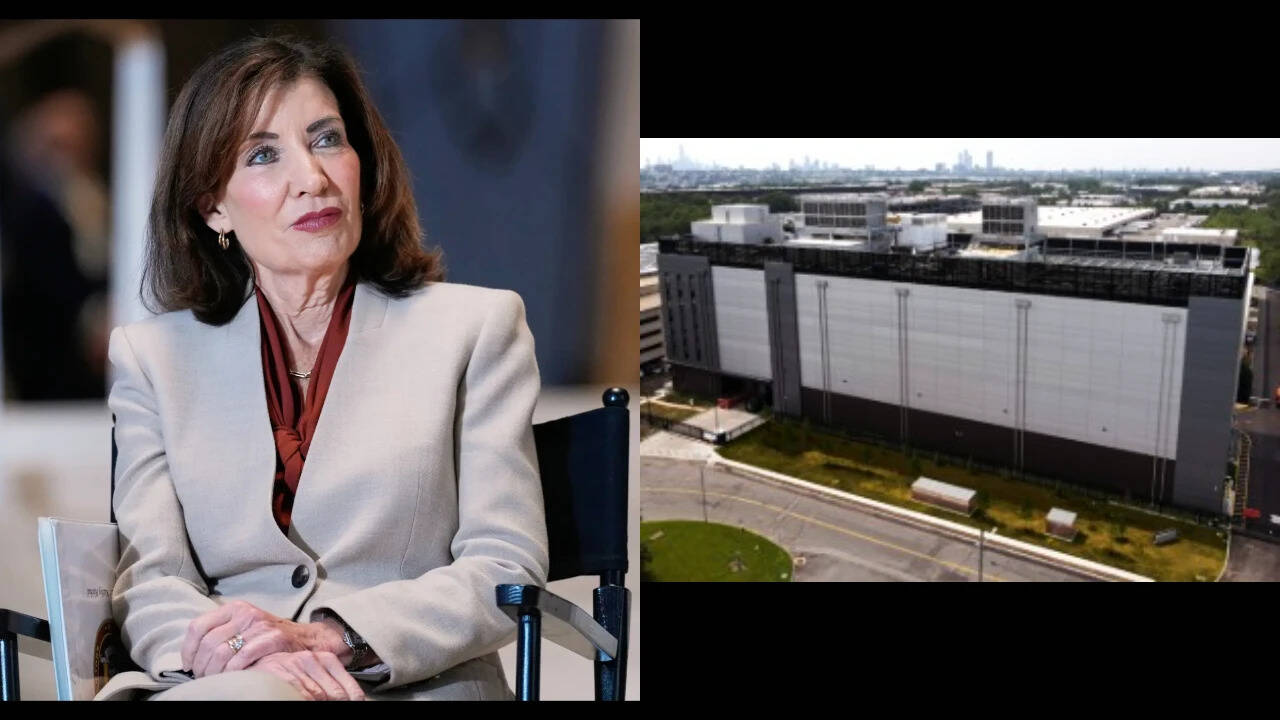
New York just threw a massive wrench into the gears of the artificial intelligence boom. Governor Kathy Hochul signed a first-in-the-nation executive order establishing a one-year moratorium on environmental permits for massive data centers. If you've been watching tech companies gobble up real estate across the country, you knew a breaking point was coming. New York just hit it first.
The decision targets "hyperscale" facilities—specifically those projected to draw 50 megawatts or more of electricity. For context, 50 megawatts can power tens of thousands of homes. The sudden surge in these power-hungry hubs has state officials panicking over grid stability and skyrocketing utility bills for everyday residents.
"As data center development threatens to hike up utility bills, deplete our natural resources, and create uncertainty for New Yorkers, it's my responsibility to take action and lead," Hochul stated. It's a dramatic pivot for a governor who spent years courting tech investments. But with an election cycle looming and voters furious over energy costs, the politics of AI infrastructure just shifted completely.
The Real Cost of AI Infrastructure
We talk about the cloud like it's a fluffy, weightless thing. It isn't. It's a massive concrete building packed with rows of servers running at blistering temperatures 24/7. To keep those servers from melting, they require millions of gallons of water and an ungodly amount of electricity.
When a massive tech company plugs a 300-megawatt facility into a local grid, the utility provider has to upgrade its infrastructure to handle the load. Guess who usually pays for those upgrades? You do.
Look at what happened in the PJM Interconnection grid, which spans 13 states from Virginia to Michigan. Residential electricity bills jumped significantly, and independent market monitors pointed the finger directly at data center expansion. New York lawmakers looked at that mess and decided they didn't want a repeat performance.
The state's Department of Environmental Conservation now has 12 months to draft a Generic Environmental Impact Statement. They'll set uniform benchmarks for water use, air quality, and energy demand. Until those rules are locked in, no new large-scale permits are getting approved.
What the One Year Pause Actually Changes
Let's clear up some misconceptions. This isn't a total ban on technology. It's a targeted pause.
If a data center is already under construction or holds all its necessary permits, the work keeps moving. Smaller facilities that serve local hospitals, universities, or Wall Street trading desks are completely exempt. The state is only choking the pipeline for new, massive server farms designed to train AI models.
The executive order also sets up a massive battle over taxes. Hochul wants to eliminate sales tax exemptions for these massive data centers. For years, states competed in a race to the bottom, offering billions in tax breaks to lure tech giants. New York is saying the era of free rides is over. If you want to use the state's resources, you're going to pay full price.
There is also a much stricter bill sitting on the governor's desk passed by the state legislature. That bill, the Responsible Data Center Development Act, targets facilities drawing just 20 megawatts. Hochul bypassed that stricter threshold for now by using an executive order focused on 50-megawatt giants, keeping her options open while reviewing the legislative text.
Tech Innovation Versus Local Reality
The tech industry is already pushing back hard. The common argument is that blocking data centers risks ceding AI leadership to foreign rivals. They claim these regulations kill jobs and stifle the modern economy.
But the economic reality on the ground tells a different story. Data centers create plenty of construction jobs while they're being built. Once the doors open, though? They operate with skeleton crews. A massive facility might only employ a few dozen full-time technicians. For local communities, the trade-off of higher electric bills and strained water supplies for a handful of jobs is a bad deal.
State Senator Kristen Gonzalez, who sponsored the legislative bill, summed it up perfectly during the signing ceremony: "If Big Tech is coming onto our turf, it should be on our terms."
Next Steps for Energy Conscious Tech Leaders
If you operate in the infrastructure space or rely on massive computational scaling, the playground just changed. You can't assume local governments will roll out the red carpet anymore.
First, pivot your site selection toward regions with dedicated, isolated power generation. If your project relies on the public grid and threatens residential rate stability, you're looking at a regulatory brick wall. Look into behind-the-meter nuclear or co-located renewable assets.
Second, prepare for mandatory community benefit agreements. New York's upcoming framework will likely force developers to fund local infrastructure, subsidize residential energy upgrades, or guarantee union labor commitments. Factor these baseline costs into your financial models right now, because the New York playbook is going to spread to other states fast.