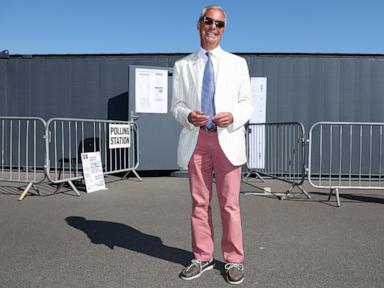
Nigel Farage won his parliamentary seat back in Clacton-on-Sea, but the victory feels more like a bruising public relations disaster than a triumph. If you followed the headlines, you probably saw the bizarre matchup: the Reform UK leader squaring off against a satirist wearing a trash-can helmet. It sounds like a joke. Honestly, it basically was.
Farage triggered this special election himself. He resigned his seat a month prior to escape immediate pressure over a brewing financial controversy involving a £5 million gift from a crypto billionaire. He expected a massive turnout of loyal supporters to hand him a resounding mandate against the political establishment. Instead, every major UK political party boycotted the contest, calling it an expensive vanity project costing local taxpayers roughly £250,000.
That boycott left the field wide open for minor contenders. Enter Jonathan Harvey, better known as Count Binface. The intergalactic space warrior character pulled in a staggering 9,455 votes, grabbing nearly 27 percent of the total ballot. Farage took 22,239 votes, securing his return to the House of Commons, but the result exposed deep vulnerabilities.
The Boycott Backfire
Why did Labour, the Conservatives, and the Liberal Democrats stay home? They refused to legitimize a stunt. By declining to field candidates, they turned the local election into a referendum on Farage's personal integrity rather than a battle of mainstream ideologies.
This strategy worked like a charm for critics. Without mainstream rivals splitting the anti-Farage or alternative vote, disgruntled voters and satirists coalesced around the trash-can-wearing comedian. The turnout dropped to 44.4 percent, a noticeable slide from the 58.7 percent seen during the general election.
Farage tried to spin the outcome as a monumental blow against his detractors. Yet, his actions on election night told a different story. Claiming a security threat advised by local police—a claim quickly disputed by authorities—he skipped the count entirely and avoided the traditional victory speech.
What the Numbers Actually Tell Us
Let us look at the raw data. Farage won with 63.34 percent of the vote. That sounds dominant on paper. But dig into the context. He actually gained only about 1,000 more votes than he did in the previous general election, despite facing zero competition from major parties. Meanwhile, nearly 10,000 people voted for a man with a wastepaper basket on his head.
That is not a glowing endorsement. It is a protest vote.
Voters in Clacton expressed frustration over the sudden disruption, the media circus, and the continuous financial scrutiny trailing the Reform UK leader. Following his return to Parliament, the parliamentary standards commissioner immediately resumed investigations into his unreported donations and financial gifts.
Where Reform UK Goes From Here
Farage remains the undisputed glue holding Reform UK together. When he steps away, the party polls sluggishly. But relying entirely on one polarizing figure creates a fragile structure.
The Clacton stunt proved that while Farage can mobilize a dedicated base of populist voters, he also alienates large segments of the electorate who view these maneuvers as self-serving distractions.
If the standards watchdog finds against him, Farage could face yet another election cycle. Next time, the major parties might not stay home.
Take a close look at how modern populist movements handle accountability. When leaders try to dodge investigations by forcing new ballots, voters notice the bill. Watch the parliamentary inquiries closely over the coming weeks, because this political saga is far from finished.