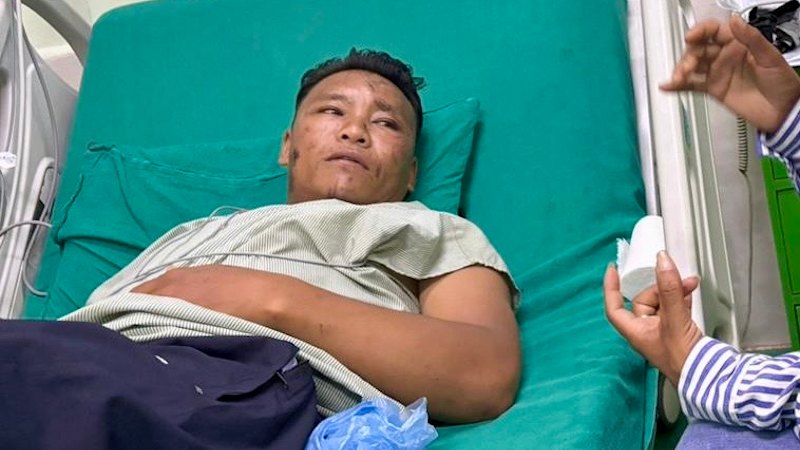
Water does not knock. It arrives with a roar, tearing through valleys and wiping out infrastructure in seconds. When the Trishuli River surged toward the remote village of Khalte in Nepal, poultry farmer Sidar Tamang did not hesitate. Armed with a whistle and raw instinct, he ran through the main street, shouting warnings before the flash flood cut off escape routes entirely.
The recent catastrophic floods across Nepal and Tibet left thousands dead or missing, including dozens of international travelers. Amidst the macro statistics and political briefings, individual survival accounts reveal the brutal reality of what happens when natural disasters strike isolated mountain regions. Sidar Tamang’s ordeal, from blowing his whistle in Khalte to his grueling multi-day medical evacuation to Kathmandu's Tribhuvan University Teaching Hospital, captures the chaotic human cost of the crisis.
The Anatomy of a Flash Flood Warning
Communication lines fail instantly during extreme weather events. Tamang received an early heads-up phone call from a supplier upstream, giving him a microscopic window of time. In rural Himalayan valleys, early warning systems often rely on informal phone trees rather than automated sirens.
When seconds count, community members become the first responders. Tamang grabbed children near a petrol station, guiding them toward high ground. Yet, the sheer volume of water moving down the river valley overwhelmed human speed.
- Water roiled with debris, sweeping away homes, shops, and bridges.
- Mudslides and sudden torrents left residents stranded with zero margin for error.
- Infrastructure collapses severed road links, turning minor injuries into life-threatening emergencies.
Being swept over 100 meters and managing to latch onto a field terrace saved Tamang's life. But the water took what mattered most. While he survived the physical thrashing, he lost his grip on the children he tried to save, and his middle son remains among the missing.
The Logistical Nightmare of Himalayan Evacuations
Survival is only the first phase. Getting out of a disaster zone in Nepal requires navigating a broken logistics network. With roads washed out and mountains blocking direct routes, survivors face severe hurdles.
Tamang’s journey to a hospital bed in Kathmandu took two days. He bounced from an abandoned local clinic to a second facility lacking proper medical equipment. Helicopters filled the skies, but landing in rugged terrain proved impossible in many zones. Local officials noted that managing internal rescue resources without outside clutter remains a priority, yet private helicopters booked up instantly, leaving many injured individuals waiting hours for transport.
Hospitals in the capital tell a stark story. Courtyards fill with families scanning lists of survivor-patients and pinning posters of missing relatives. With no air-conditioning and cramped conditions, medical facilities operate under immense strain. Pomegranate seeds by a bedside offer little comfort when family members remain unaccounted for.
What Recovery Looks Like Now
The immediate danger of rising waters shifts quickly to the psychological and structural aftermath. Communities face the daunting task of accounting for missing loved ones while confronting the threat of secondary flooding.
For travelers, families abroad, and locals alike, accessing reliable information channels remains vital. Official emergency hotlines are handling heavy volumes as frantic relatives seek news.
If you are tracking developments or trying to reach loved ones affected by the disaster, use established diplomatic channels rather than relying on unverified social media updates.
- Keep emergency contact numbers handy, such as the Department of Foreign Affairs and Trade consular services if you are an Australian citizen affected overseas.
- Monitor official updates from local authorities regarding secondary flood warnings and lake threat assessments.
- Support accredited relief operations working directly on the ground in Kathmandu and surrounding districts.
The human element of these tragedies lingers long after the floodwaters recede. Sidar Tamang sits in a hospital bed with cuts across his face and head, facing a future stripped of certainty. The numbers in news headlines represent individuals, families, and communities forced to rebuild from zero.