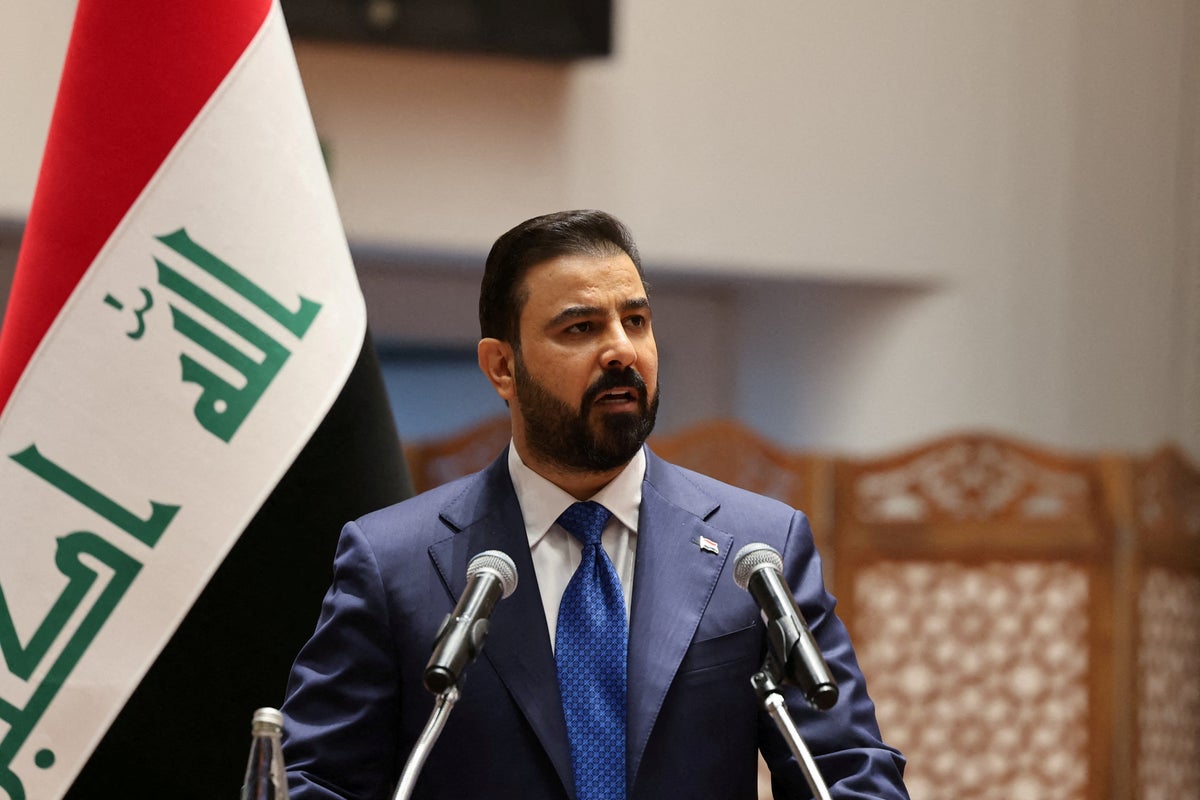
Donald Trump just rolled out the red carpet at the White House for Iraq newly minted Prime Minister, Ali al-Zaidi. On the surface, it looks like a standard diplomatic victory lap. The White House gets to praise a political novice who promises to crack down on Iran-backed militias and sign massive oil and gas deals with American energy corporations. But underneath the smiles and the handshake photos lies a massive contradiction that Washington doesn't want you to think about too hard.
Ali al-Zaidi isn't a career diplomat. He's a billionaire businessman who brands himself as an outsider. Insiders even call him "the Trump of the Middle East". Before his sudden ascent to power, he ran Al-Janoob Islamic Bank. If that name sounds familiar, it's because that exact bank was slapped with a dollar ban by Iraq central bank under direct pressure from the United States Treasury. The accusation? Helping money laundering networks funnel millions of greenbacks straight into the hands of the Iranian regime.
The irony is thick enough to choke on. The current administration has spent months demanding that Baghdad cut ties with Tehran, especially after the violent flare-ups following the war with Iran earlier this year. Yet, the man Trump chose to back to the hilt is the very guy who chaired an institution accused of keeping Iran financial lifelines open.
If you want to understand how international politics actually works when the cameras turn off, this meeting is the perfect case study. It shows exactly how transactional foreign policy operates. It proves that when the stakes are high enough, past financial sins are wiped clean with a single pencil stroke.
Why Washington Bet Big on a Baghdad Outsider
For months, Iraqi politics was stuck in an ugly, dragging deadlock. The dominant parliamentary group, a coalition of Shiite parties called the Coordination Framework, wanted to install former Prime Minister Nouri al-Maliki. Washington explicitly hated that idea. Al-Maliki is widely viewed by American defense officials as a puppet for Iranian interests. The White House went public with its threats, stating flatly that if al-Maliki took the wheel, the US would cut off every cent of aid to Iraq.
Enter Ali al-Zaidi. He was the ultimate compromise candidate, a corporate tycoon with zero political baggage who managed to get confirmed. When he secured the nomination, Trump immediately jumped on social media to declare it the start of an incredible new era of prosperity and stability.
The administration saw an opportunity. They didn't see a complex historical ally; they saw a business partner who could talk the same language as a real estate developer. The calculation was simple. Al-Zaidi needed American backing to survive the cutthroat world of Iraqi politics. In exchange, Trump wanted three specific things. First, the total disarmament of Iranian-backed militias operating inside Iraq. Second, a dramatic drop in Iraq reliance on Iranian natural gas. Third, a stack of signed contracts ensuring American energy giants get first dibs on Iraq massive oil reserves.
It sounds like a great deal on paper. But ignoring the new prime minister banking history requires a level of willful blindness that could backfire spectacularly.
The Dirty Business of Iraqi Banking and the Dollar Leak
To get why the Al-Janoob Islamic Bank connection is such a big deal, you have to look at how money moves through Iraq. Ever since the 2003 invasion, Iraq has used a highly unusual financial setup. The cash earned from selling Iraqi oil gets deposited directly into the Federal Reserve Bank of New York. Then, the Central Bank of Iraq flies in pallets of physical US dollars and runs daily wire transfer auctions to fund international trade.
For nearly two decades, this system was an open secret for illicit finance. Private banks, often owned by political bosses or backed by powerful militias, would submit fake invoices for goods that didn't exist. They claimed they were buying car parts, textiles, or food from abroad. In reality, they were buying physical dollars and siphoning them across the border into Iran to help Tehran bypass global sanctions.
US intelligence officials estimate that at one point, up to 80% of the $250 million flowing through these daily auctions was completely untraceable. It was a massive financial pipeline funding the Islamic Revolutionary Guard Corps (IRGC) and various armed groups that regularly target American troops.
When the US Treasury finally forced a crackdown, dozens of Iraqi banks were barred from accessing dollars. Al-Janoob Islamic Bank, under al-Zaidi leadership, found itself right in the crosshairs of those restrictions.
Now, the man who oversaw an entity caught up in that web is sitting in the Oval Office. He's being cheered as the savior who will stop the exact illicit influence his former industry facilitated.
Walking an Impossible Tightrope in Baghdad
Al-Zaidi is playing an incredibly dangerous game. He arrived in Washington with a massive entourage of Iraqi corporate executives and government ministers. His goal is to sign Memorandums of Understanding with major US energy companies. He wants to show Trump that he's serious about doing business.
He's also trying to prove his anti-corruption credentials at home. Since taking office, his administration has launched highly publicized raids, arresting several high-profile politicians and former lawmakers. He even went after individuals connected to the former Prime Minister, Mohammed Shia al-Sudani. It’s a classic political playbook: make a loud, public show of cleaning house to distract people from your own corporate vulnerabilities.
The real test won't happen in a corporate boardroom, though. It’s going to happen on the ground in Iraq. Baghdad has given non-state armed groups until the end of September to completely disarm. Some major militia leaders have made public statements claiming they are willing to step down. But the most heavily armed, battle-tested factions have openly laughed at the deadline. They have no intention of giving up their weapons.
If al-Zaidi actually tries to enforce this disarmament deadline to please his allies in Washington, he risks sparking a bloody internal civil conflict. The militias aren’t just rogue actors; they are deeply embedded in the Iraqi parliament, the security forces, and the economy. They have the power to tear his fragile coalition government apart overnight.
What the Transactional Approach Misses
The current White House strategy relies entirely on personal leverage and quick corporate deals. The administration assumes that because al-Zaidi is a fellow billionaire, he can simply command the Iraqi state to do what he wants.
This view ignores how power actually works in the Middle East. A prime minister can sign all the energy contracts he wants, but if he cannot control his own borders, his own central bank, or the armed groups roaming the capital, those papers aren't worth the ink.
Iran isn't going to just sit back and watch its influence vanish. Tehran has spent decades building a deep, structural presence inside Iraq financial, religious, and political systems. They know exactly which buttons to press to create economic panic or security chaos whenever a prime minister leans too far toward the West.
By putting all its chips on al-Zaidi, Washington is setting up a high-stakes scenario where failure is highly likely. If the new prime minister fails to deliver on the militia issue by the fall deadline, Trump will almost certainly lose patience. The administration has already made it clear that they are perfectly willing to walk away from the relationship if Baghdad doesn't perform.
How to Track What Happens Next
If you want to know whether this high-society alliance is actually working or if it's just a hollow media spectacle, stop watching the press conferences. Watch these specific indicators instead.
First, track the volume of the daily dollar auctions run by the Central Bank of Iraq. If the numbers spike without a clear economic explanation, it means the illicit financial networks have already found a workaround, regardless of who is sitting in the prime minister's office.
Second, watch the major energy projects. See if American corporate entities actually break ground on new infrastructure or if the signed memorandums simply sit on shelves gathering dust because security concerns make investment too risky.
Third, monitor the movements of the most powerful militias as the September deadline approaches. If the government blinks and extends the timeline, you’ll know al-Zaidi has realized he doesn't have the muscle to back up his promises.
International diplomacy isn't about shared values or moral consistency. It's an arena where a leader can be accused of funding your worst enemy one year, and invited to a state meeting the next, as long as the price is right. Whether this particular gamble pays off for the White House remains an open question, but the clock is ticking loudly toward September.