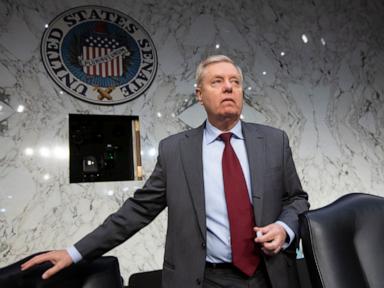
The unexpected passing of Senator Lindsey Graham on July 11, 2026, has left a massive power vacuum in Washington and triggered an immediate, messy scramble back in South Carolina. Most national news reports are glossing over the actual mechanics of how this seat gets filled. They treat it like a simple gubernatorial appointment where Governor Henry McMaster picks a successor, and everyone moves on.
It is not that simple. Not even close.
South Carolina law handles congressional vacancies through a unique, dual-track process that is about to unleash absolute political chaos. We are not looking at one decision here. We are looking at two completely separate battles that will play out simultaneously over the next few weeks. One path determines who sits in Graham's desk for the next five months. The other path decides who gets the Republican nomination for a full six-year term on the November ballot.
If you think this is just a routine procedural transition, you are completely misreading the situation. This situation is an unprecedented electoral headache that will reshape the state’s political order for a generation.
The Dual Track Problem
To understand why this is going to be so chaotic, you have to break down how South Carolina handles a mid-term Senate vacancy. State law separates the immediate, temporary replacement from the long-term election nominee.
First, let's look at the temporary fix. Under Section 7-19-20 of the South Carolina Code of Laws, the governor has the absolute authority to appoint an interim senator. Because Graham passed away more than 100 days before the November general election, this appointed individual does not just stay in office indefinitely. They will serve only until January 3, 2027.
That is track one. It is entirely up to Governor McMaster.
Track two is where things get wild. Graham had already won the Republican primary back in June, securing 57% of the vote to run for a fifth term. Because he was the official nominee, the party cannot just gather in a smoky backroom and hand-pick his replacement for the November ballot. State law explicitly forbids that. Section 7-11-55 mandates that a brand-new, compressed special primary election must take place to choose the new Republican candidate.
This means South Carolina voters are about to be bombarded with a rapid-fire summer campaign they never saw coming. The winner of that sudden August primary will face Democrat Annie Andrews, a pediatrician who was already campaigning against Graham for the November general election.
The Brutal August Primary Timeline
Because the statutory clock started ticking the moment Graham passed, the timeline for the special primary is incredibly tight. There is zero room for error, and the South Carolina Election Commission has to move immediately.
The state law dictates that the candidate filing window must open on the second Tuesday following the nominee’s death. Since Graham died on Saturday, July 11, the timeline falls into a strict, relentless schedule:
- Tuesday, July 21: Official candidate filing opens for any Republican wishing to run.
- Tuesday, July 28: The filing window slams shut after exactly one week.
- Tuesday, August 11: The special Republican primary election is held statewide.
- Tuesday, August 25: A primary runoff will take place if no single candidate clears the 50% threshold.
Think about those dates for a second. Candidates have basically one week to decide if they are willing to abandon their current offices, raise millions of dollars, build a statewide campaign infrastructure, and convince voters to turn out in the dead of the August heat. It is a logistical nightmare.
The winner of this sprint has to be officially certified at least two weeks before the November general election so the state can print the ballots correctly. If the primary goes to a runoff on August 25, the party will have just a couple of months to unite behind the winner and pivot to the general election fight.
Who Wants the Seat?
The short timeline is not going to stop people from running. Open Senate seats are the rarest commodity in South Carolina politics. Graham held his seat for over two decades, since 2003. Strom Thurmond held his before that for nearly half a century. When a seat opens up here, ambition explodes.
Four major Republican names are already dominating conversations in Columbia and Washington.
Representative Nancy Mace
Mace is a fundraising powerhouse and a master of self-promotion. She knows how to command national media attention, which is exactly what a three-week primary campaign requires. She has a complicated relationship with the traditional party establishment, but her grassroots appeal among MAGA voters makes her a formidable threat in a low-turnout August primary.
Representative Ralph Norman
Norman represents the deeply conservative, fiscal hawk wing of the party. As a prominent member of the House Freedom Caucus, he would enter the race with an immediate, highly organized base of conservative activists. Norman would frame himself as the true ideological conservative in the race, a sharp contrast to Graham's more institutionalist legacy.
Lieutenant Governor Pamela Evette
Evette is the wildcard. She has served alongside Governor McMaster for years and has deep ties to the state's business community. If McMaster wants to signal his preference without explicitly endorsing in the primary, appointing Evette as the interim senator would give her the massive advantage of incumbency heading into the August vote.
Representative Russell Fry
Fry entered Congress in 2022 after ousting an incumbent who had crossed Donald Trump. He is young, ambitious, and holds strong credentials with the modern populist wing of the Republican party. He could easily position himself as the generational change candidate.
McMaster's Dilemma with the Interim Appointment
Governor McMaster is facing an incredible amount of pressure right now. His office has naturally tried to deflect, stating that their current focus is solely on honoring Graham’s life and service. Behind closed doors, though, the calculations are furious.
McMaster has two choices for his interim appointment, and both carry massive risks.
Option one is to appoint a "caretaker." This would be a respected, elder statesman figure who explicitly promises not to run in the special primary. Choosing a caretaker keeps the governor's hands clean. It ensures he doesn't tilt the scales or anger the factions supporting Mace, Norman, or Fry. The downside? It leaves South Carolina with a temporary senator who has zero institutional weight during a critical legislative stretch in Washington.
Option two is to appoint one of the active primary contenders. If he appoints Evette or another favorite, he gives them an immediate leg up. They get to fly to Washington, take the oath of office, and look senatorial on the evening news just days before voters head to the primary polls. But doing this will alienate the rest of the state's congressional delegation and ignite an internal civil war within the South Carolina GOP.
What Happens Next
The political landscape is shifting by the hour, but the immediate next steps are rigid and legally mandated. If you want to watch how this plays out, forget the talking heads on television and track these specific actions instead.
- Watch the Governor’s Office: McMaster will have to announce his interim appointment soon. Look closely at whether the appointee is a caretaker or a serious contender for the permanent seat.
- Monitor the July 21 Filing Deadline: This date will reveal who actually has the stomach and the financial backing to launch a chaotic, short-fuse statewide campaign.
- Track the Ground Game: Because an August primary relies entirely on base voter turnout, look at which candidate secures the endorsements of major grassroots conservative groups in the state. High-profile national endorsements will carry outsized weight here.
This is not a standard political transition. It is a high-velocity, high-stakes collision of state law and raw political ambition. The rules are clear, the timeline is brutal, and the fight for South Carolina's future has officially begun.