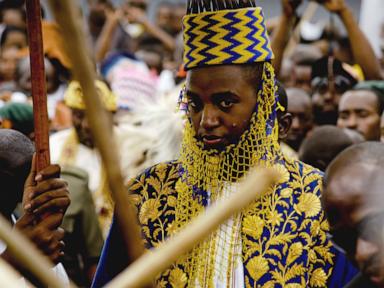
King Oyo Nyimba Kabamba Iguru Rukidi IV took his throne when he was three years old. Picture a toddler sitting on a heavy traditional chair, barely visible behind giant royal robes, clutching a toy. That image captivated global news in 1995. Now, his sudden death at age 34 in the United States, where he was receiving cancer treatment, closes a three-decade chapter for Uganda's historic Tooro Kingdom.
Most international headlines freeze him in that toddler moment. They frame him as an adorable trivia fact or a Guinness World Record holder. But that narrative misses the real weight of his reign. Oyo wasn't just a nostalgic relic of a bygone era. He spent thirty-one years navigating the complicated tightrope between ancient traditional customs and a modern, rapidly changing African republic.
The Reality of Traditional Kingdoms in Modern Uganda
Uganda operates as a constitutional republic under President Yoweri Museveni. Yet, ancient tribal kingdoms like Tooro, located in the country's west near the border of the Democratic Republic of Congo, wield massive cultural and social influence. These monarchs don't write national laws or command state military forces. Instead, they command deep loyalty, preserve indigenous heritage, and act as moral anchors for millions.
Oyo inherited this responsibility at an age when most kids are learning to tie their shoes. Following the death of his father, King Patrick David Matthew Kaboyo Olimi III, the toddler king was crowned on September 12, 1995. Growing up meant stepping out of childhood tutorials and straight into high-stakes diplomacy. He met international leaders, charmed global figures, and gradually transformed from a symbolic figurehead into an active advocate.
Throughout his adulthood, Oyo used his platform to push for public health. He served as a United Nations goodwill ambassador, throwing his energy into the fight against HIV and AIDS. He wasn't hiding inside a palace. He stayed connected to his generation, bringing a fresh perspective that Tooro's leadership repeatedly praised as a vital asset rather than a liability.
The Scramble for Succession and What Comes Next
His passing in late August triggered profound national mourning. President Museveni personally received the monarch's casket at Entebbe Airport as it returned from the United States. Thousands of citizens gathered at the Karuziika Palace in Fort Portal to pay respects while the kingdom entered a formal period of mourning leading up to his burial.
Naturally, a sudden royal death kicks off intense internal politics. Traditional succession processes rarely run smooth, and Tooro's case is no exception. Conflicting announcements surfaced regarding who would take the crown. While parts of the kingdom's administration pointed toward an heir, the Tooro Royal Succession Committee selected alternative leadership to steer the monarchy through its next chapter.
These competing claims highlight the fragile tension inside traditional institutions today. When a ruler ascends as an infant and passes away in their mid-thirties, the transition leaves an entire community grasping for stability.
Why This Story Matters Beyond Uganda
People outside East Africa often look at monarchies through the lens of European tabloid drama. They view them as expensive tourist attractions. But in regions like western Uganda, the king embodies collective identity.
Oyo's thirty-one-year reign proves that traditional governance adapts when forced to face contemporary crises. He lived through health battles, political shifts, and economic pressures that his ancestors never imagined. He managed to keep an ancient crown relevant in the twenty-first century.
As the Tooro Kingdom prepares to lay its beloved monarch to rest, the focus shifts to preserving stability. If you want to understand modern East Africa, look past the surface politics. Pay attention to how ancient heritage survives through the young leaders tasked with carrying it forward.