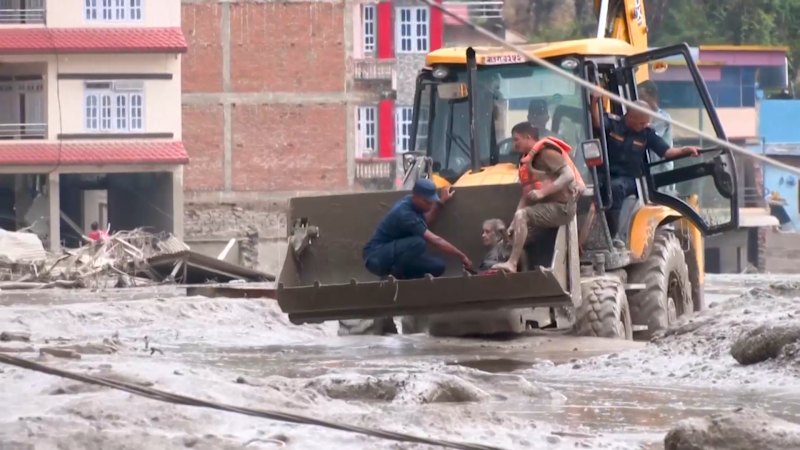
When a massive wall of mud, ice, and debris tore down the Trishuli River system on August 26, 2026, initial reports blamed heavy monsoon rains or an earthquake. They were wrong. High in the Himalayas near the Nepal-Tibet border, a massive slope failure involving a mountain glacier triggered an avalanche equivalent to a magnitude 5.2 earthquake. Millions of tons of rock and ice collapsed from Langtang Lirung peak, sending a destructive, tsunami-like wall of water racing down narrow mountain gorges.
The human cost has been staggering. More than 1,400 people have lost their lives, and thousands remain unaccounted for as security forces and international agencies comb through thick layers of gray-brown sediment. If you are trying to understand what actually happened during Nepal's devastating late-August flash floods, you need to look past the standard weather disaster headlines. This was an unprecedented cryosphere collapse, and its ripple effects are rewriting how scientists view high-altitude risks.
The Reality on the Ground Across the River Valleys
The devastation didn't stay confined to remote peaks. The debris flow traveled nearly 100 kilometers downstream, slamming directly into districts like Rasuwa, Nuwakot, Dhading, Gorkha, and Tanahun. Entire villages were buried, roads vanished, and critical infrastructure, including hydropower tunnels and cross-border trade ports, took a direct hit.
In towns like Bidur and throughout local municipalities, schools and community structures were wiped out. Local education units have reported hundreds of children missing—some searching for surviving parents, others separated entirely. Thousands of families are currently displaced, living in makeshift camps or relying on host communities while organizations like UNICEF rush clean drinking water, hygiene kits, and medical supplies to the cut-off zones.
Rescue teams have faced nightmare logistics. With bridges swept away and communications crippled, just getting heavy earthmovers to the banks of the Trishuli and Lende rivers took days. While a few miraculous survivors have been pulled alive from deep inside blocked hydropower tunnels weeks after the disaster, the search operation remains a grueling, slow-moving race against time.
Why This Disaster Was Different
Most annual monsoon floods in South Asia follow a predictable seasonal script. Heavy downpours swell rivers gradually, giving communities time to move to higher ground. This event threw out every rulebook.
Geologists and USGS researchers note that the disaster started with structural failures deep inside high-altitude ice and bedrock, likely accelerated by prolonged warming trends. When the upper slopes gave way, the debris torrent swelled local river levels by an astonishing 230 feet in narrow gorges and spiked downstream channels by 30 feet within thirty minutes. That speed left zero reaction time for residents working near riverbeds or inside valley settlements.
Furthermore, the cascading nature of the catastrophe created secondary hazards. Temporary barrier lakes formed when tons of rubble momentarily dammed fast-moving streams, only to breach minutes later and send fresh waves of destruction downstream.
What Needs to Happen Next
If you want to track recovery efforts or support relief operations effectively, you have to focus on the long-term displacement crisis rather than just immediate rescue metrics.
- Prioritize Vulnerable Demographics: Relief agencies must maintain stringent safety protocols in displacement camps. Hundreds of children remain separated from their families, facing heightened risks of malnutrition and psychological distress.
- Rebuild Resilient Infrastructure: Reconstructing washed-out highways and bridges cannot follow old blueprints. Engineers must account for extreme glacial hazards when planning future mountain corridor developments.
- Upgrade Early Warning Systems: Traditional rain-gauge monitoring is useless against sudden high-altitude ice avalanches. Expanding satellite-based cryosphere tracking and seismic sensors along border peaks is the only way to give downstream valleys a fighting chance next time.
The mountain valleys of Nepal are shifting under a changing climate, and disasters like this show how vulnerable modern high-altitude infrastructure remains. Stay informed, track updates through verified humanitarian portals like the IOM or UNICEF, and look past the initial breaking news cycle to support long-term recovery on the ground.