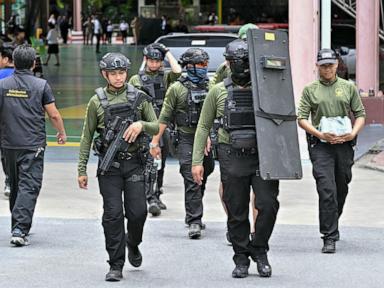
Six lives were abruptly cut short at a high school just outside Bangkok, shaking a nation already grappling with deep-seated questions about public safety and youth mental health.
A teenage student walked into Debsirin Nonthaburi School and opened fire, killing three teachers and three students after having already shot and killed his own grandparents at home. More than a dozen others sustained injuries, some from direct gunfire and others while stampeding to escape the chaos. Prime Minister Anutin Charnvirakul later noted that the young suspect was under severe personal stress and had clearly planned the assault.
When tragedies like this happen, headlines flash across international screens, but they rarely capture the full cultural and structural reality behind the violence. Let's break down what actually occurred, why these incidents shock the region, and what experts are saying about the country's rising exposure to gun violence.
The Anatomy of the Nonthaburi Tragedy
The sequence of events unfolded rapidly on a Friday morning that began like any other. According to national police statements, the 14-year-old suspect first targeted his grandparents, using a handgun belonging to his grandfather. From there, he traveled to the secondary school in Nonthaburi province, wearing his school uniform.
He fired at least 26 bullets, carrying dozens more rounds of ammunition before his life ended at the scene. Local authorities and media reports offered conflicting initial accounts on whether police neutralized him or if he died by suicide, but the grim math remained identical: eight total dead, including the suspect and his grandparents.
Emergency medical teams flooded the area. Health officials confirmed that over twenty people suffered injuries, with a significant portion hurt in the frantic scramble to find cover or jump from windows.
Why Thailand is Confronting a Gun Violence Reckoning
Many outsiders assume strict gun laws protect nations in Southeast Asia, but Thailand actually possesses one of the highest rates of private firearm ownership in the region. Estimates point to roughly 10 million firearms circulating legally and illegally within the country.
This isn't the first time the nation has reeled from mass violence. Memories of the horrific 2022 daycare massacre in Nong Bua Lamphu remain raw, forcing citizens and lawmakers to ask uncomfortable questions about institutional failures.
While the 2022 attack involved a disgruntled former police officer, this recent incident hit a different kind of nerve because the perpetrator was a child himself. Friends told investigators the teen was heavily stressed. That single word masks a much larger crisis concerning adolescent isolation, academic pressure, and the accessibility of lethal weapons in domestic environments.
The Mental Health Blind Spot
When a teenager snaps, society loves to look for a single villainous trigger. Psychologists who study school violence point out that the reality is rarely that simple. Academic burnout, social alienation, and unaddressed trauma create a volatile mix, especially when firearms are left unsecured in family homes.
Prime Minister Anutin expressed public bewilderment at the scene, stating, "It's such a terrible incident. It should never have happened. How could this happen in our country?"
Yet, preventing future tragedies requires looking past political shock. Mental health infrastructure in many public schools remains severely underfunded. Teachers are expected to act as educators, disciplinarians, and frontline counselors all at once, usually with zero training in identifying acute psychological crises.
Moving Forward From the Shockwaves
As parents pick up their children from police cordons and classmates cope with survivor's guilt, the immediate crisis transitions into a long, painful recovery process. Mental health workers deployed to Nonthaburi face an uphill battle trying to help students process the sound of gunfire echoing through hallways.
If real change is going to take root, policymakers have to target two distinct fronts simultaneously: tightening secure storage laws for civilian gun owners and drastically expanding accessible mental health interventions for youth. Until those structural vulnerabilities are fixed, schools will remain fragile targets.